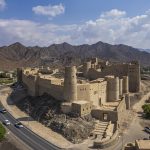
Saudi Arabia’s Voluntary Carbon Market Fuels the Shift to a Low-Carbon

Under UAE President’s directives, UAE launches urgent relief response for Ghana flood victims

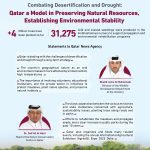
Combating Desertification and Drought: Qatar a Model in Preserving Natural Resources, Establishing Environmental Stability
UAE allocates US$30 million for emergency humanitarian response in El Obeid, calls for civilian protection, safe humanitarian aid access in Sudan

Amman, Jan. 29 (Petra) – The president of the Jordan and Amman Chambers of Industry, Fathi Al-Jaghbir, said Jordan’s industrial sector has seen significant development under King Abdullah II, who has worked since assuming power to build a self-reliant national economy that competes globally.
In a statement marking the king’s birthday on Thursday, Al-Jaghbir said His Majesty has prioritized creating a competitive investment climate by introducing a comprehensive set of investment-friendly regulations.
He noted that as part of the king’s efforts to advance Jordan’s foreign trade, the country joined the World Trade Organization (WTO) at the end of the 20th century, prompting key legislative reforms to align with WTO standards. These included updates to intellectual property laws, standards and metrology regulations, consumer protection policies, the general sales tax system, customs laws, and competition laws, among others.
Joining the WTO, Al-Jaghbir said, was a major step in opening global markets to Jordanian products, allowing them access to more than 150 countries under a transparent regulatory framework.
Regarding the industrial sector, he said it has been a key focus for King Abdullah, who has consistently highlighted the potential of Jordanian industries to become a regional hub for strategic and high-value industries.
Al-Jaghbir noted that Jordan’s industrial exports have grown significantly since the king took office. Jordanian-made products now reach over 148 markets, serving more than 1.5 billion consumers. The total value of industrial exports surged from approximately JD993 million in the late 20th century to more than JD7.9 billion in 2022, reaching JD5.9 billion in the first three quarters of 2023.
The industrial sector’s added value increased from JD1 billion in 1998 to JD7.33 billion in 2022, contributing 21.7% of the country’s gross domestic product (GDP), up from about 19%.
As part of the king’s efforts to attract investment, industrial investments have doubled in recent decades, reaching JD15 billion. The number of industrial enterprises has also expanded from around 4,000 in 1999 to over 18,000 across the kingdom today.
Al-Jaghbir highlighted that Jordan was one of the first Arab countries to establish vocational and technical training centers, which contributed to a growing industrial workforce. Today, the sector employs about 268,000 workers, most of them Jordanian, accounting for more than 21% of the country’s labor force up from around 140,000 workers in 1999.
He also praised the resilience of Jordan’s industrial sector during the COVID-19 pandemic, noting its ability to meet domestic demand for essential goods, with some products reaching self-sufficiency levels.
Al-Jaghbir pointed to the king’s recent economic modernization vision, launched last year, as a key initiative to drive economic growth and improve living standards over the next decade.
The vision aims to create one million new jobs, improve quality of life, and establish comprehensive social and economic frameworks. It prioritizes the industrial sector as a pillar of sustainable economic growth, targeting the creation of 314,000 new jobs and attracting JD10.2 billion in foreign investments by 2033.
Additionally, the vision seeks to boost the sector’s output from JD5.3 billion to JD11.1 billion and increase industrial exports from JD4.8 billion in 2021 to JD19.8 billion by 2033.
//Petra// AF
29/01/2025 21:57:45