Jordan’s Q2 2026 GDP Expands 3.0%, Outperforming Regional Headwinds, International Forecasts
ENV-KUWAIT-SUSTAINABLITYKuwait strengthens environmental sustainability through strategic initiativesBy Zahra Al-Kadhmi

HLT-KUWAIT-SURGERYKuwait advances health sector with robotic, remote surgeryBy Mohammad Al-Moseb

Saudi Arabia’s Voluntary Carbon Market Fuels the Shift to a Low-Carbon

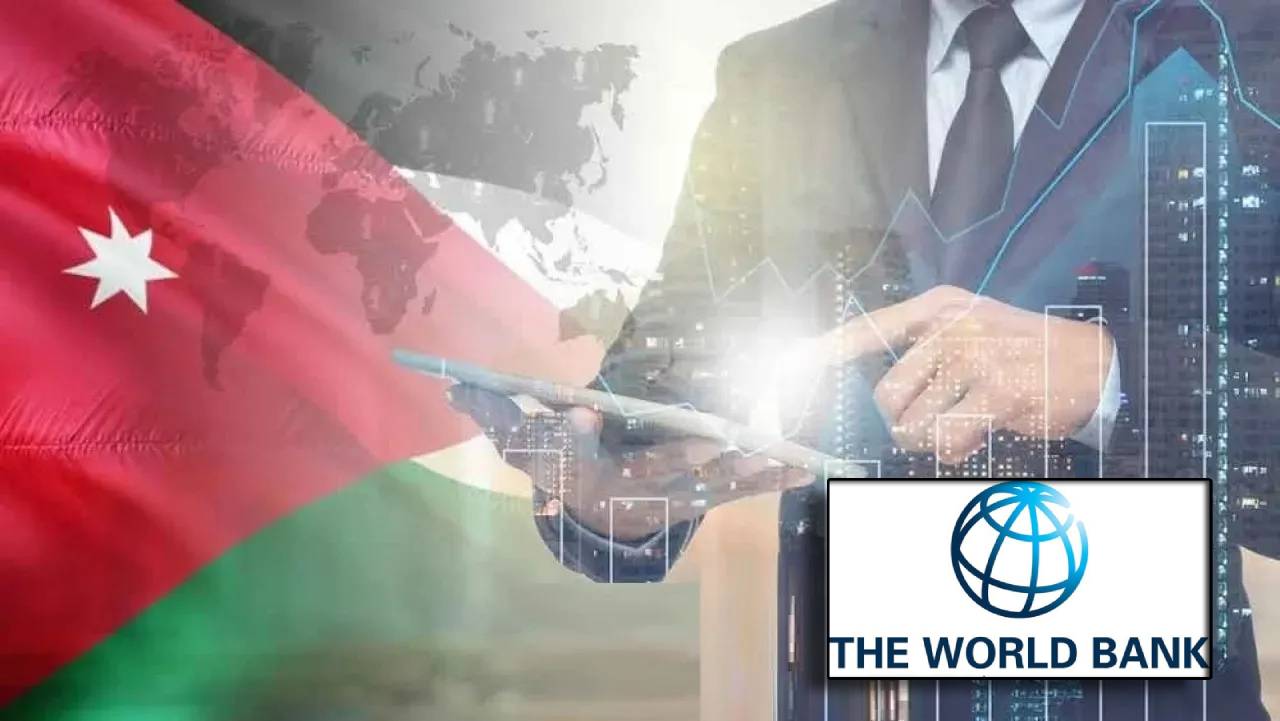
Amman, June 16 (Petra)– Economists have described recent remarks by
World Bank Managing Director of Operations Anna Bjerde as an
important international endorsement of Jordan’s ability to withstand
and adapt to successive economic and geopolitical shocks in one of
the world’s most volatile regions.
Speaking to the Jordan News Agency (Petra), experts said Bjerde’s
positive assessment reflects the success of Jordan’s monetary and
fiscal policies, the stability of the Jordanian dinar, and the growth
of foreign currency reserves. They also highlighted the impact of the
Kingdom’s Economic Modernization Vision and public sector reform
efforts aimed at enhancing competitiveness, improving the business
environment, and investing in human capital.
The economists stressed, however, that the next phase should focus on
accelerating economic growth, creating jobs, and attracting
high-quality investments.
During a recent visit to Jordan, Bjerde said that the best way to
address current challenges is through investment that strengthens
resilience. She noted that Jordan has successfully adopted this
approach, emphasizing that economic stability, sound macroeconomic
and fiscal policies, and investments in human capital have enhanced
the Kingdom’s ability to manage the repercussions of ongoing regional
crises.
Chairman of the Economic Forum, Khair Abu Saileek, said Bjerde’s
remarks constitute a significant international recognition of
Jordan’s capacity to navigate economic crises in a region marked by
constant instability.
He attributed this resilience to modernization reforms launched under
the directives of His Majesty King Abdullah II and implemented
through the Economic Modernization Vision and the Public Sector
Modernization Roadmap. These initiatives, he said, seek to improve
government efficiency, strengthen the business climate, and boost the
competitiveness of the national economy.
Abu Saileek noted that Jordan has faced a series of challenges over
the past decade, including regional conflicts, the COVID-19 pandemic,
global supply chain disruptions, and the war in Gaza. Despite these
pressures, he said, the Kingdom has maintained steady economic
growth, preserved the stability of the dinar, and successfully
contained inflation compared with many countries in the region.
He added that Jordan’s resilience has been evident in its ability to
absorb shocks without experiencing major economic imbalances while
maintaining public services and financial stability.
Abu Saileek also emphasized that Bjerde’s focus on investments in
education, healthcare, and skills development highlights Jordan’s key
competitive advantage: its qualified human resources.
He described human capital as one of the country’s most valuable
assets for attracting investment and supporting future growth.
At the same time, he cautioned that significant challenges remain,
particularly reducing unemployment, accelerating economic growth,
increasing domestic and foreign investment, and expanding labor
market participation among women and youth.
Financial and economic expert Mohammad Abdul Qader echoed these
views, describing Bjerde’s comments as an important international
acknowledgment of Jordan’s success in managing multiple economic and
geopolitical shocks over recent years.
He pointed out that Jordan weathered the effects of the COVID-19
pandemic, the Russia-Ukraine war, the conflict in Gaza, and broader
regional tensions while maintaining a notable degree of economic and
financial stability compared with many peer economies.
According to Abdul Qader, one of the main factors behind this
resilience has been the Central Bank of Jordan’s success in
maintaining exchange rate stability and strengthening confidence in
the banking sector, thereby limiting the transmission of external
shocks to the domestic economy.
He noted that Jordan has retained its sovereign credit ratings at Ba3
from Moody’s and BB- from both S&P and Fitch, with all three agencies
maintaining a stable outlook despite regional uncertainties.
Abdul Qader also highlighted the continued growth of Jordan’s foreign
reserves, which rose by approximately $1.7 billion since the end of
2025 to reach $27.2 billion by the end of May 2026.
He said the reserves are sufficient to cover the Kingdom’s imports of
goods and services for about 9.5 months, exceeding international
benchmarks and underscoring the strength of Jordan’s external
position and its ability to withstand global market fluctuations.
Confidence in the economy, he added, is also reflected in the decline
of deposit dollarization, which fell from 18.4 percent at the
beginning of 2025 to around 17.7 percent in January 2026, signaling
sustained trust in the Jordanian dinar and the country’s monetary
policies.
Abdul Qader further praised Jordan’s investments in human capital and
social protection, noting that the country improved its ranking on
the Human Development Index from 102nd globally when the Economic
Modernization Vision was launched to 99th place.
He said Jordan’s long-standing strategy of investing in people before
infrastructure has produced a highly skilled workforce capable of
competing in regional and international markets.
One direct outcome of this approach, he noted, has been the strong
performance of remittances from Jordanians working abroad, which
increased by 12.4 percent during the first quarter of 2026 to
approximately $1.23 billion.
These remittances, he explained, not only support domestic
consumption and foreign reserves but also represent a long-term
economic return on investments in education, training, and skills
development.
Abdul Qader said that the combination of stable credit ratings,
growing reserves, declining dollarization, and rising remittances
helps explain the World Bank’s positive assessment of Jordan’s
economic resilience.
He added that Jordan’s balanced economic and diplomatic relations
with regional and international partners have helped sustain flows of
aid, investment, and development support, strengthening the economy’s
ability to cope with recurring crises.
Looking ahead, Abdul Qader stressed the need to shift from crisis
management toward faster economic growth, job creation, and the
attraction of high-value investments. He said the World Bank’s
message underscores the importance of investing in economic
resilience, strong institutions, and human capital as strategic
priorities for safeguarding Jordan’s future prosperity.
Economic analyst Munir Dieh also described the World Bank’s praise as
further evidence of international confidence in Jordan’s economic
policies.
He noted that despite ongoing geopolitical and economic challenges,
Jordan has maintained stable growth rates ranging between 2.7 and 3
percent, while many countries in the Middle East and North Africa
region have experienced slower growth.
Dieh highlighted Jordan’s strong foreign reserve levels, record
export performance, increased foreign investment inflows, and the
launch of major development projects in water, energy, and
transportation sectors.
He said reforms implemented under the Economic Modernization Vision,
combined with the government’s ability to execute projects on
schedule and secure financing through partnerships with the private
sector, demonstrate strong investor confidence in the Jordanian
economy.
According to Dieh, large-scale projects valued at approximately $14
billion including the National Water Carrier Project, the Aqaba
Railway Project, the Risha Gas Project, and the Amra City development
initiative have strengthened confidence in Jordan’s economic outlook
and are expected to support higher growth rates in the coming years.
He concluded that Jordan has consistently demonstrated its ability to
confront challenges, mitigate the impact of regional and global
crises, and pursue greater self-reliance in energy, food, and water
security, while advancing sustainable development goals aimed at
improving living standards and building a stronger, more resilient
economy.
//Petra// MF