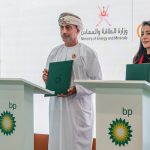
ENV-KUWAIT-SUSTAINABLITYKuwait strengthens environmental sustainability through strategic initiativesBy Zahra Al-Kadhmi

HLT-KUWAIT-SURGERYKuwait advances health sector with robotic, remote surgeryBy Mohammad Al-Moseb

Saudi Arabia’s Voluntary Carbon Market Fuels the Shift to a Low-Carbon

Under UAE President’s directives, UAE launches urgent relief response for Ghana flood victims


Amman, July 1 (Petra) — The agricultural sector reached a record
milestone in the first quarter of 2026, contributing 6.1 percent to
the Kingdom’s gross domestic product (GDP), Agriculture Minister Saeb
Khraisat said on Wednesday.
Commenting on figures released by the Department of Statistics,
Khraisat told the Jordan News Agency (Petra) that the agricultural
sector recorded the highest growth rate among all economic
activities, expanding by 6.8 percent at constant prices compared with
the first quarter of 2025, underscoring its growing role in
supporting the national economy.
He noted that the national economy grew by 2.9 percent during the
first quarter of 2026, up from 2.7 percent in the corresponding
period last year, while agriculture made one of the strongest
contributions to that growth.
Khraisat said the sector accounted for 0.40 percentage points of the
overall 2.9 percent GDP growth, ranking second only to manufacturing
in its contribution to economic expansion and reflecting
agriculture’s increasing importance as a driver of national growth.
He attributed the sector’s performance to the implementation of the
Economic Modernization Vision and the 2026-2029 Executive Program, as
well as government policies carried out by the Ministry of
Agriculture in partnership with the private sector and farmers to
boost productivity, improve the efficient use of natural resources,
and expand export markets for Jordanian agricultural products.
He said the ministry’s measures include implementing the agricultural
calendar, providing subsidized agricultural financing, encouraging
the adoption of modern agricultural technologies, supporting
agro-industries that rely on local inputs, and promoting agricultural
exports through air and sea freight.
Khraisat said the ministry will continue implementing its strategic
plans to strengthen national food security and enhance the
competitiveness of Jordanian agricultural products in local and
international markets, contributing to higher farmers’ incomes,
creating employment opportunities, and supporting sustainable
economic development.
He added that the sector’s performance reinforces agriculture’s
position as one of the Kingdom’s key engines of economic growth,
stressing that investment in agriculture is an investment in food
security as well as economic and social development. He also praised
Jordanian farmers for their role in achieving these results.
//Petra// AJ