Saudi Arabia’s Voluntary Carbon Market Fuels the Shift to a Low-Carbon

Under UAE President’s directives, UAE launches urgent relief response for Ghana flood victims

Combating Desertification and Drought: Qatar a Model in Preserving Natural Resources, Establishing Environmental Stability

UAE allocates US$30 million for emergency humanitarian response in El Obeid, calls for civilian protection, safe humanitarian aid access in Sudan

Amman, July 22 (Petra) – The Food and Agriculture Organization of the
United Nations (FAO), in cooperation with the Jordan Valley Authority
(JVA) and the Embassy of the Netherlands in Jordan, launched
Wednesday the implementation of the Mapping Irrigation Potential and
Needs (IRMA) initiative in Jordan to support sustainable irrigation
planning and improve agricultural water management.
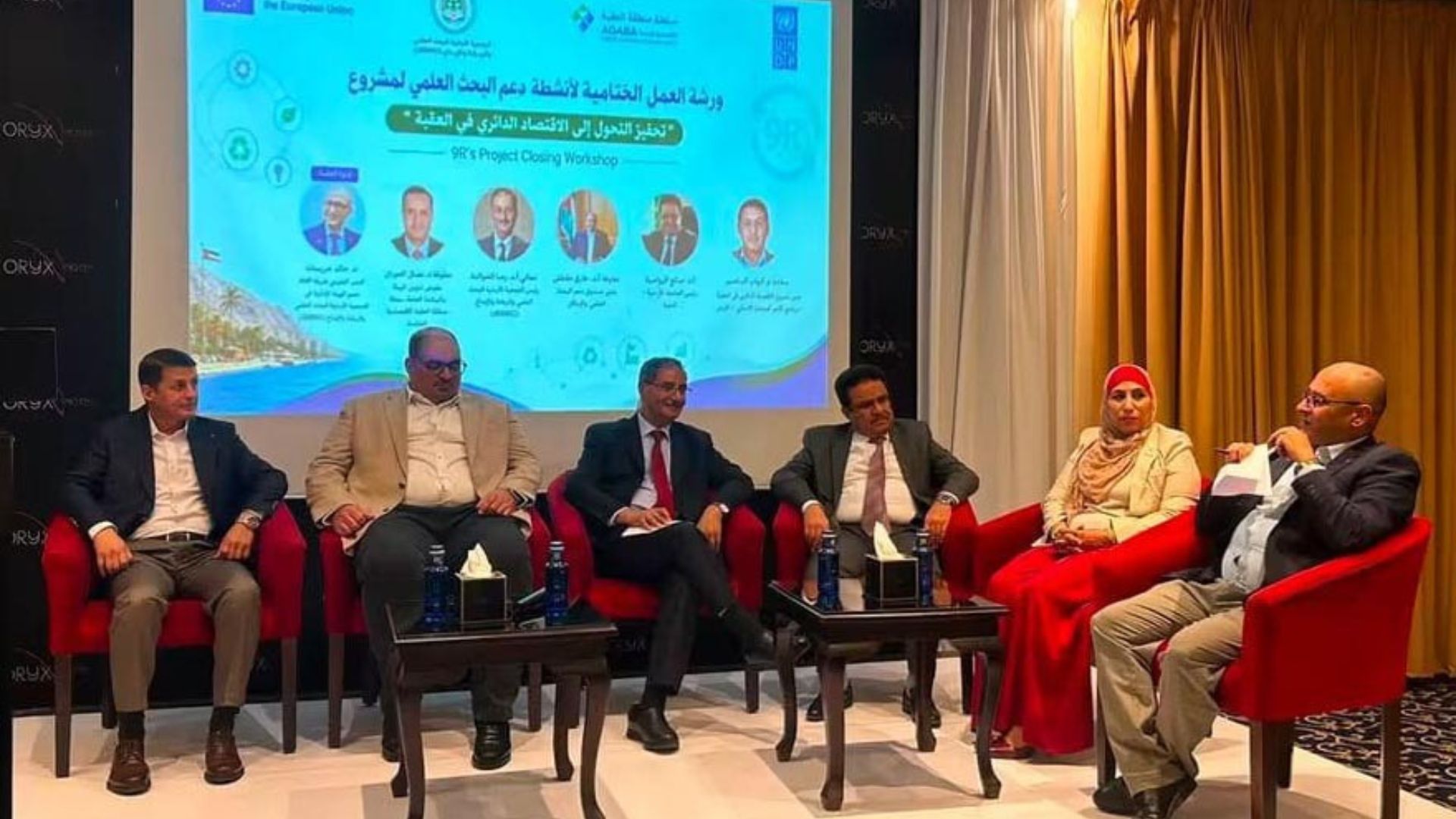
The launch took place during a two-day national workshop in Amman,
held with support from the Regional Water Scarcity Initiative (WSI)
Program, which assists nine countries across the Near East and North
Africa in addressing water scarcity through sustainable water
management and improved agricultural water governance. The program is
funded by the governments of Sweden and the Netherlands.
The workshop brought together representatives from the Ministry of
Water and Irrigation, the JVA, the Water Authority of Jordan, the
Ministry of Agriculture, development partners and FAO technical
experts to explore how the IRMA approach can support evidence-based
decisions on irrigation development in Jordan.
FAO developed IRMA as a multi-criteria decision-support framework
that assesses irrigation potential and needs by combining scientific
data and analysis. The approach uses artificial intelligence to map
existing irrigated areas and evaluates three main factors: the
biophysical suitability of land for irrigation development,
irrigation needs in the context of sustainable development
priorities, and the benefits of irrigation expansion.
The initiative aims to identify areas where irrigation development is
technically feasible, economically viable, and aligned with broader
food security and development objectives.
For Jordan, one of the world’s most water-scarce countries, improving
irrigation efficiency is a critical priority. Agriculture consumes a
significant share of the Kingdom’s limited water resources, making
improved water productivity essential to strengthening water and food
security.
Through the Regional WSI Program, FAO is supporting Jordan in
improving irrigation water productivity, while tools such as IRMA
will help decision-makers better allocate resources, prioritize
investments and plan future irrigation development.
Opening the workshop, FAO Acting Representative in Jordan Paul Opio
said increasing water scarcity, climate change impacts and rising
demand require innovative and science-based solutions.
“Through the IRMA initiative, FAO is supporting the Government of
Jordan with a practical decision-support tool that integrates
geospatial, climate, water and agricultural data to strengthen
irrigation planning, prioritize investments, improve water
productivity and promote sustainable management of the country’s
limited water resources,” he said.
During the workshop, participants were introduced to the IRMA
methodology, international best practices and potential applications
in Jordan to support investment prioritization and sustainable
agricultural development.
Secretary-General of the JVA, Hisham Haisa, said improving irrigation
water-use efficiency is a national priority to address Jordan’s water
scarcity challenges and enhance water and food security.
He noted that IRMA will contribute to more efficient water management
by using artificial intelligence to support evidence-based planning
and investment decisions, while promoting sustainable agricultural
development.
Haisa stressed the importance of strengthening cooperation with FAO
and benefiting from international expertise to improve water
productivity and advance sustainable irrigation management. He also
highlighted the need to expand treated wastewater reuse, adopt water
footprint approaches and prioritize limited water resources for
high-value crops to maximize economic returns.
Speaking on behalf of the FAO Regional Office for the Near East and
North Africa, Regional WSI Program Coordinator Mohamed Abdallah said
addressing water scarcity requires cooperation among institutions and
partners.
He said the Regional WSI Program, led by FAO with support from Sweden
and the Netherlands, brings together international organizations
including UNICEF, ESCWA, ICARDA, IWMI and ICBA to provide
complementary expertise and work closely with national institutions.
“Supporting the implementation of IRMA in Jordan is a natural
extension of that partnership, and its success will rest on national
ownership and close technical collaboration with the Jordan Valley
Authority and its national partners,” Abdallah said.
During the workshop, FAO experts presented the four main components
of the IRMA approach: mapping irrigated areas using artificial
intelligence, assessing biophysical suitability, evaluating
development needs and measuring the benefits of irrigation
development.
The sessions also included a demonstration of the IRMA digital
platform, presentations on international applications and lessons
learned, and discussions on Jordan’s irrigation sector priorities and
future development needs.
The workshop marks a new phase in the longstanding partnership
between FAO and the Jordanian government to enhance water security,
improve agricultural water management and strengthen climate
resilience through technical cooperation, innovation and capacity
building.
//Petra// AJ