Saudi Arabia’s Voluntary Carbon Market Fuels the Shift to a Low-Carbon

Under UAE President’s directives, UAE launches urgent relief response for Ghana flood victims

Combating Desertification and Drought: Qatar a Model in Preserving Natural Resources, Establishing Environmental Stability

UAE allocates US$30 million for emergency humanitarian response in El Obeid, calls for civilian protection, safe humanitarian aid access in Sudan

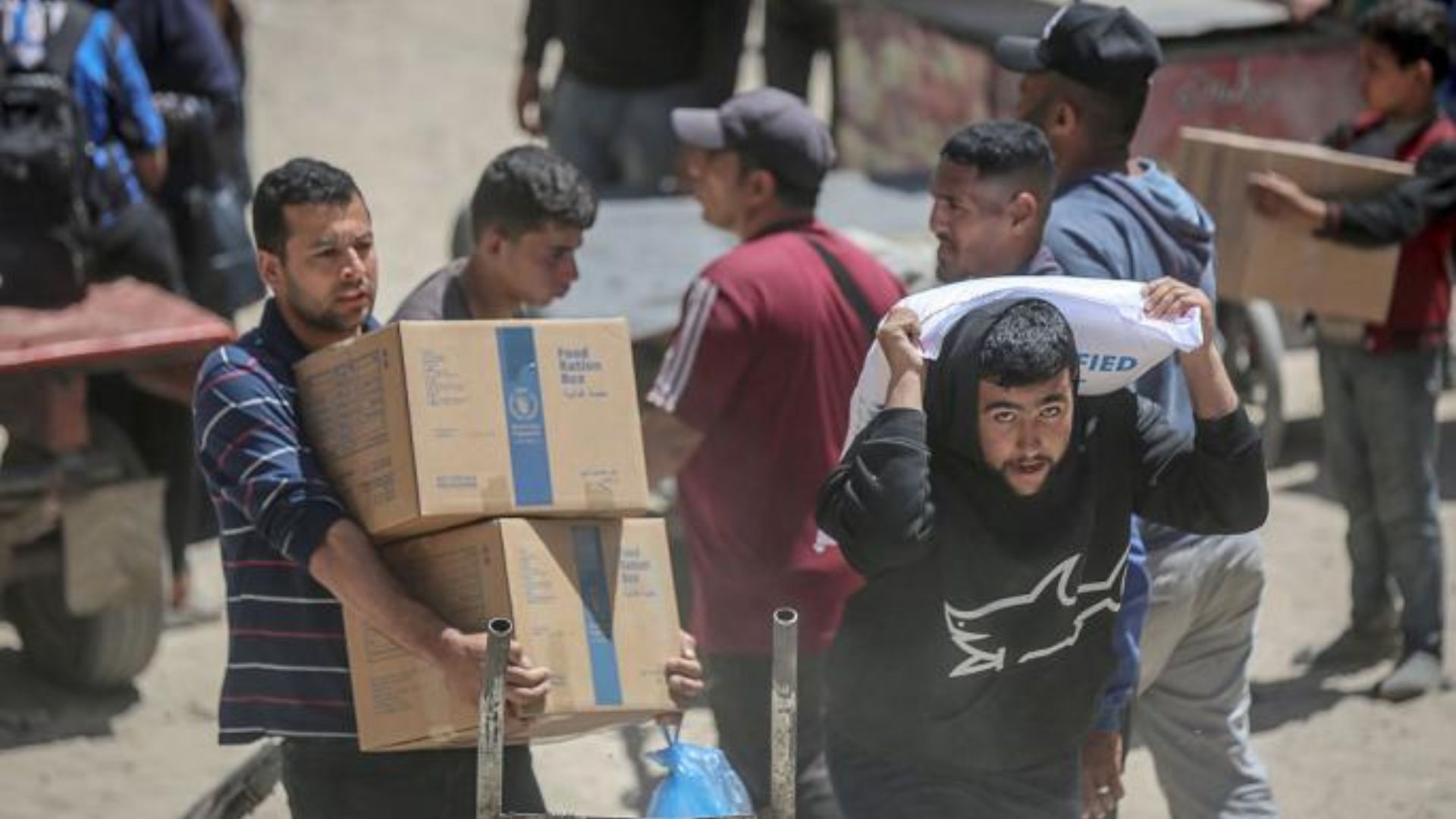
Amman, July 24 (Petra)– The United Nations World Food Programme
(WFP) warned on Friday that it will be forced to make deeper cuts to
its humanitarian assistance in the Gaza Strip unless it receives
urgent additional funding, as nearly 70 percent of the enclave’s
population relies on food aid to meet basic needs.
The warning comes days after the latest Integrated Food Security
Phase Classification (IPC) report projected that more than two-thirds
of Gaza’s population could face acute hunger by the end of the year,
amid declining humanitarian aid flows caused by funding shortages.
According to the WFP, most of Gaza’s residents remain dependent on
humanitarian assistance after two years of war, repeated
displacement, and severe restrictions on the delivery of aid, the
Palestinian news agency WAFA reported.
Speaking via video link from Rome, a WFP spokesperson said the agency
would be forced to reduce assistance to people who depend on it for
survival unless additional funding is secured.
The WFP requires more than $420 million to sustain its operations in
Gaza and the West Bank through the end of the year.
The spokesperson said the agency has already begun scaling back its
assistance. Cash support for 75,000 people was reduced by 25 percent
in July, while food rations for around 220,000 households were cut in
half. He warned that more extensive reductions will take effect by
October if the funding crisis persists.
The WFP also noted that rising operational costs, driven by the war
involving Iran, higher oil prices, and disruptions to global supply
chains, have added to its financial pressures. However, it said the
primary cause of the current funding shortfall is declining donor
attention as international priorities shift toward other global
crises.
//Petra// MF