Saudi Arabia’s Voluntary Carbon Market Fuels the Shift to a Low-Carbon

Under UAE President’s directives, UAE launches urgent relief response for Ghana flood victims

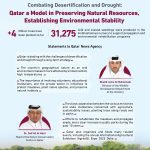
Combating Desertification and Drought: Qatar a Model in Preserving Natural Resources, Establishing Environmental Stability
UAE allocates US$30 million for emergency humanitarian response in El Obeid, calls for civilian protection, safe humanitarian aid access in Sudan


The Ministry of Health, through the General Directorate of Planning and Policies and in cooperation with the World Health Organization (WHO), held on Sunday its annual planning meeting, marking the launch of work on approving the National Health System Recovery Strategy for Sudan for the period 2026–2030.The meeting was held under the patronage of Minister of Health Dr. Haitham Mohamed Ibrahim, with the participation of Undersecretary of the Ministry of Health Dr. Ali Babiker Sid Ahmed, Undersecretary of the Ministry of National Education Dr. Ahmed Khalifa Omar, directors-general of state health ministries, directors of general and subsidiary directorates, and affiliated ministry units. It is being held at Al Salam Rotana Hotel from 27 to 29 July 2026. Minister of Health Dr. Haitham Mohamed Ibrahim announced the launch of the national strategy, commending the Sudanese Armed Forces and supporting forces for their victories and expressing appreciation to all those who contributed to preparing the strategy.He described the occasion as a historic milestone in the path of the health system, affirming the transition from the response phase to the recovery stage, with peace, justice, and resilience representing the pillars of the strategy. The Minister praised the resilience of the health sector during the war, noting that the strategy covers all Sudanese states through interventions that take into account the specific circumstances of each state. He expressed hope that the completion of its implementation would be celebrated after five years, paving the way for the development and establishment of a strong health system. For his part, WHO representative Dr. Nassim Korbi congratulated the Ministry of Health on the launch of the strategy approval process, affirming that it reflects national and international commitment to supporting recovery efforts and developing the health system. He explained that the war affected health services, and that the strategy represents a joint platform for strengthening primary healthcare, achieving universal health coverage, and supporting health security. He affirmed the organisation’s continued commitment to supporting Sudan on its path towards a recovered health system. In his remarks, Acting Director-General of Health in Khartoum State, Dr. Mahmoud Al-Badri, paid tribute to the martyrs, wished a speedy recovery for the wounded and the safe return of detainees, and expressed his pleasure at participating in this national event. He affirmed Khartoum State’s commitment to contributing to health system reform, revealing that the state’s strategy was completed in January 2026 and implementation had begun. He pointed to the special nature of the state due to its population density and the presence of referral centres, stressing full coordination with the Ministry of Health and all states to implement the strategy on the ground. Director-General of Planning and Policies, Dr. Al-Moghira Al-Amin Jad Al-Seed, affirmed that the strategy represents the culmination of the Ministry of Health’s efforts at various levels and reflects the transition from response to recovery in a scientific and practical manner, with the participation of all relevant stakeholders. He explained that the Sudanese people are the central focus of the strategy, thanking the technical committees and all participants, and expressing hope that the plan will contribute to advancing healthcare and achieving citizens’ aspirations.BH/BH