Saudi Arabia’s Voluntary Carbon Market Fuels the Shift to a Low-Carbon

Under UAE President’s directives, UAE launches urgent relief response for Ghana flood victims
Combating Desertification and Drought: Qatar a Model in Preserving Natural Resources, Establishing Environmental Stability
UAE allocates US$30 million for emergency humanitarian response in El Obeid, calls for civilian protection, safe humanitarian aid access in Sudan

Amman, July 29 (Petra) — Jordan and Rwanda explored ways to expand
cooperation between investors operating in Jordan’s free zones and
their Rwandan counterparts.
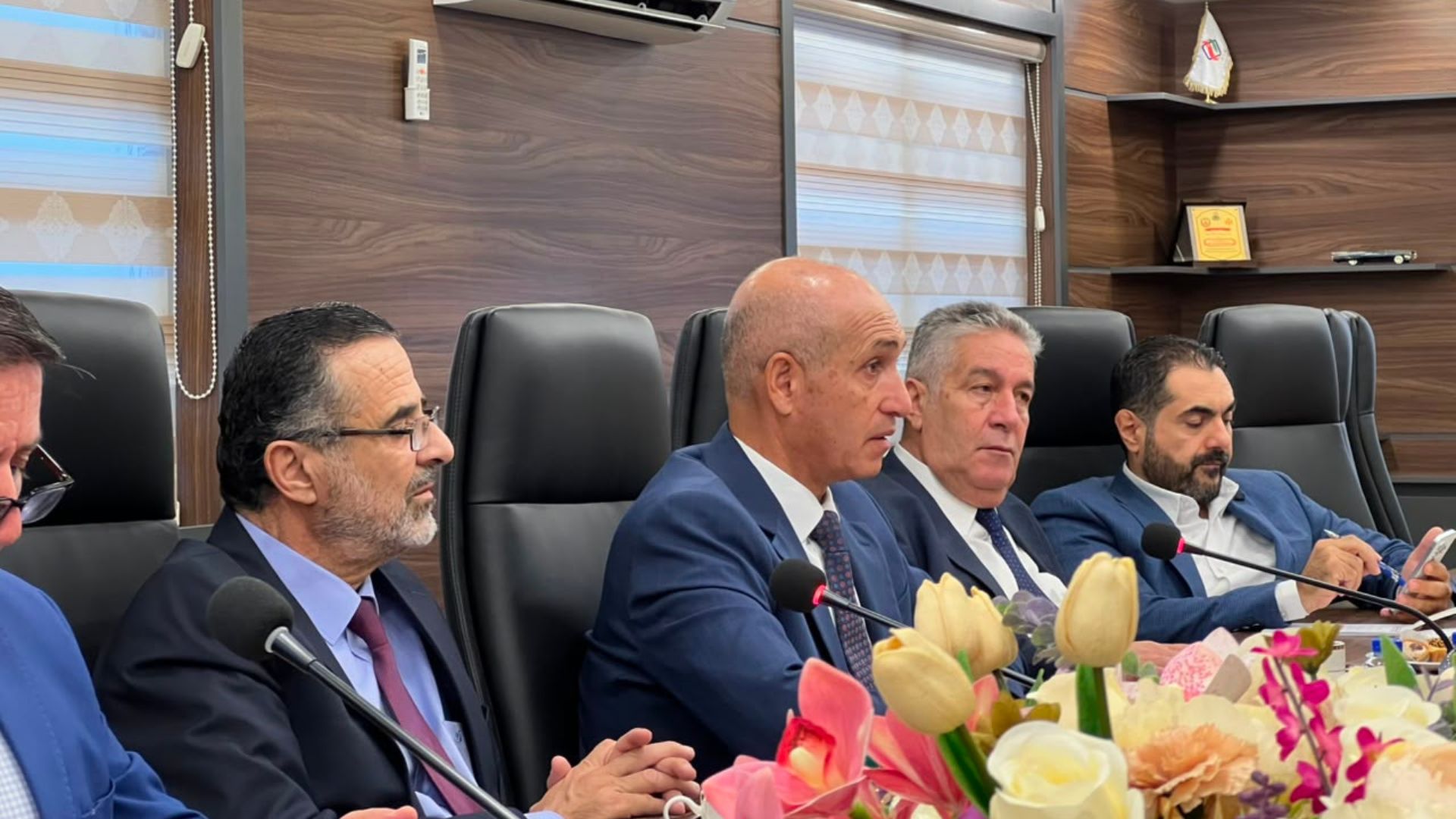
In a meeting with Rwandan Ambassador to Jordan James Ngango on
Wednesday, Vice chairman of the Jordan Free Zones Investors
Commission (JFZIC), Amer Jayyousi discussed investment opportunities
across industrial, commercial and service sectors, according to a
commission statement.
Jayyousi, speaking in the presence of JFZIC’s several board members,
said the meeting gave Jordanian investors “direct insight” into
Rwanda’s market, including investment legislation, production costs,
energy, telecommunications, land and construction, as well as fund
transfer mechanisms and foreign investment protections.
He said Jordanian investors bring expertise in sectors with “strong
potential” in Rwanda, including mining and crushing equipment
industries, electrical manufacturing, logistics and storage services,
food and agricultural industries, and information technology
services.
Additionally, Jayyousi called for “broader” meetings between
Jordanian investors and Rwandan private-sector and investment
officials to facilitate information exchange, address practical
questions and explore joint ventures or the establishment of branches
for Jordanian companies in Rwanda.
For his part, Ngango said Jordan’s “well-established” institutions
and “advanced” industrial, investment and regulatory expertise make
cooperation with the kingdom a priority for Rwanda, which is seeking
to benefit from Jordanian expertise, knowledge transfer and
investment.
Referring to “high-level” attention for bilateral relations, he cited
role of King Abdullah II’s 2024 visit to Rwanda in strengthening ties
and opening the door to expanded economic and trade cooperation.
Ngango said Rwanda has streamlined its business registration
procedures, which allowed investors to register a company
electronically from abroad within about six hours, either as a wholly
owned entity or through partnership with a local investor.
He said Rwanda offers tax incentives and exemptions that vary by
project size and nature, sometimes extending for years for qualifying
projects, adding that Rwanda needs investment and technical and
industrial expertise, not just capital.
Rwanda has two special economic zones, Ngango said: One in the
capital, Kigali, covering manufacturing, storage, information
technology and technical education, and another focused on
agricultural processing, pharmaceuticals, textiles and green energy.
He pointed to additional opportunities in financial and banking
services, agricultural processing, pharmaceuticals, and mining and
energy, noting that Rwanda’s market, though limited in size, serves
as a gateway to the East African Community, a bloc of about 200
million people.
On future steps, both sides agreed to maintain contact and explore
holding a broader meeting bringing together Jordanian investors with
Rwandan private-sector and investment representatives.
This vision also aims to organize a visit by a delegation of
Jordanian investors to explore opportunities and build direct ties
with Rwanda’s business community.
//Petra// NQ