ENV-KUWAIT-SUSTAINABLITYKuwait strengthens environmental sustainability through strategic initiativesBy Zahra Al-Kadhmi

HLT-KUWAIT-SURGERYKuwait advances health sector with robotic, remote surgeryBy Mohammad Al-Moseb

Saudi Arabia’s Voluntary Carbon Market Fuels the Shift to a Low-Carbon

Under UAE President’s directives, UAE launches urgent relief response for Ghana flood victims

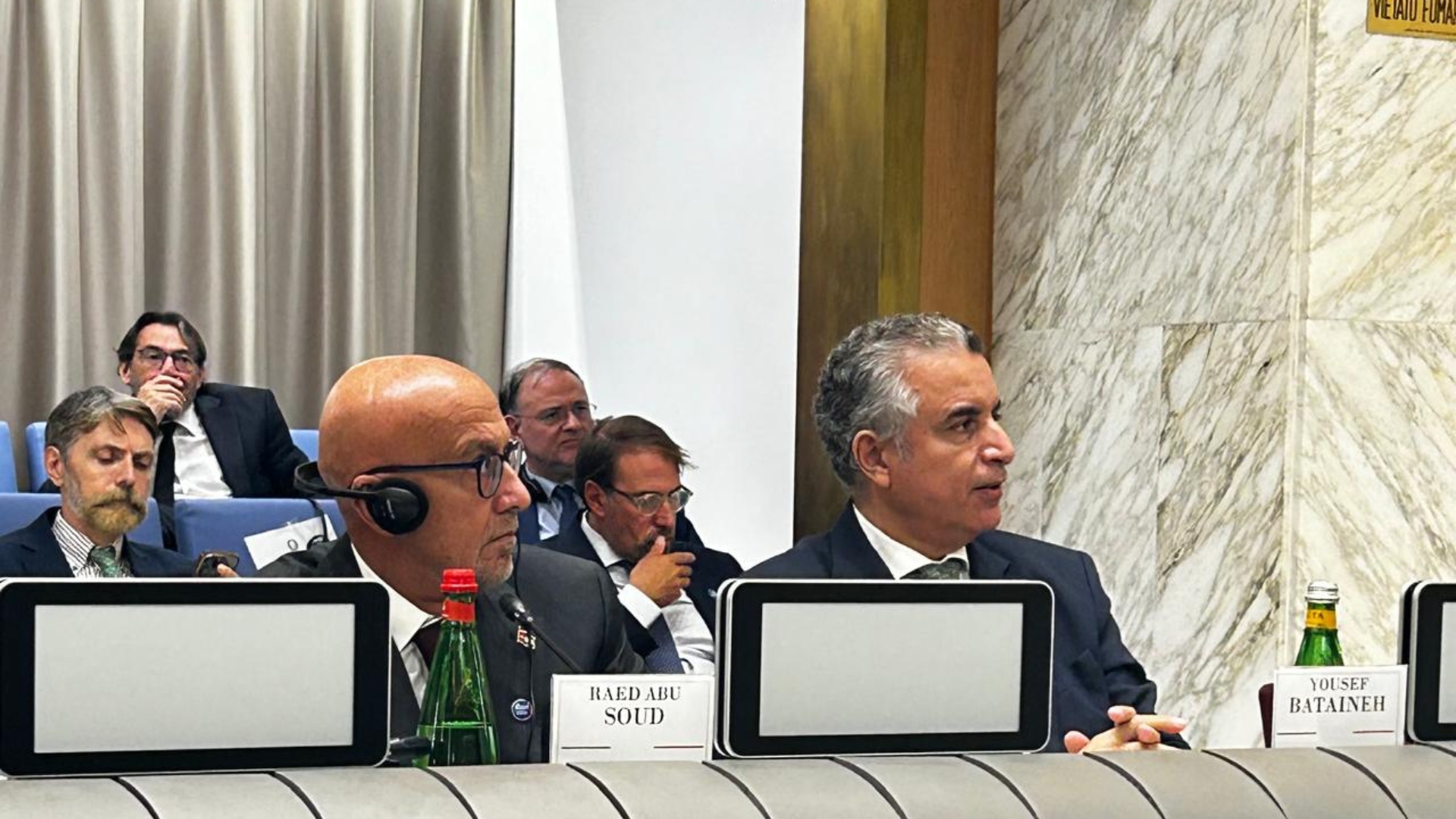
Amman, Sept. 29 (Petra) – Minister of Water and Irrigation Raed Abu
Soud called for “stronger” Mediterranean cooperation on water
security, saying water should not be used as a political tool or
monopolized by any single country.
Speaking at the second Union for the Mediterranean (UfM) Ministerial
Meeting on Water in Rome, Abu Soud said water security is a “shared
regional responsibility” amid mounting geopolitical pressures,
calling for practical mechanisms to strengthen cooperation on
sustainable water management.
On attendance, the event brought together representatives from 43 UfM
member states, including European Commissioner for Environment, Water
Resilience and a Competitive Circular Economy Jessika Roswall,
Italian Foreign Minister Antonio Tajani, and UfM Acting
Secretary-General Fadi Hajali.
Abu Soud said Jordan supports a regional framework covering
transboundary surface and groundwater resources, noting that such
resources are directly linked to food security, energy, public
health, economic development, and the environment.
He said Jordan remains “committed” to translating the Mediterranean
Water Declaration into practical measures, stressing the need for
cooperation on water governance, financing, knowledge-sharing, and
sustainable investment.
Abu Soud noted that Jordan is among the world’s most water-scarce
countries and has made water security a national priority through
efforts to diversify conventional and non-conventional water sources,
reduce water losses, expand treated wastewater use, protect
groundwater and surface-water quality, and increase private-sector
participation in water management.
He also cited the National Water Carrier Project as part of Jordan’s
efforts to secure additional “non-conventional” water resources.
The minister called for “practical” responses to water scarcity,
drought, climate change, and flood risks, as well as fair access to
water and sanitation services. He also highlighted cooperation in
digital transformation and the water-food-energy-environment nexus.
Abu Soud said Jordan supports wider use of treated wastewater and
other non-conventional sources to reduce pressure on freshwater
supplies and support rural economic development.
Additionally, he added that Jordan has sought to align its water
policy with international legal principles on equitable and
reasonable use and the prevention of harm to other states, including
through its accession to the 1992 UN Convention on the Protection and
Use of Transboundary Watercourses and International Lakes.
He said future regional cooperation should focus on three tracks:
knowledge and data exchange, governance and cooperation, and
sustainability and investment.
In turn, Tajani said Italy is working to strengthen regional dialogue
and cooperation and views water as a strategic issue for the future
of Mediterranean countries. He added that Italy is committed to
helping regional states design and finance water-security projects.
Roswall said the Mediterranean is among the regions most exposed to
water scarcity and climate impacts, adding that cooperation and
adequate financing are essential to improving resilience.
Hajali said Mediterranean countries face combined pressures from
water scarcity, climate change, socioeconomic and demographic
challenges, and geopolitical instability, and described the Rome
meeting as a step toward turning political commitments into practical
results.
The ministerial meeting was held ahead of the Euro-Mediterranean
Water Forum.
During discussions, participants agreed to focus future cooperation
on water governance, the water-energy-food-ecosystems nexus,
financing and investment, digitalization, and water-climate issues.
The delegates also adopted three strategic documents to guide
regional cooperation in the sector.
//Petra// AO