ENV-KUWAIT-SUSTAINABLITYKuwait strengthens environmental sustainability through strategic initiativesBy Zahra Al-Kadhmi

HLT-KUWAIT-SURGERYKuwait advances health sector with robotic, remote surgeryBy Mohammad Al-Moseb

Saudi Arabia’s Voluntary Carbon Market Fuels the Shift to a Low-Carbon

Under UAE President’s directives, UAE launches urgent relief response for Ghana flood victims

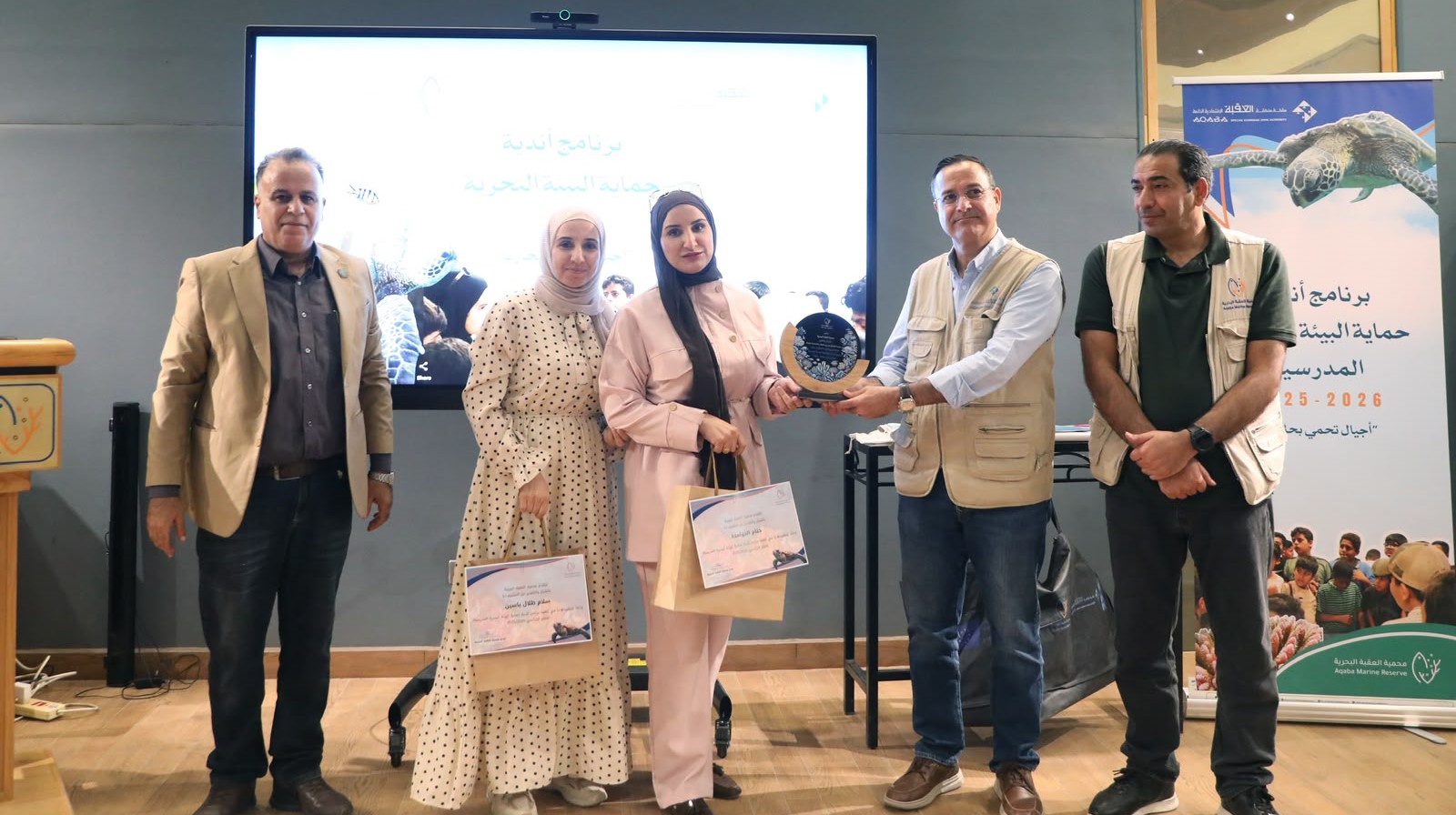
Aqaba, Sept. 29 (Petra) — Commissioner for Environment and Public
Safety Affairs at the Aqaba Special Economic Zone Authority (ASEZA)
Nedal Al-Ouran on Tuesday honored the marine environmental protection
clubs for the 2025/2026 academic year at the Aqaba Marine Reserve
Visitor Center.
The clubs were implemented by the reserve in cooperation with the
Aqaba Directorate of Education, with the participation of 18 schools,
around 600 male and female students, and 36 male and female
supervisors.
Al-Ouran said investing in students’ awareness constitutes a
fundamental pillar of efforts to protect the marine environment,
stressing the importance of partnership with the education sector in
building a generation aware of the value of natural resources in the
Gulf of Aqaba and capable of translating environmental knowledge into
behavior, initiatives, and practical practices.
He added that the marine environmental protection clubs program
embodies a participatory approach to environmental awareness by
involving students and supervisors in continuous activities and
providing tools and content that help schools implement environmental
initiatives suited to their environment and students’ needs.
For his part, Aqaba Marine Reserve Director Nasser Al-Zawaideh said
the program focuses on empowering school clubs and providing them
with the knowledge and tools needed to carry out sustained
environmental activities, noting that the reserve trained 36 male and
female supervisors and provided a package of educational and
interactive materials that supported the clubs’ work throughout the
academic year.
He explained that documentation and evaluation results showed 17
clubs implemented five or more activities, while six clubs carried
out more than 15 activities, alongside documentation of 63
participations or links via social media, reflecting the broad scope
of interaction with the program.
Al-Zawaideh noted that the program included lectures, educational
games, competitions, challenges, artwork, environmental exhibitions,
and recycling activities, as well as school radio broadcasts, visits
to the reserve’s visitor center, participation in environmental
occasions and days, and use of the “Because It Is Our Sea” platform
to provide awareness and educational content.
He noted that the evaluation results from male and female supervisors
showed a high rating for the program’s performance, with all 18
supervisors rating the reserve’s role and club coordinators as
excellent, while 15 of them rated the level of interaction with the
reserve as high; the same number believed the program’s environmental
and awareness impact was strong and clear, and 17 supervisors
reported that the clubs achieved a high or full level of performance.
Al-Zawaideh pointed out that the reserve prepared 30 proposed
environmental radio messages on the marine environment, coral reefs,
marine organisms, and ways to protect them, aiming to enhance
students’ role in conveying environmental messages to their peers and
turning them from recipients of information into participants in
spreading it.
The ceremony included a presentation of the program’s key stages and
outputs, a film documenting some of the clubs’ experiences and the
activities carried out by the schools, and the honoring of
participating schools, supervisors, and supervisors in appreciation
of their efforts.
//Petra// AF