Jordan’s Q2 2026 GDP Expands 3.0%, Outperforming Regional Headwinds, International Forecasts

ENV-KUWAIT-SUSTAINABLITYKuwait strengthens environmental sustainability through strategic initiativesBy Zahra Al-Kadhmi

HLT-KUWAIT-SURGERYKuwait advances health sector with robotic, remote surgeryBy Mohammad Al-Moseb

Saudi Arabia’s Voluntary Carbon Market Fuels the Shift to a Low-Carbon

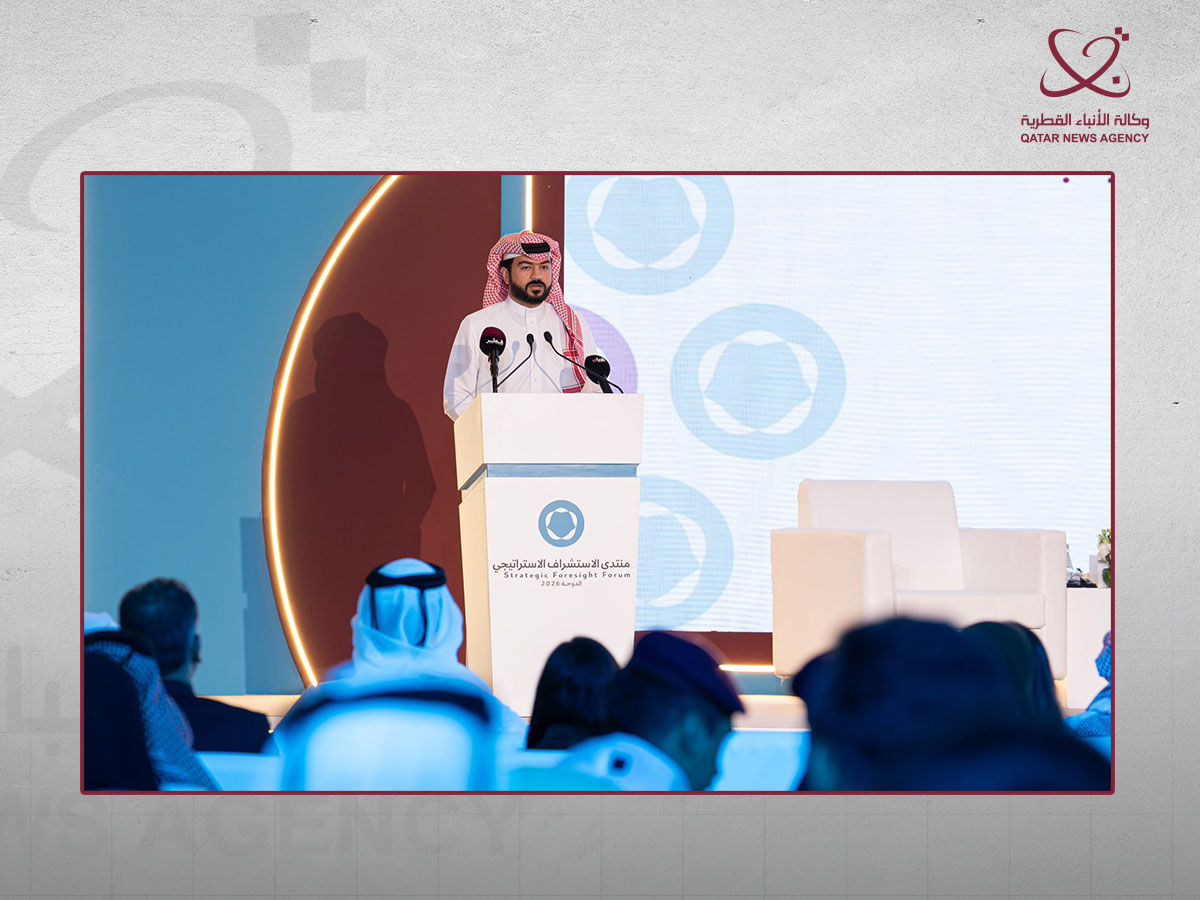
Doha, October 12 (QNA) – The Strategic Foresight on Global Youth Competencies and Lifelong Learning Forum kicked off in Doha on Monday.
This event is being hosted by the State of Qatar from Oct. 12 to 15 in collaboration with the Islamic World Educational, Scientific and Cultural Organization (ICESCO).
Assistant Undersecretary for Youth Affairs at Qatar’s Ministry of Youth and Sports Ahmed Mohammed Al Harami said that hosting the forum demonstrates Qatar’s commitment to empowering young people and engaging them in shaping their future policies in alignment with Qatar National Vision 2030 and the National Youth Policy.
Al Harami added that the forum is part of the executive program for the aforementioned policy and reflects several of its key pillars, particularly education, the full and effective participation of young people, information technology, and social media.
He emphasized that the Ministry is committed to providing a platform for young people from member states to express their own perspectives and help advance practical visions for the future of education and work.
In recorded remarks, ICESCO Director-General Dr. Salem bin Mohammed Al Malik said he was profoundly grateful for the State of Qatar’s commitment to caring for young people, along with its efforts to invest in knowledge, innovation, and capacity building, as demonstrated by its hosting of the forum.
Young people are a force in the present and core partners in charting the future, Al Malik underlined, noting that the challenge lies not only in identifying talent but also in ensuring that no young person is left out of learning, participation, and productive work. This challenge is becoming more pressing amid rapid changes in the labor market, he said.
Al Malik further explained that by 2030, 170 million new jobs are expected to be created, while 92 million jobs are projected to be displaced, and almost 39% of current core skills are expected to change.
The responsibility is to empower young people to engage in lifelong learning, think critically and outside the box, remain adaptable, develop leadership skills, and leverage technology in an informed and responsible manner, Al Malik said.
Al Malik emphasized that ICESCO has for years been among the international organizations at the forefront of institutionalizing strategic foresight as part of its work, adding that in 2020, it established a specialized center for strategic foresight, placing future-building at the heart of its new vision.
He affirmed that the organization launched the ICESCO Year of Youth, which provided a framework for dozens of initiatives aimed at bolstering young people’s capabilities across its member states and fostering their creativity and participation in technology, innovation, culture, peace, and dialogue.
ICESCO also launched its Young Professionals Program, which gives young professionals the opportunity to work and train for two years within ICESCO’s sectors and specialized centers, gaining direct experience in international work and program and project management.
In its second cohort, 13 young men and women from 11 countries were selected from approximately 7,000 applicants, reflecting the strong interest the program has generated among young people.
For his part, President of Prince Mohammed bin Fahd University in the Kingdom of Saudi Arabia, Dr. Issa Bin Hassan AlAnsari, said young people’s responsibilities go beyond adapting to a changing world, adding that they are expected to be partners in advancing their country’s vision, contribute to the development of their society and economy, address issues that transcend borders, and help achieve the Sustainable Development Goals (SDGs) in their complex economic, social, and environmental dimensions.
AlAnsari stressed that empowering young people is of substantial importance to keep learning as knowledge evolves, think outside the box to help remedy intractable problems, make choices amid a growing range of alternatives, and hold fast to their values and identity even as their horizons expand.
For his part, Director of the Youth Affairs Department at the Ministry of Sports and Youth, Fawaz Abdullah Al Misfari, told the Qatar News Agency (QNA) that the forum brings together youth and government delegations from 19 ICESCO member states, represented by more than 30 young men and women aged 18 to 30.
The forum also features 95 Qatari young people who graduated from the Ministry’s programs or are affiliated with government entities, alongside a pantheon of international speakers and experts, Al Misfari explained, noting that this broad participation provides an international platform for sharing experiences and perspectives on future challenges and opportunities related to youth, education, and the labor market.
He wished all participants success, highlighting that the agenda was designed to ensure multiple forms of youth participation, ranging from open discussions and roundtables to practical workshops and interactive labs.
The event also features an interactive youth lab titled “A Message from 2040”, which enables young people to apply futures-thinking tools and envision scenarios and transformations the world may undergo in the coming years.
Overall, the forum convenes renowned young leaders, policymakers, and international experts from ICESCO member states. It focuses on equipping participants with the tools and methodologies required for strategic foresight, scenario planning, and data-driven decision-making.
The forum conspicuously aims to strengthen their ability to interpret emerging trends and anticipate future transformations and their implications, while developing their critical thinking, problem-solving, effective communication, teamwork, emotional intelligence, leadership, and influence.
The gathering also focuses on anticipating the future of education and culture from the perspective of young people and involving them in developing visions that can help craft more flexible and inclusive educational and cultural models that are better equipped to meet the needs of generations to come. Other priorities include fostering a culture of lifelong learning and encouraging creative thinking and innovation to develop practical, sustainable solutions to future challenges.
The forum seeks to forge a network of young leaders that enables participants from different countries to share ideas, experiences, and best practices while broadening opportunities for cooperation and mutual learning.
These efforts are intended to support more effective youth participation in discussions on issues and policies that shape their future.
The forum is being organized in cooperation with a range of national and international partners, including the Qatar National Commission for Education, Culture and Science, the Arab Youth Council, the National Planning Council, Prince Mohammad Bin Fahd University in Saudi Arabia, Qatar University (QU), Hamad Bin Khalifa University (HBKU), the Qatar Scouts and Guides Association, the Qatar Scientific Club, the Entrepreneurs Club, Qatar Youth Hostels, and the Friends of the Environment Center.
Qatar’s Ministry of Sports has sought to leverage its hosting of the forum to strengthen international youth cooperation frameworks by inviting several countries that have bilateral agreements with Qatar on youth affairs.
This approach aims to translate those agreements into practical avenues for cooperation and the exchange of expertise and experience. (QNA)