Jordan’s Q2 2026 GDP Expands 3.0%, Outperforming Regional Headwinds, International Forecasts
ENV-KUWAIT-SUSTAINABLITYKuwait strengthens environmental sustainability through strategic initiativesBy Zahra Al-Kadhmi

HLT-KUWAIT-SURGERYKuwait advances health sector with robotic, remote surgeryBy Mohammad Al-Moseb

Saudi Arabia’s Voluntary Carbon Market Fuels the Shift to a Low-Carbon

Amman, Oct. 19 (Petra) — Preliminary studies of the Abu Khashiba
copper mining project in southern Jordan have identified mineral
resources estimated at between 9.4 million and 20.9 million tons of
ore, depending on the assessment method, as exploration continues and
work progresses on a pilot processing plant.
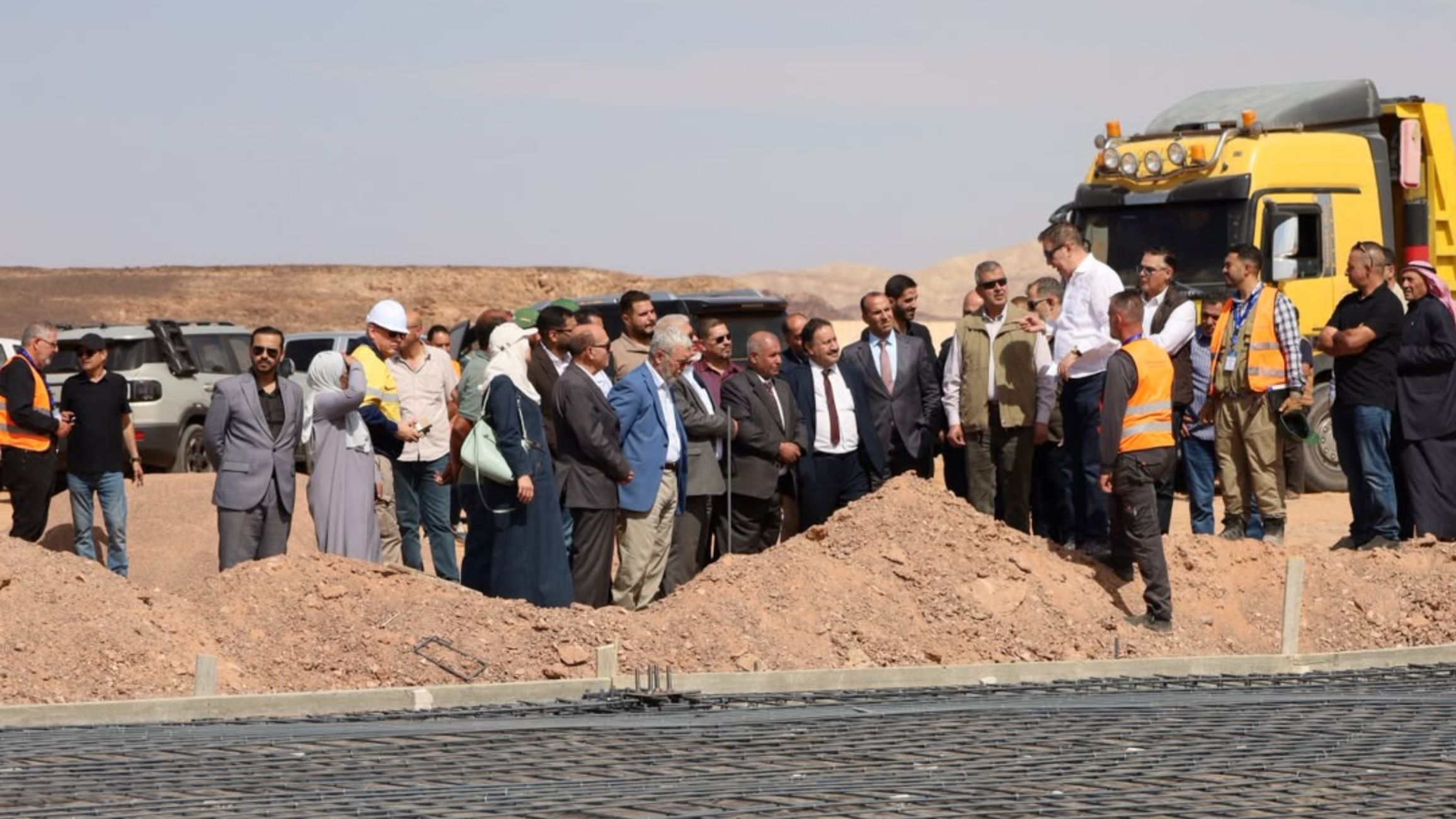
The figures were presented Monday during a field visit by Minister of
Energy and Mineral Resources Saleh Kharabsheh and members of the
energy and mineral resources committees of the Senate and Lower House
to the project, which is being developed by Wadi Araba Minerals
Company.
The visit began with a technical briefing at the company’s field
camp, covering geological studies, exploration and drilling results,
mineral resource estimates, and plans to develop the project and
establish processing facilities for copper and associated minerals.
Kharabsheh described Abu Khashiba as a promising strategic mining
project that could help Jordan make greater use of its mineral
resources, increase the mining sector’s contribution to gross
domestic product, attract investment and create jobs in line with the
Economic Modernization Vision.
He highlighted the project’s potential economic returns, including
government revenues, direct and indirect employment, and increased
activity in mining-related industries and services, particularly in
southern Jordan.
The minister stressed the importance of progressing systematically
from exploration to mineral resource assessment, economic feasibility
studies and eventual commercial production, in accordance with
internationally recognized scientific and technical standards.
He said the copper exploration and development agreement signed with
Wadi Araba Minerals Company was the first of its kind in Jordan,
emphasizing the need to continue exploration and development
activities under the implementation agreement and approved work
plans.
Wadi Araba Minerals Company General Manager Hani Asmar presented the
results of the company’s technical work, including geological,
geochemical and geophysical surveys, remote sensing, trenching,
exploratory drilling, laboratory analysis and metallurgical testing
to assess copper and gold mineralization.
Asmar said the company’s internal assessment estimated approximately
20.9 million tons of ore with an average copper grade of 0.38%, while
an independent technical assessment estimated 9.4 million tons at an
average grade of 0.50%, equivalent to approximately 46,000 tons of
copper.
He explained that the figures reflect current study results and that
drilling has so far covered only an initial portion of the basin’s
copper-bearing areas, leaving opportunities for further exploration
and revisions to resource estimates as additional drilling data
become available.
Since the implementation agreement took effect in May, the company
has advanced its exploration program. Work reported for October
includes analysis of 659 geochemical samples, excavation of 53
exploration trenches, drilling of 65 boreholes, and laboratory and
metallurgical tests using different extraction and leaching
techniques. Asmar said the next phase will extend over 24 months and
include drilling more than 120 exploratory boreholes using diamond
core drilling techniques.
The program aims to expand the areas studied, improve
three-dimensional geological models and increase confidence in
mineral resource classifications, ultimately supporting preparation
of a definitive feasibility study.
He added that the company is developing a pilot-scale copper ore
processing plant to test the ore’s technical and metallurgical
characteristics, evaluate processing and extraction efficiency, and
generate operational data for designing a future commercial
production facility.
Preliminary metallurgical tests have produced encouraging results for
copper extraction from oxidized ores, particularly copper-bearing
minerals such as malachite and chrysocolla.
Some laboratory tests achieved extraction rates exceeding 99% under
specific operating conditions, Asmar said, noting that larger-scale
testing remains necessary to verify processing efficiency and
economic feasibility.
The company has also identified sites containing copper ore suitable
for initial extraction, with preliminary estimates indicating
approximately 400,000 tons of ore at an average copper grade of
around 1%. Asmar said these resources could provide an initial basis
for studying pilot operations and potential future expansion.
During the tour, the minister and parliamentary delegation inspected
construction work at the pilot processing plant, including planned
ore stockpiling areas and proposed processing units. They were
briefed on the technical and economic objectives of the pilot
production phase.
The delegation also visited exploration drilling sites in sectors 2
and 3, where members examined diamond core drilling operations and
extracted samples and received explanations of the area’s
mineralization, geological structures and ongoing exploration
programs.
The company also presented preliminary projections of the project’s
economic returns, including government revenues from taxes and other
financial contributions.
According to the company’s initial estimates, the government’s share
of total profits could range from 48% to 50%. The company stressed
that these projections depend on assumptions about production, prices
and costs and will be revised following the completion of final
feasibility studies.
Asmar reaffirmed the company’s commitment to working with local
communities by providing training and employment opportunities,
supporting local suppliers and service providers, and complying with
environmental sustainability and social responsibility requirements.
Senate Energy Committee Chair Farouk Hiyari, for his part, stressed
the importance of expanding mining investment across Jordan. He said
the visit was intended to assess progress on the ground and review
the latest copper and gold exploration activities undertaken by Wadi
Araba Minerals Company.
Hiyari added that developing the mining sector supports the Economic
Modernization Vision’s priorities of increasing value added from
mineral resources, expanding extractive industries and stimulating
economic growth.
//Petra// AJ