Jordan’s Q2 2026 GDP Expands 3.0%, Outperforming Regional Headwinds, International Forecasts
ENV-KUWAIT-SUSTAINABLITYKuwait strengthens environmental sustainability through strategic initiativesBy Zahra Al-Kadhmi

HLT-KUWAIT-SURGERYKuwait advances health sector with robotic, remote surgeryBy Mohammad Al-Moseb

Saudi Arabia’s Voluntary Carbon Market Fuels the Shift to a Low-Carbon
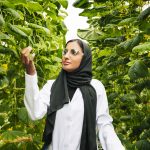

Tafilah, June 21 (Petra) – Grain cultivation has rebounded strongly
in Tafilah during the current agricultural season, marking a
significant step forward in Jordan’s national strategic efforts to
enhance food security and self-reliance in vital food commodities.
Field surveys show that approximately 42,000 dunams were planted with
wheat and barley, supported by significantly improved rainfall that
has boosted production prospects and revived a sector long affected
by drought conditions. The recovery aligns with the Kingdom’s broader
agricultural modernization plans aimed at building sustainable food
systems and supporting rural communities.
Farmers in the governorate emphasized that boosting domestic wheat
and barley production remains a core pillar of local food security
and a critical income source for rural families, while simultaneously
reducing reliance on imports by providing crucial livestock feed
through hay and crop residues.
As the harvest season gets underway, wheat and barley fields across
the governorate have returned to production levels not seen in recent
years, restoring a key agricultural activity for which Tafilah has
historically been known. This turnaround follows several difficult
seasons marked by severe drought and low rainfall that had previously
compromised local yields and threatened agrarian livelihoods.
Since early June, local farmers have begun harvesting their fields
using traditional methods across various agricultural areas,
expressing high optimism about a season considered among the best in
recent years. Rainfall exceeded 500 millimeters during the current
season, a dramatic increase compared with about 80 millimeters last
season, when production declined sharply, and no grain was delivered
to collection committees.
Field surveys conducted by the Tafilah Agriculture Directorate also
showed that 25 farmers have already registered to obtain certificates
of origin for their grain crops. This step is essential for
integrated supply chain planning, enabling farmers to market their
produce efficiently.
Farmers noted that the abundant and well-distributed rainfall
contributed to stronger crop growth and higher ear density, with
production expected to reach nearly 80 percent of the cultivated
land’s potential capacity. This improved outlook has renewed hopes
for restoring grain cultivation to its traditional prominence,
reinforcing the agricultural sector’s resilience against climate
change.
Director of the Tafilah Agriculture Directorate, Bilal Haloul, said
the directorate is closely monitoring the agricultural season through
specialized field committees tasked with inspecting cultivated areas
and verifying data in preparation for marketing and supply
procedures. These measures ensure that certificates of origin are
accurately issued to eligible farmers, streamlining the integration
of local harvests into national reserves.
Haloul explained that harvesting operations were delayed somewhat
this season due to continued moisture in wheat stalks and leaves
resulting from favorable weather conditions, but he expected
harvesting activity to expand rapidly in the coming days.
He added that Tafilah possesses substantial agricultural potential
for expanding field crop cultivation, supported by its diverse
climate, varying elevations, and available water resources, all of
which are being leveraged to strengthen agricultural productivity and
support sustainable sector growth.
Farmers called for sustained technical and financial support for the
agricultural sector and requested proactive measures to address
production challenges. They stressed that expanding grain cultivation
represents a critical, strategic move toward protecting national food
security and achieving long-term sustainable agricultural development
in the Kingdom.
//Petra// AJ