Jordan’s Q2 2026 GDP Expands 3.0%, Outperforming Regional Headwinds, International Forecasts

ENV-KUWAIT-SUSTAINABLITYKuwait strengthens environmental sustainability through strategic initiativesBy Zahra Al-Kadhmi

HLT-KUWAIT-SURGERYKuwait advances health sector with robotic, remote surgeryBy Mohammad Al-Moseb

Saudi Arabia’s Voluntary Carbon Market Fuels the Shift to a Low-Carbon

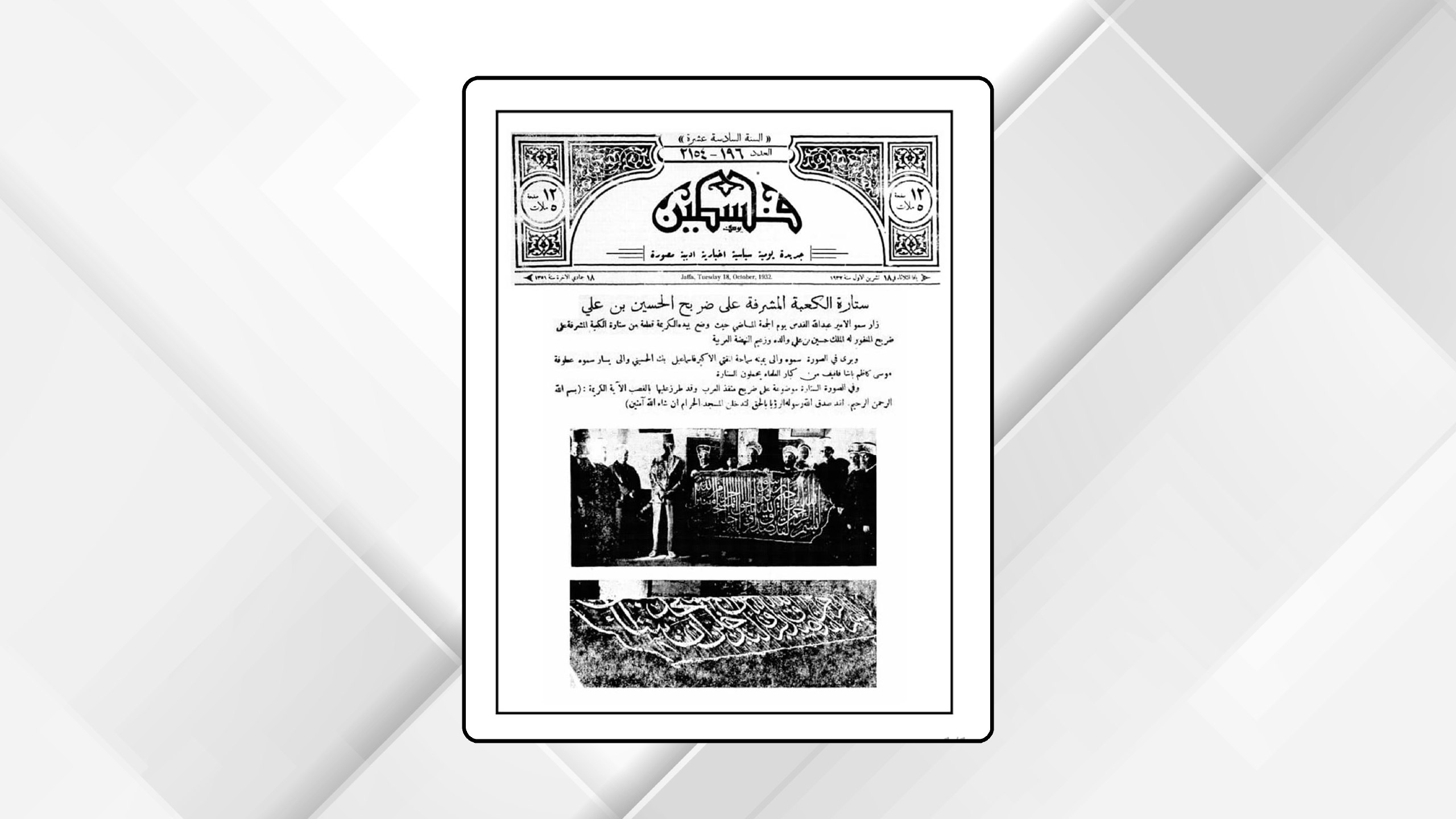
Amman, June 8 (Petra) – To mark the anniversaries of the Great Arab
Revolt on June 10, 1916, and the death of its leader, Sharif Hussein
bin Ali on June 4, 1931, the Royal Committee for Jerusalem Affairs on
Monday published a historical document from the newspaper “Falastin,”
dated October 18, 1932, corroborating the deep Hashemite connection
to Jerusalem.
The document includes photographs of a visit by Martyr of Al-Aqsa,
His Majesty King Abdullah I bin Al-Hussein, to the tomb of his
father, Sharif Hussein bin Ali, to Jerusalem on October 14, 1932,
during which he placed a piece of the Kaaba’s covering on the tomb of
the Great Arab Revolt leader.
This document embodies the deep historical Hashemite attachment to
the city of Jerusalem and Palestine, and reflects an unwavering
Hashemite approach to caring for Jerusalem and its holy sites,
defending them, and sacrificing for them, the Committee stressed.
It said that bearing the responsibility of the Hashemite
custodianship of the Islamic and Christian holy sites in Jerusalem
will remain a testament to the unwavering Hashemite commitment to the
holy city, its people, and sacred sites, and an embodiment of the
Hashemite covenant passed down through generations, regardless of
challenges and sacrifices.
//Petra//SS