
Jordan’s Q2 2026 GDP Expands 3.0%, Outperforming Regional Headwinds, International Forecasts
ENV-KUWAIT-SUSTAINABLITYKuwait strengthens environmental sustainability through strategic initiativesBy Zahra Al-Kadhmi

HLT-KUWAIT-SURGERYKuwait advances health sector with robotic, remote surgeryBy Mohammad Al-Moseb

Saudi Arabia’s Voluntary Carbon Market Fuels the Shift to a Low-Carbon

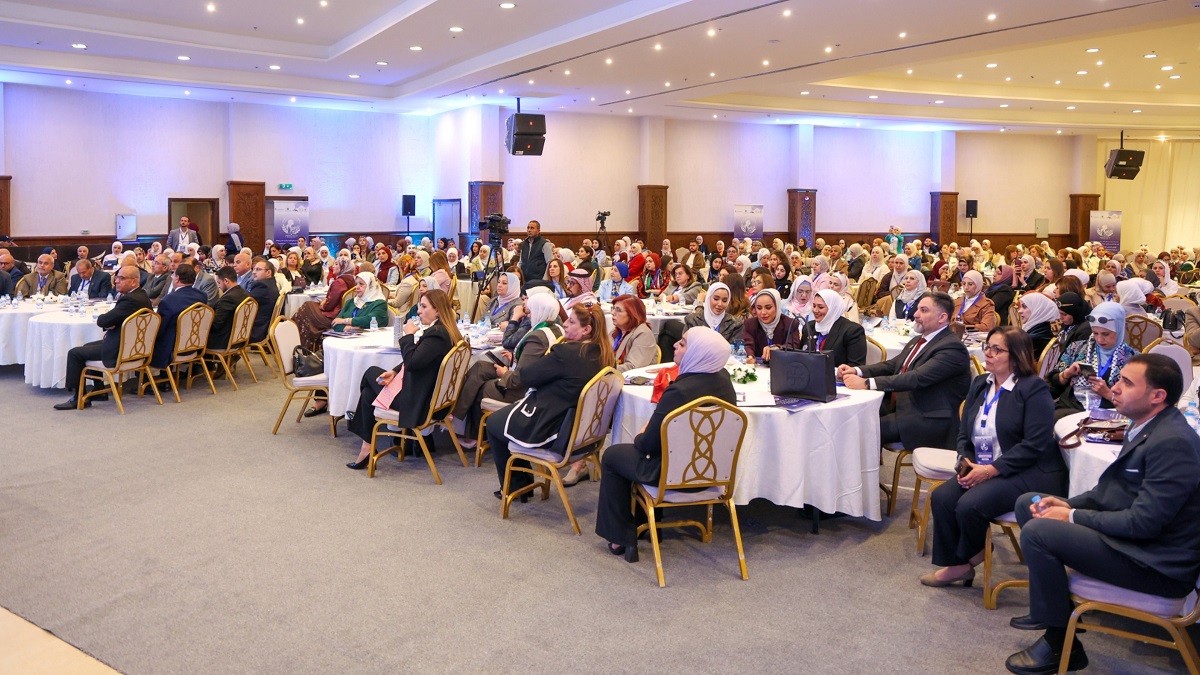
Salt, Oct. 25 (Petra) — Minister of Social Development Wafa Bani
Mustafa, deputizing for Her Royal Highness Princess Sumaya bint El
Hassan, President of the Royal Scientific Society, inaugurated the
sixth Arab Women Engineers Forum at the Salt Heritage House on
Sunday.
Held under the theme “The Role of Women Engineers in Planning
Resilient and Sustainable Cities,” the two-day forum brings together
engineering professionals from Jordan and eight other Arab countries
to discuss urban resilience, sustainability and women’s role in
shaping the future of cities.
In a speech delivered by Bani Mustafa on her behalf, Princess Sumaya
emphasized women’s pivotal role in achieving comprehensive
development as equal partners with men in building and advancing
society.
She highlighted women’s contributions to raising future generations,
strengthening family cohesion and participating in various fields,
including politics and the economy.
The princess said engineering extends beyond equations and designs,
representing creative thinking and constructive work that transforms
ambitions into achievements serving humanity.
She pointed to engineering’s historical role in building
civilizations and cities, developing infrastructure and turning
natural challenges into opportunities for progress.
Princess Sumaya stressed that resilient and sustainable cities
require integrated engineering solutions, highlighting the essential
role of women engineers in designing more people-centered urban
environments.
Such cities, she said, should provide safe sidewalks, adequate
lighting, accessible green spaces, convenient access to schools and
hospitals, and energy-efficient buildings.
“Sustainable cities are not built with concrete alone, but with
thinking that places people at the forefront of priorities and looks
to the future with a vision that goes beyond present needs,” she
said.
She emphasized that women engineers, working alongside their male
colleagues, play an important role in urban planning and development,
helping build smarter cities that are more resilient to
climate-related crises and responsive to people’s needs.
Citing Salt as an example of engineering’s role in heritage
preservation, Princess Sumaya highlighted the contributions of an
engineering team led by prominent Jordanian women engineers to
documenting, preserving and developing the historic city’s heritage.
She noted that these efforts contributed to Salt’s inscription on the
UNESCO World Heritage List in 2021 as “As-Salt – The Place of
Tolerance and Urban Hospitality.” The achievement, she said,
demonstrates engineering’s ability to transform historical heritage
into a foundation for the future.
Jordan Engineers Association President Abdullah Ghosheh said a
resilient city is not one that never faces crises, but one that
prepares for them, learns from them, protects its residents and
recovers.
He explained that resilience goes beyond constructing roads and
buildings to anticipating risks, planning ahead, protecting people
and resources, and ensuring development continues.
Ghosheh said water scarcity, energy challenges, climate change and
urban expansion require integrated engineering planning that connects
infrastructure with public policy and quality of life.
He emphasized that sustainability depends on balancing economic
growth, social justice and environmental protection, calling for the
forum’s outcomes to be translated into partnerships, projects and
practical solutions that improve cities and residents’ lives.
For his part, Abdulmohsen Kharabsheh, head of the Jordan Engineers
Association’s Balqa branch, said the forum raises fundamental
questions about the role of Arab women engineers and how they can
contribute to planning cities and shaping their future.
He expressed hope that the discussions would produce practical
professional recommendations and a vision document reflecting Arab
women engineers’ perspectives on the future, engineering and
development. Such a document, he said, could serve as an Arab
reference for coordinating efforts toward cities better equipped to
withstand crises, protect people and resources, and meet future
needs.
Hanan Awad, Chair of the Arab Women Engineers Committee, said the
forum’s theme reflects an urgent challenge facing Arab cities amid
climate change, resource scarcity and rapid urban expansion.
She noted that these pressures affect infrastructure and quality of
life, stressing that women engineers’ contributions extend beyond
technical expertise, design and implementation to planning,
decision-making and leading the transition toward safer, more
inclusive and sustainable cities.
The two-day forum includes representatives from Palestine, Libya,
Egypt, Lebanon, Saudi Arabia, Iraq, Oman and Syria, in addition to
Jordan.
The forum opened with a minute of silence in memory of the victims of
the terrorist attack in Karak Governorate.
//Petra// AJ