Jordan’s Q2 2026 GDP Expands 3.0%, Outperforming Regional Headwinds, International Forecasts
ENV-KUWAIT-SUSTAINABLITYKuwait strengthens environmental sustainability through strategic initiativesBy Zahra Al-Kadhmi

HLT-KUWAIT-SURGERYKuwait advances health sector with robotic, remote surgeryBy Mohammad Al-Moseb

Saudi Arabia’s Voluntary Carbon Market Fuels the Shift to a Low-Carbon

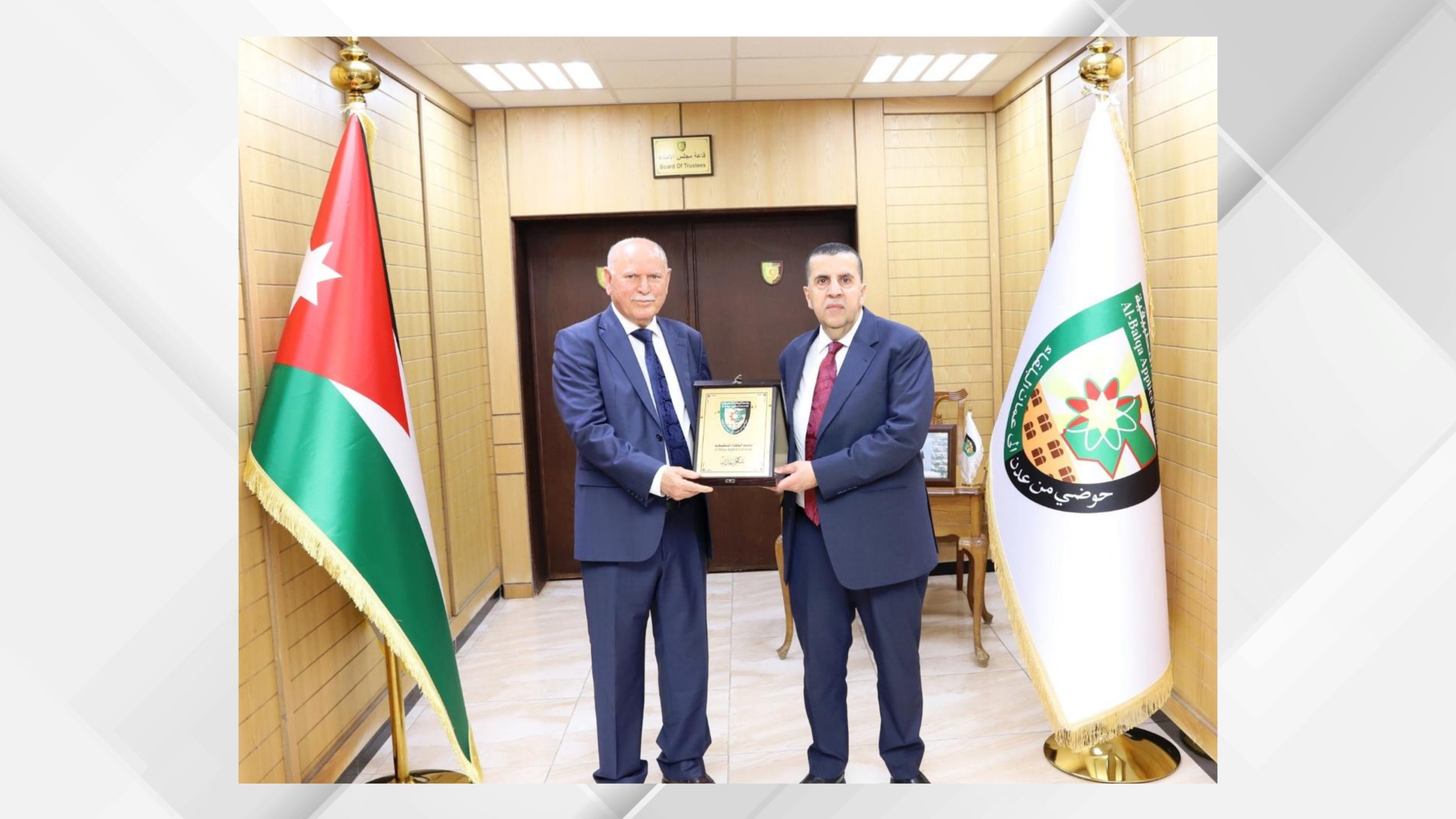
Salt, June 1 (Petra) — Al-Balqa Applied University and Tishk
International University in Iraq’s Kurdistan Region are seeking to
broaden their academic partnership through expanded cooperation in
higher education, scientific research, and knowledge exchange.
The initiative was discussed during a meeting between Al-Balqa
Applied University President Professor Ahmad Fakhri Al-Ajlouni and
Tishk International University President Professor Sultan Abu Orabi
Al-Adwan, as the two sides reviewed mechanisms to activate and build
on a cooperation agreement previously signed by the institutions.
Al-Ajlouni said the university places strategic importance on
strengthening ties with leading Arab universities, describing
academic partnerships as a key driver for advancing educational
quality, research output, and institutional development.
He noted that cooperation between universities has become
increasingly important in responding to rapid scientific and
technological changes, stressing the need to exchange expertise and
successful experiences that can enhance academic and research
programs.
Al-Adwan, in turn, highlighted the growing relationship between the
two universities, expressing appreciation for Al-Balqa Applied
University’s achievements, particularly in technical and applied
education.
He said Tishk International University is looking to expand areas of
collaboration in a way that serves students and academic communities
at both institutions, while creating new opportunities for joint
educational and research initiatives.
The talks focused on several practical areas of cooperation,
including faculty and student exchanges, joint research projects, and
collaboration in organizing conferences, workshops, and scientific
events.
The two sides also explored additional avenues for academic and
training cooperation, reflecting a shared interest in strengthening
institutional links and promoting greater collaboration across the
higher education sector.
The meeting forms part of ongoing efforts by both universities to
translate their partnership agreement into concrete programs and
initiatives that support academic excellence and research
development.
//Petra// RZ