Jordan’s Q2 2026 GDP Expands 3.0%, Outperforming Regional Headwinds, International Forecasts
ENV-KUWAIT-SUSTAINABLITYKuwait strengthens environmental sustainability through strategic initiativesBy Zahra Al-Kadhmi
HLT-KUWAIT-SURGERYKuwait advances health sector with robotic, remote surgeryBy Mohammad Al-Moseb

Saudi Arabia’s Voluntary Carbon Market Fuels the Shift to a Low-Carbon

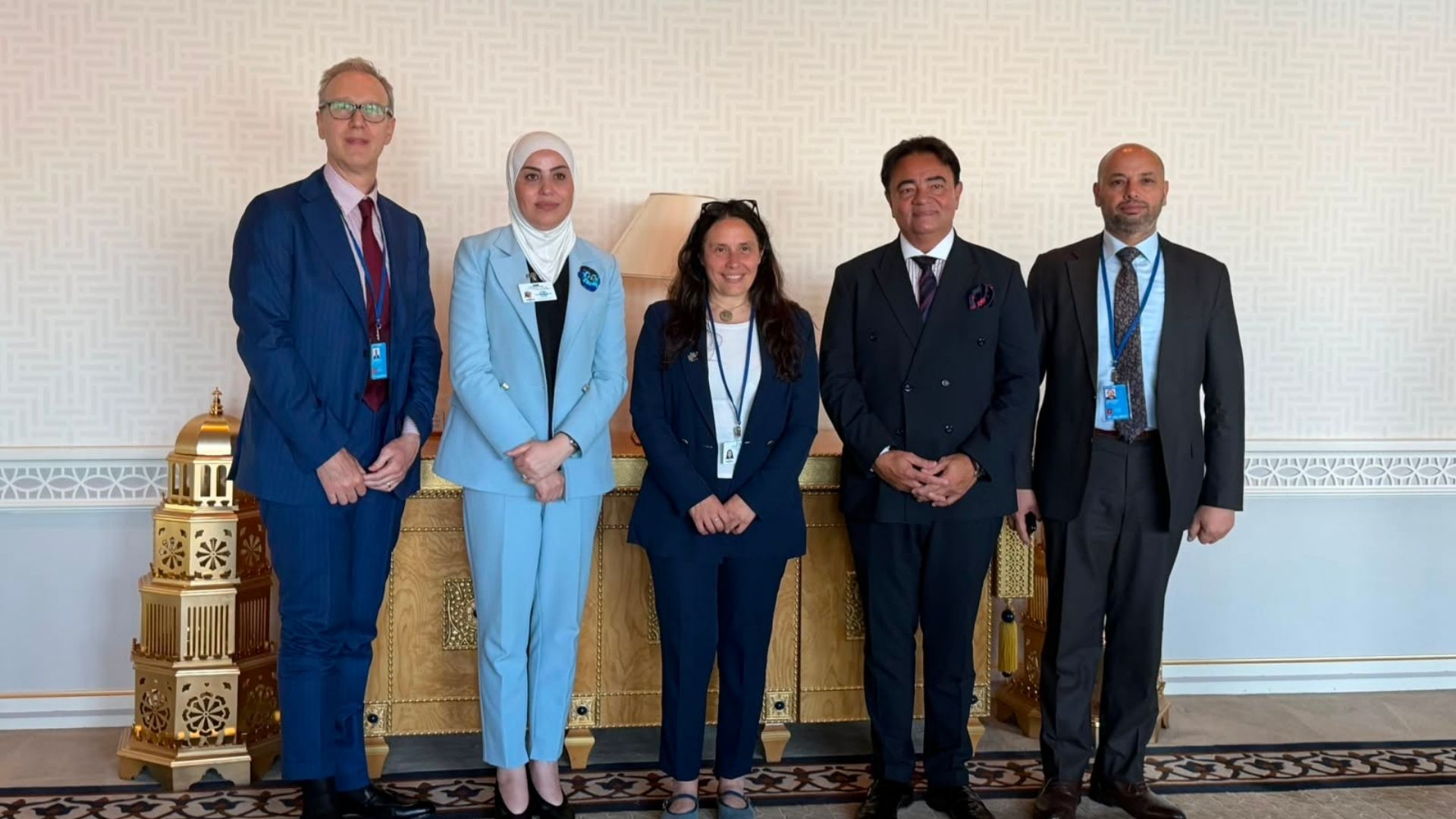
Amman, June 10 (Petra) – Minister of Social Development Wafa Bani
Mustafa, in her capacity as Chair of the 45th session of the Council
of Arab Ministers of Social Affairs, on Wednesday met with Italian
Minister for People with Disabilities, Alessandra Locatelli.
According to a statement issued by Ministry of Social Development,
this meeting took place on the sidelines of Bani Mustafa’s
participation in the 19th session of Conference of States Parties to
the Convention on the Rights of Persons with Disabilities (COSP),
held under the auspices of the United Nations at its headquarters in
New York.
Bani Mustafa noted “deep-rooted” Jordanian-Italian relations, which
enjoy attention and support of both friendly countries’ leadership,
reflecting their shared commitment to expanding cooperation,
particularly in social and humanitarian issues.
She called for strengthening cooperation with Italy on disability
issues by concluding the memorandum of understanding between the
Council of Arab Ministers of Social Affairs and the Italian Ministry
of Disability Affairs, which would contribute to supporting
disability issues and exchanging expertise and the best practices in
this field.
Bani Mustafa stressed the importance of supporting implementation of
the commitments outlined in the Amman-Berlin Declaration on Global
Disability Inclusion.
At the bilateral level, she highlighted the need to enhance
partnership and coordination between the Italian Ministry of
Disability Affairs and the Arab League in areas of disability, social
inclusion, and social protection.
Locally, she presented Jordan’s “pioneering” experience in
transitioning from institutional to alternative care for people with
disabilities, which is a “leading model” that promotes independence
of people with disabilities and their right to live within an
inclusive family and community environment.
Bani Mustafa noted the Ministry of Social Development’s efforts to
develop the social services, protection, and care system, focusing on
expanding alternative housing services for people with disabilities.
She added that this process includes promoting the transition to
inclusive community care, establishing inclusive day centers,
developing early intervention services, and strengthening family
integration, all of which contribute to a gradual shift from
institutional care to a sustainable community model that fosters
independence and inclusion.
She highlighted the importance of mutually benefiting from the two
countries’ experiences in areas such as enhancing and building the
capacities of social sector workers, professionalizing social work,
developing inclusive community intervention and service models, and
designing programs specifically for people with disabilities.
For her part, Locatelli called for exchanging expertise and learning
about the best practices in programs and services provided to people
with disabilities.
She expressed her aspiration to strengthen cooperation and expand
partnerships in the coming phase.
//Petra// AG