Jordan’s Q2 2026 GDP Expands 3.0%, Outperforming Regional Headwinds, International Forecasts
ENV-KUWAIT-SUSTAINABLITYKuwait strengthens environmental sustainability through strategic initiativesBy Zahra Al-Kadhmi
HLT-KUWAIT-SURGERYKuwait advances health sector with robotic, remote surgeryBy Mohammad Al-Moseb

Saudi Arabia’s Voluntary Carbon Market Fuels the Shift to a Low-Carbon
AMMAN, Oct. 26 (Petra) – Following the terrorist attack on the parish
in Hmoud village last Friday afternoon, the courtyards of Karak’s
hospitals filled not with panic, but with people.
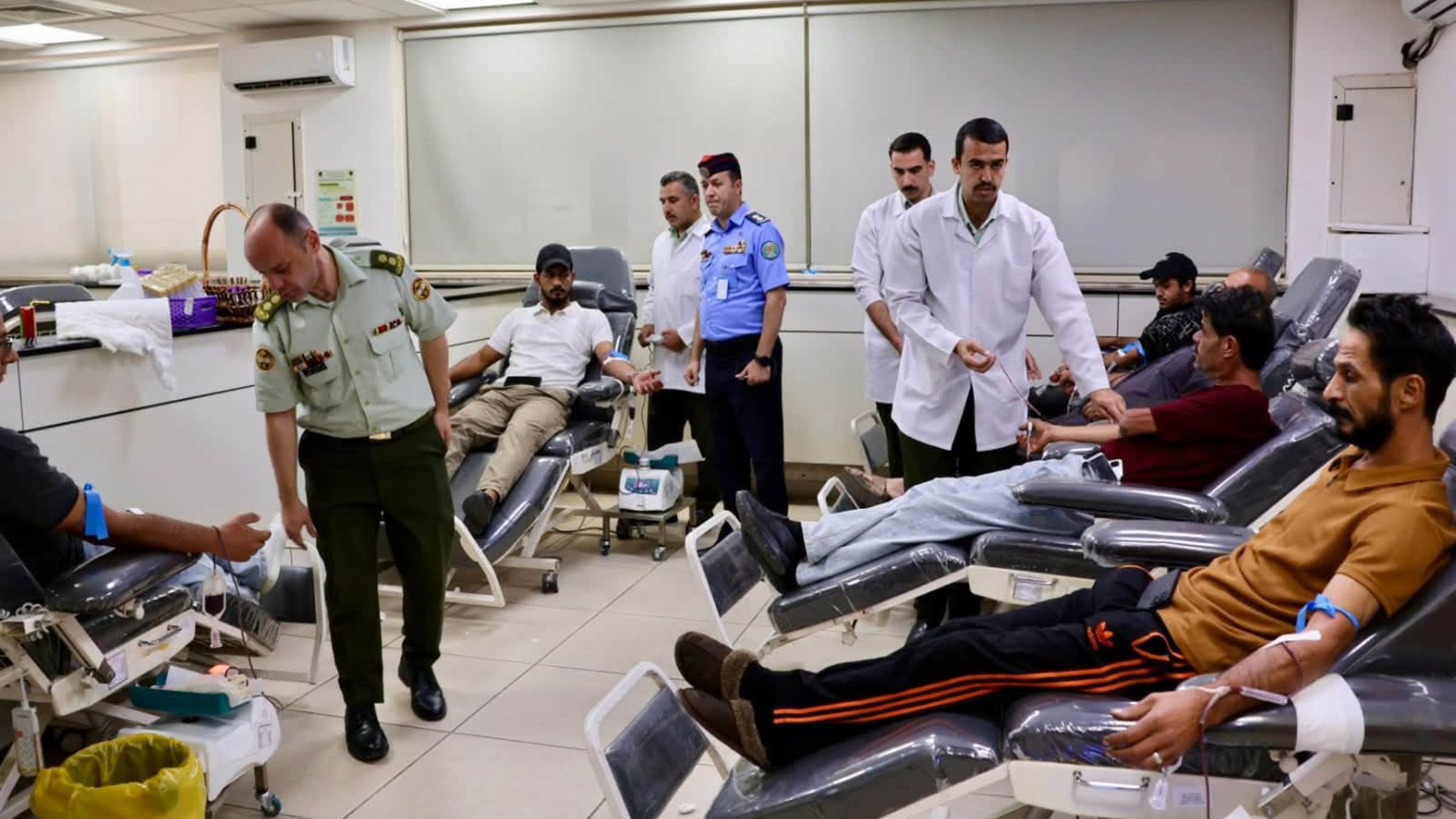
Within hours of the Friday assault on the local church, Jordanians
from every corner of the Kingdom converged on Karak Government
Hospital and Prince Ali Military Hospital. By sunrise, their
collective response yielded 220,150 milliliters of blood–a physical
testament to a national refusal to let terror fracture the country’s
social fabric.
The movement began locally in Karak. As news of the attack spread,
residents rushed to the medical centers to inquire about the wounded.
When word got out that doctors urgently needed rare blood types,
calls echoed across local phone lines and social media platforms.
Within the first six hours, Karak Government Hospital collected 186
units–a staggering pace of 31 units per hour. By the following
morning, buses loaded with civilian donors began arriving from Salt,
Tafileh, Jerash, and beyond.
“The departments and courtyards were overflowing,” recalled Dr. Arabi
Abu Qudairi, Crisis Liaison Officer and Head of Technical Affairs at
the Karak Health Directorate. He noted that over the first 24 hours,
the two hospitals collectively gathered 629 units of blood. While
medical staff immediately administered 30 units of pre-screened blood
to stabilize critical cases, the remaining hundreds of units were
processed into the national reserve.
For locals like Shadi Al-Madadha, who arrived at the hospital
emergency room alongside his 20-year-old son, there was no
second-guessing. After hearing the news of the Friday afternoon
assault, he drove straight into the heart of the crisis, standing in
line for hours until medical staff informed the crowd that supplies
had reached capacity for the night.
“This is the absolute least we could do for our fellow Jordanians
targeted in their place of worship,” Al-Madadha said, standing among
crowds of university students, off-duty soldiers, and elderly
residents who waited until morning just in case more blood was
needed.
Sociological and political observers view the scene in Karak as more
than an emergency medical reaction.
Hussein Al-Sarayrah, a researcher at the Institute of Politics and
Society, noted that the public’s swift response underscores a
foundational layer of Jordanian citizenship: when life is threatened,
all social, regional, and religious distinctions dissolve.
“Blood carries no identity card, and life asks no questions about the
religion of the person who saves it,” Al-Sarayrah observed. “When
Jordanians step forward to give a part of themselves to save a
stranger, civic responsibility ceases to be an abstract slogan–it
becomes a tangible force of national resilience.”
Sultan Al-Khalaileh, Chairman of the Sanad Youth Thought Association,
echoed these sentiments, pointing out that while the assault was
aimed at sewing division, the outcome was an unprecedented
demonstration of solidarity.
As quiet returns to Hmoud village following the dawn capture of the
perpetrators on Monday and the wounded continue their recovery, the
thousands of medical bags stored in the Kingdom’s blood banks carry a
message that outlasts the attack itself: in times of trial, Jordan’s
ultimate defense remains its shared humanity.
//Petra// AA