Jordan’s Q2 2026 GDP Expands 3.0%, Outperforming Regional Headwinds, International Forecasts
ENV-KUWAIT-SUSTAINABLITYKuwait strengthens environmental sustainability through strategic initiativesBy Zahra Al-Kadhmi

HLT-KUWAIT-SURGERYKuwait advances health sector with robotic, remote surgeryBy Mohammad Al-Moseb

Saudi Arabia’s Voluntary Carbon Market Fuels the Shift to a Low-Carbon

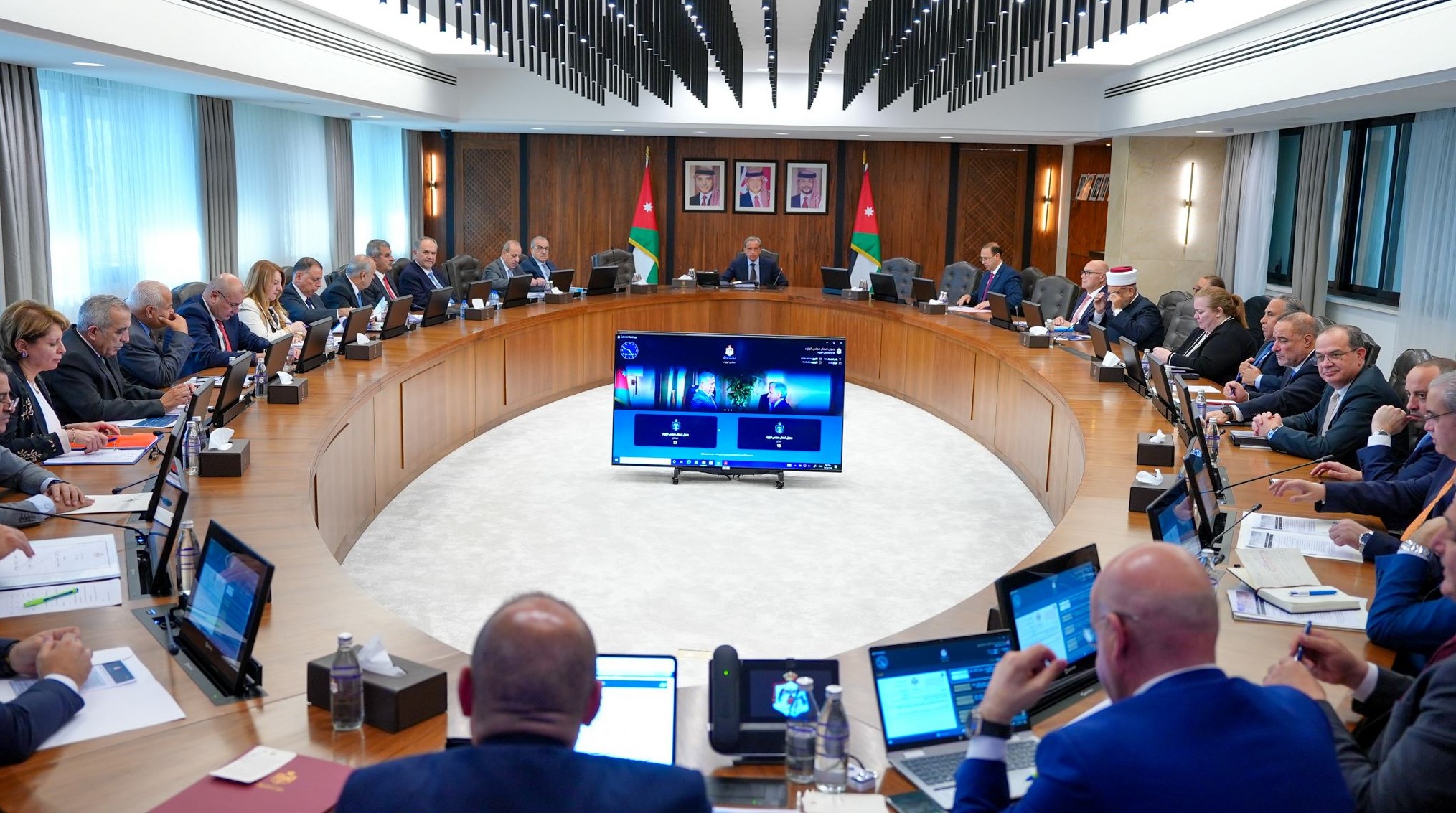
Amman, June 14 (Petra) – The Cabinet approved the extension of the
concession agreement granted to the National Petroleum Company for
oil and gas exploration and production in the Risha Gas Field for an
additional 15 years, extending its validity until 2061.
The decision is part of efforts to achieve greater self-sufficiency
in locally produced natural gas, diversify energy sources and
implement one of the key projects included in the second Executive
Programme of the Economic Modernisation Vision (2026–2029).
The move aims to support the development of an integrated and
sustainable energy economy that attracts investment and promotes
economic growth.
The extension was approved based on a recommendation by the Minister
of Energy and Mineral Resources to enable the company to complete its
comprehensive development plans.
Under its production strategy, the National Petroleum Company aims to
increase output from the Risha Gas Field to 418 million standard
cubic feet per day by 2030 and further raise production to 810
million standard cubic feet per day by 2035.
The company is financing the development of gas processing facilities
and pipeline infrastructure through its own resources to ensure the
efficient delivery of natural gas to consumers and strengthen
long-term national energy security.
In a related development, the company has begun taking the necessary
logistical steps to establish natural gas processing units and launch
construction of a strategic pipeline linking the Risha Gas Field to
the Arab Gas Pipeline.
The project is expected to transport locally produced gas to
consumption centres across the Kingdom and become operational by
2029.
The government is providing financial support to help the company
implement its production expansion plans, allocating a total of JD87
million over three years. This includes JD35 million this year, a
similar amount in 2027 and JD17 million in 2028.
As part of public sector modernisation efforts, the Cabinet approved
the first phase of technical competency frameworks covering a range
of common government positions, including human resources, digital
transformation, information management and data analysis,
cybersecurity, legal affairs, procurement, inventory management,
media and communication, service provision, administrative affairs
and financial affairs.
The competency frameworks are intended to establish unified and
transparent standards for public sector positions, enhance
institutional efficiency, improve service delivery and strengthen
public trust in government institutions.
The government will adopt a competency-based approach focused on
employees’ knowledge, skills and behaviours rather than traditional
job titles and qualifications.
For the first time, the framework establishes a unified understanding
of these occupations, which account for approximately 40 per cent of
public sector jobs, by defining the competencies required for
recruitment, development and performance evaluation according to
clear and measurable standards.
The frameworks are intended to support professional development,
performance management and training programmes, enabling government
institutions to invest more effectively in human capital.
The Cabinet directed all government entities to adopt the framework
in their human resources processes and tasked the Civil Service and
Public Administration Authority with monitoring implementation,
providing technical support and updating the frameworks when
necessary.
Future steps include developing assessment tools capable of measuring
these competencies and providing the framework to the Jordanian
Academy of Public Administration to design cumulative training
programs linked to career development pathways.
As part of efforts to modernise government institutions and improve
organisational structures, the Cabinet approved the justifications
for the draft Administrative Organisation Bylaw of the Petra
Development and Tourism Region Authority for 2026 and referred it to
the Legislation and Opinion Bureau to complete the required
legislative procedures.
The draft bylaw seeks to strengthen the Authority’s organisational
and administrative structure, enhance institutional efficiency,
reinforce governance, transparency and accountability and ensure the
optimal use of human, financial and technological resources through a
clearer distribution of responsibilities.
The proposed reforms are intended to improve administrative
effectiveness in serving Petra, one of Jordan’s most important
tourist destinations and a UNESCO World Heritage Site.
As a major contributor to the national economy and a key destination
for visitors and investors, Petra requires a modern and flexible
administrative system capable of supporting sustainable tourism
development and improving visitor services.
The bylaw is expected to strengthen coordination among the
Authority’s organisational units, improve institutional performance,
enhance service delivery and boost Petra’s competitiveness as a
global tourism destination.
The Cabinet approved amendments to the Administrative Organisation
Bylaw of the Ministry of Social Development (MoSD) for 2026 to align
its organisational structure with the Social Development Law of 2024
and the public sector modernisation roadmap.
The amendments include restructuring the ministry by establishing
specialised departments focused on care, protection, institutional
support, governorate affairs and development, in addition to
directorates designed to enhance the sustainability of funding and
governance for associations.
The revised structure establishes an Inspection and Compliance Unit
to strengthen the independence of oversight over care homes and
licensed entities, as well as dedicated units for information
management, data analysis and cybersecurity to support digital
transformation and improve decision-making.
The government stated that implementation of the new structure will
not result in additional financial burdens on the state budget, as
staffing requirements will be met through internal restructuring and
redeployment of existing personnel.
The Cabinet approved amendments to the Administrative Organisation
Bylaw of the Income and Sales Tax Department for 2026.
The amendments aim to align the department’s organisational structure
with international best practices in planning, analysis and risk
management in tax administration, while keeping pace with
technological developments and digital transformation to enhance
operational efficiency.
To support economic activity and improve services, the Cabinet
approved the justifications for amendments to the Amman Building and
Zoning Bylaw for 2026 and referred the draft legislation to the
Legislation and Opinion Bureau for final review.
The proposed amendments are designed to create a more supportive
environment for economic activity and stimulate growth in the
construction sector in Amman.
They respond to recommendations submitted by partner organisations
through consultation sessions, including the Housing Investors
Association, the Association of Engineering Offices and the Jordan
Engineers Association.
Discussions focused on extending procedural deadlines and
facilitating licensing and service-related procedures for businesses
and people.
In the education sector, the Cabinet approved the draft Education Tax
budget for the years 2026–2028, estimated at approximately JD20
million.
The revenues generated from the tax, which is collected through the
Greater Amman Municipality (GAM) and other municipalities in
accordance with the law, will be allocated to school construction,
infrastructure development and maintenance projects.
The budget is approved annually by the Cabinet and provides an
important source of funding for the Ministry of Education’s efforts
to expand and maintain educational facilities across the Kingdom.
//Petra// AK