Jordan’s Q2 2026 GDP Expands 3.0%, Outperforming Regional Headwinds, International Forecasts
ENV-KUWAIT-SUSTAINABLITYKuwait strengthens environmental sustainability through strategic initiativesBy Zahra Al-Kadhmi

HLT-KUWAIT-SURGERYKuwait advances health sector with robotic, remote surgeryBy Mohammad Al-Moseb

Saudi Arabia’s Voluntary Carbon Market Fuels the Shift to a Low-Carbon

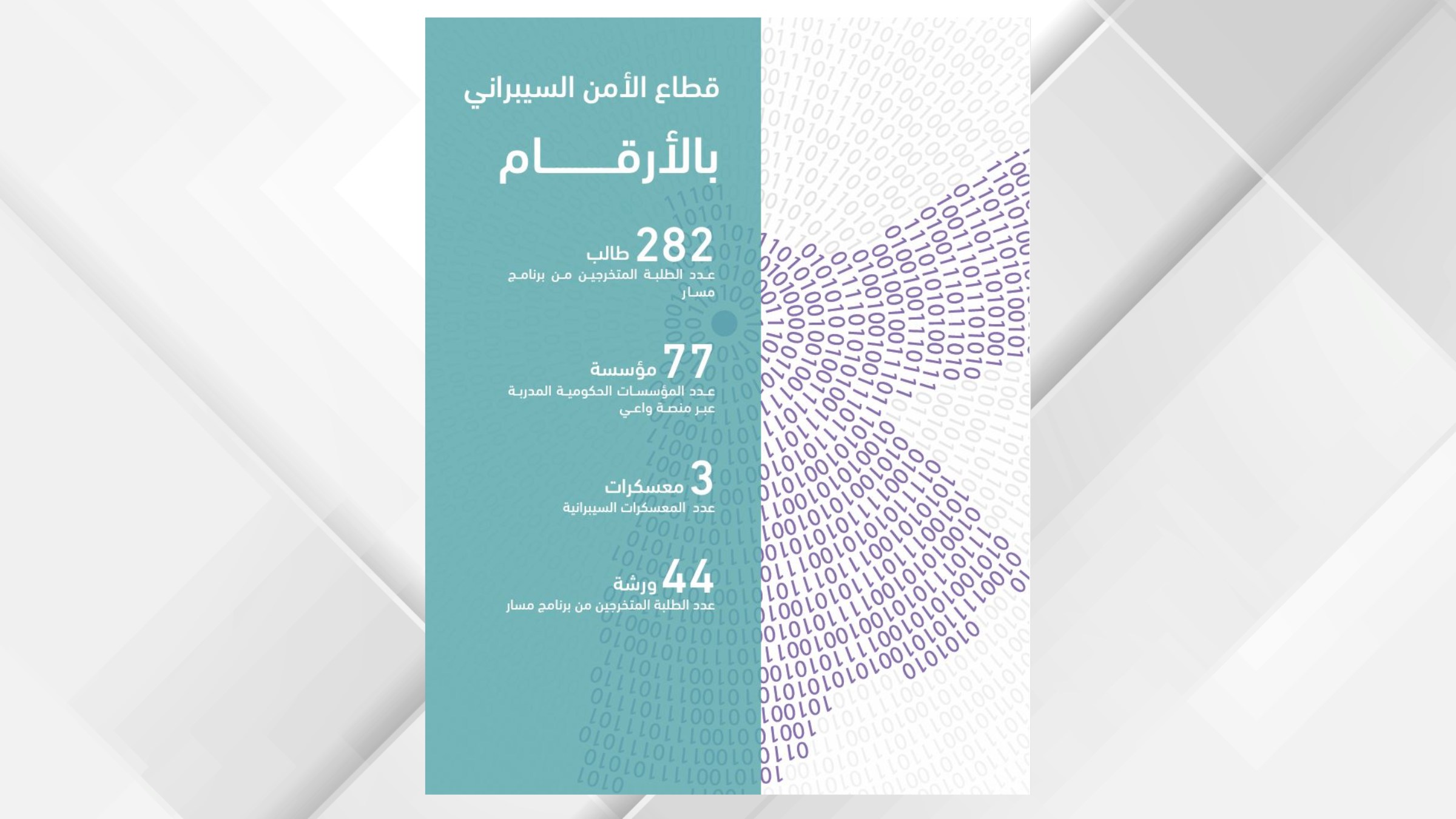
Amman, Aug. 10 (Petra) — Cybersecurity programs under the Economic
Modernization Vision expanded training and institutional
capacity-building efforts during the first half of 2026, with 282
students graduating from the Masar program and 77 government
institutions receiving training through the Wa’i platform.
The 2026-2029 Executive Program report highlighted progress in
cybersecurity under the Future Services driver, including the
implementation of three cybersecurity camps and a series of national
initiatives aimed at strengthening awareness, education and technical
capabilities.
The initiatives, implemented in cooperation with the public and
private sectors and local communities, included specialized training
for 22 schools and 10 universities on Capture the Flag (CTF)
challenges, competitions designed to develop and test practical
cybersecurity skills.
Training and follow-up programs were also conducted for 77 government
institutions through the Wa’i platform, while simulated phishing
campaigns were launched to assess employees’ awareness of cyber
threats.
A total of 44 cybersecurity awareness workshops were held for 5,664
employees during the reporting period.
The report said 282 students graduated from the fifth edition of the
Masar program, which provides university students specializing in
cybersecurity with practical training aimed at developing their
technical skills and preparing them for the labor market.
Participants also graduated from the ninth and tenth Nashama
cybersecurity camps, which target recent cybersecurity graduates
through an intensive four-month program focused on developing
practical and professional skills and improving employment readiness.
The report also highlighted efforts to expand strategic partnerships
at the local level and strengthen the Kingdom’s regional and
international engagement in cybersecurity through the signing of
several memoranda of understanding.
Progress was also made in supporting institutions in implementing the
Jordanian National Cybersecurity Framework.
Capacity-building activities included business modeling courses,
quantitative cyber risk assessment and risk management training for a
number of entities.
Training and awareness workshops were also conducted for nine
government entities, targeting senior management, directorate heads,
organizational units and technical teams as part of efforts to
strengthen institutional cybersecurity capabilities.
//Petra// RZ