Jordan’s Q2 2026 GDP Expands 3.0%, Outperforming Regional Headwinds, International Forecasts
ENV-KUWAIT-SUSTAINABLITYKuwait strengthens environmental sustainability through strategic initiativesBy Zahra Al-Kadhmi
HLT-KUWAIT-SURGERYKuwait advances health sector with robotic, remote surgeryBy Mohammad Al-Moseb

Saudi Arabia’s Voluntary Carbon Market Fuels the Shift to a Low-Carbon

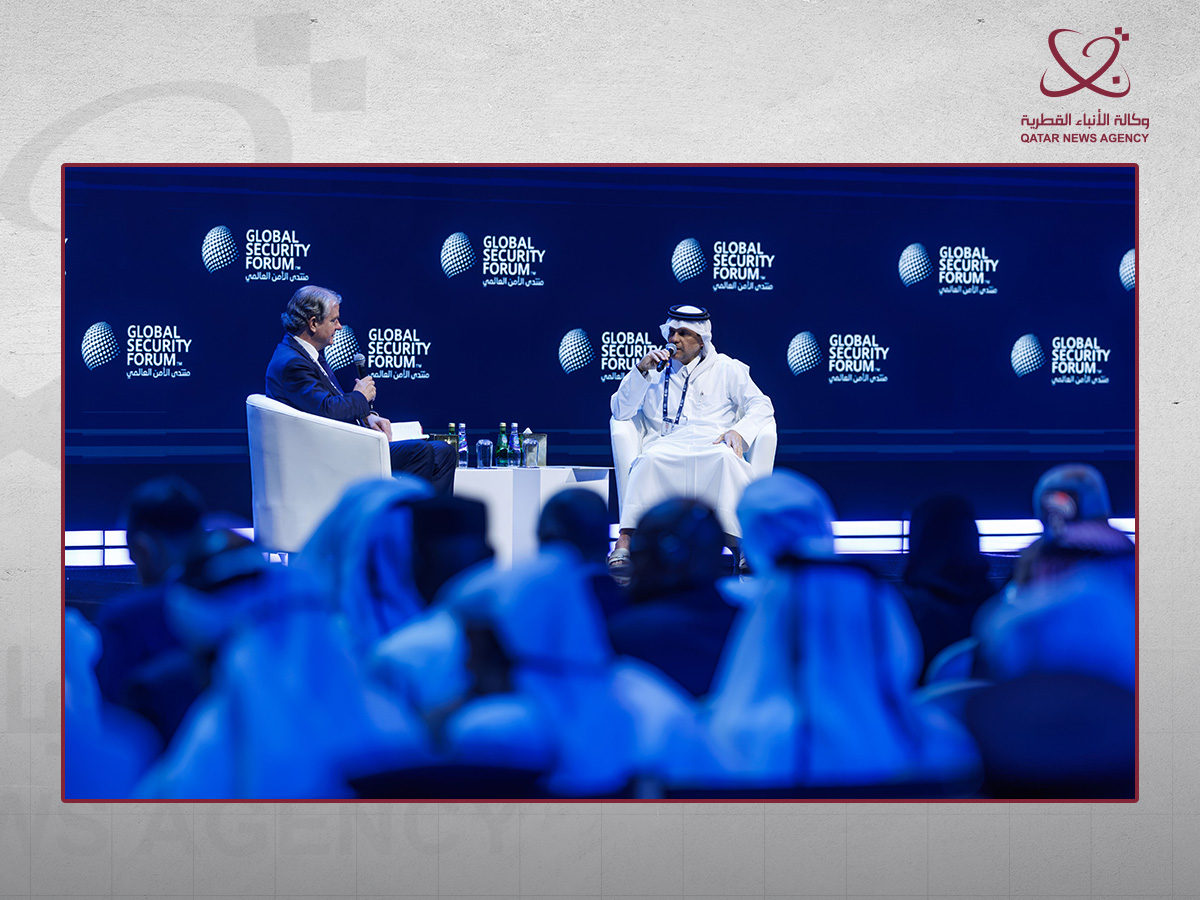
Doha, October 19 (QNA) – HE Deputy Prime Minister and Minister of State for Defense Affairs Sheikh Saoud bin Abdulrahman bin Hassan bin Ali Al-Thani affirmed that the State of Qatar continues to strengthen its defense capabilities while maintaining its approach of mediation and regional dialogue.
He stressed that the security of the Gulf region is a fundamental pillar of global economic stability and international supply chains.
During a panel discussion session held on the first day of the eighth edition of the Global Security Forum, currently underway in Doha, HE the Deputy Prime Minister and Minister of State for Defense Affairs said Qatar had faced three major challenges in the recent period: attacks targeting its territory, disruptions to energy supplies, and the repercussions of regional conflicts spreading into the region.
He noted that any disruption to energy supplies from the Gulf affects not only energy markets but also global supply chains, international investments, and the assistance Gulf countries provide to various parts of the world.
His Excellency emphasized that regional stability has a direct impact on the global economy, adding that since the outbreak of the recent crisis, the State of Qatar has worked to protect its assets and enhance its defense readiness in cooperation with its allies, noting that Qatar had demonstrated its ability to defend itself.
He also noted that Gulf countries have accumulated experience in overcoming crises and emerging from them by diversifying their economies and strengthening international partnerships.
Addressing security challenges, HE the Deputy Prime Minister and Minister of State for Defense explained that Qatar had discussed its defense strategy and identified three priority areas: air defense; countering drones and electronic warfare, including cybersecurity; and continuing to develop national capabilities in these fields in cooperation with regional and international partners.
He revealed that Qatar would soon announce a new partnership with regional partners to launch an initiative aimed at developing capabilities in these areas. The country would also announce the establishment of a defense industries center in Qatar as part of a strategy to strengthen national capabilities.
He affirmed that Al Udeid Air Base continues to play a strategic role and that its development is ongoing to meet the needs of the Qatari Armed Forces. Alongside US forces, the base hosts representatives from more than 20 countries, reflecting the nature of Qatar’s defense partnerships.
Regarding mediation policy, HE Sheikh Saoud bin Abdulrahman bin Hassan bin Ali Al-Thani stressed that mediation and defense are complementary paths.
He explained that Qatar’s mediation efforts aim to prevent conflicts from erupting and do not conflict with the need to maintain the country’s readiness to defend its security and sovereignty.
He noted that mediation requires patience and determination, citing the negotiations between the Democratic Republic of the Congo and Rwanda, which took several years before producing tangible results.
He affirmed that Qatar had demonstrated its ability to sustain mediation efforts across multiple issues in cooperation with its partners.
On relations with Iran, HE Sheikh Saoud bin Abdulrahman bin Hassan bin Ali Al-Thani said that achieving lasting peace requires launching comprehensive regional dialogue involving the Gulf Cooperation Council countries, alongside Pakistan and Turkiye, in consultation with international partners.
Such a process, he said, should be based on trust, non-aggression, and addressing mutual security concerns.
He added that the historical experience of building economic relations between Germany and France after decades of conflict offers a model that could help establish economic ties to prevent future conflicts.
He stressed that Iran remains a neighboring country and that the region needs mechanisms to prevent conflicts from recurring.
HE the Deputy Prime Minister and Minister of State for Defense Affairs affirmed that Qatar rejects imposing transit fees in the Strait of Hormuz, a position consistent with international law.
He stressed that any uncertainty in the strait negatively affects energy markets and the global economy.
He explained that Qatar continues to maintain diplomatic communication channels with Iran despite disagreements between the two sides, emphasizing that dialogue has not been interrupted and that Qatar hopes existing understandings will help build trust and prevent renewed tensions.
Concluding the discussion, HE Deputy Prime Minister and Minister of State for Defense Affairs Sheikh Saoud bin Abdulrahman bin Hassan bin Ali Al-Thani affirmed that Qatar would continue to maintain its defense readiness in cooperation with its partners while upholding dialogue and mediation as the best means of moving from conflict toward economic relations that strengthen security and stability across the region. (QNA)