
Jordan’s Q2 2026 GDP Expands 3.0%, Outperforming Regional Headwinds, International Forecasts
ENV-KUWAIT-SUSTAINABLITYKuwait strengthens environmental sustainability through strategic initiativesBy Zahra Al-Kadhmi

HLT-KUWAIT-SURGERYKuwait advances health sector with robotic, remote surgeryBy Mohammad Al-Moseb

Saudi Arabia’s Voluntary Carbon Market Fuels the Shift to a Low-Carbon

Amman, Oct. 20 (Petra) — The national engineering industries sector
aims to increase its total exports to JD 2.5 billion by 2033 and
create 15,000 direct jobs by 2031 under a strategy designed to
strengthen industrial competitiveness, expand domestic production and
attract investment.
The Engineering Industries Sector Strategy for 2026–2029 also targets
increasing exports from core engineering industries to JD 1.043
billion by 2029, alongside efforts to boost local value added and
attract industrial investment.
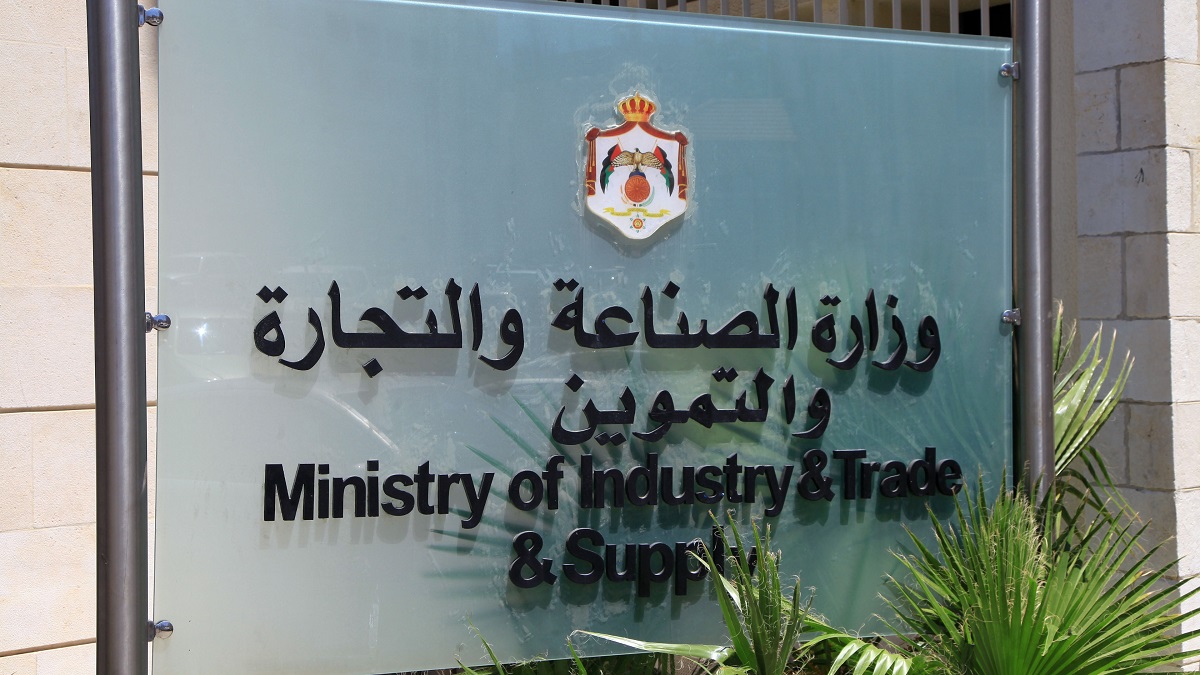
Prepared by the Ministry of Industry, Trade and Supply with support
from the Economic Reform Program and in partnership with the Jordan
Chamber of Industry and relevant public- and private-sector
stakeholders, the strategy provides an implementation framework for
advancing the objectives of the Economic Modernisation Vision and the
National Industrial Policy.
The engineering industries sector is an important contributor to
industrial growth and economic competitiveness. It comprises
approximately 4,800 establishments and provides around 35,200 direct
jobs. In 2024, exports from core engineering industries reached JD
639.2 million, while total sector exports amounted to JD 1.3648
billion, highlighting the sector’s established production base and
potential for further expansion.
A central priority is to increase domestic manufacturing value added
by strengthening local content and replacing imported products with
locally manufactured alternatives. The strategy also seeks to double
gross fixed capital formation in the metal products and electrical
equipment subsectors by 2029, while ensuring that women account for
at least 20 percent of newly created jobs.
The strategy identifies several challenges facing the sector,
including high energy costs, limited export financing options, gaps
in quality assurance and certification, vulnerable supply chains,
weak links between manufacturers and local suppliers, and the
concentration of some exports in a limited number of markets.
At the same time, it highlights opportunities arising from changes in
global supply chains, the benefits of free trade agreements, domestic
demand generated by major national projects and regional
reconstruction efforts, particularly in Syria. Preparing Jordanian
manufacturers to meet environmental and trade requirements in
international markets is another key priority.
The strategy’s vision is to position Jordan as a trusted regional
partner in high-value engineering products that meet recognized
quality standards. It aims to strengthen product quality, precision
and technical reliability while enhancing manufacturers’ ability to
serve domestic, regional and international markets.
Implementation is organized around three main pillars. The first
focuses on strengthening local value chains, developing domestic
suppliers, increasing local content and promoting import substitution
in major national projects. The second aims to build institutional
and workforce capabilities, upgrade technical infrastructure, improve
skills, and promote innovation and applied research and development.
The third pillar focuses on diversifying export markets and
strengthening the international positioning of Jordanian engineering
products. Priorities include capitalizing on reconstruction
opportunities in Syria, maximizing the benefits of free trade
agreements, recovering markets and expanding access to overseas
destinations.
The implementation portfolio includes five interconnected
initiatives: a local content program for major national projects; the
Zarqa Engineering Innovation Centre; a green industry program
supporting compliance with the European Union’s Carbon Border
Adjustment Mechanism (CBAM); a “Made in Jordan” brand for engineering
industries, alongside a Syria reconstruction corridor and measures to
safeguard the benefits of free trade agreements; and initiatives to
attract specialized investment in engineering industries.
Metal products, electrical equipment and metal furniture are given
particular priority because of their contribution to exports, import
substitution, domestic value added, investment and employment.
Targeted measures will also address other subsectors, including
electronics, machinery, basic metals and jewellery, according to
their respective opportunities and challenges.
The strategy emphasizes that achieving its targets will require
coordination among government agencies and institutions involved in
industrial development. This cooperation will support the
implementation of initiatives, monitoring of performance indicators,
stronger industrial competitiveness, increased investment and a
broader international presence for Jordanian engineering products.
Earlier this month, the Ministry announced the launch of three
sectoral strategies for 2027–2029 covering engineering industries,
food industries, and chemical industries and cosmetics. The
initiative forms part of broader efforts to improve industrial
productivity and competitiveness and advance the high-value
industries pillar of the Economic Modernisation Vision.
The strategies aim to develop the targeted industries by identifying
priorities, initiatives and projects with significant economic impact
and linking them to clear performance indicators and measurable
targets. The overall objective is to increase the industrial sector’s
contribution to economic growth, exports, investment and employment.
//Petra// WH