Jordan’s Q2 2026 GDP Expands 3.0%, Outperforming Regional Headwinds, International Forecasts
ENV-KUWAIT-SUSTAINABLITYKuwait strengthens environmental sustainability through strategic initiativesBy Zahra Al-Kadhmi

HLT-KUWAIT-SURGERYKuwait advances health sector with robotic, remote surgeryBy Mohammad Al-Moseb

Saudi Arabia’s Voluntary Carbon Market Fuels the Shift to a Low-Carbon

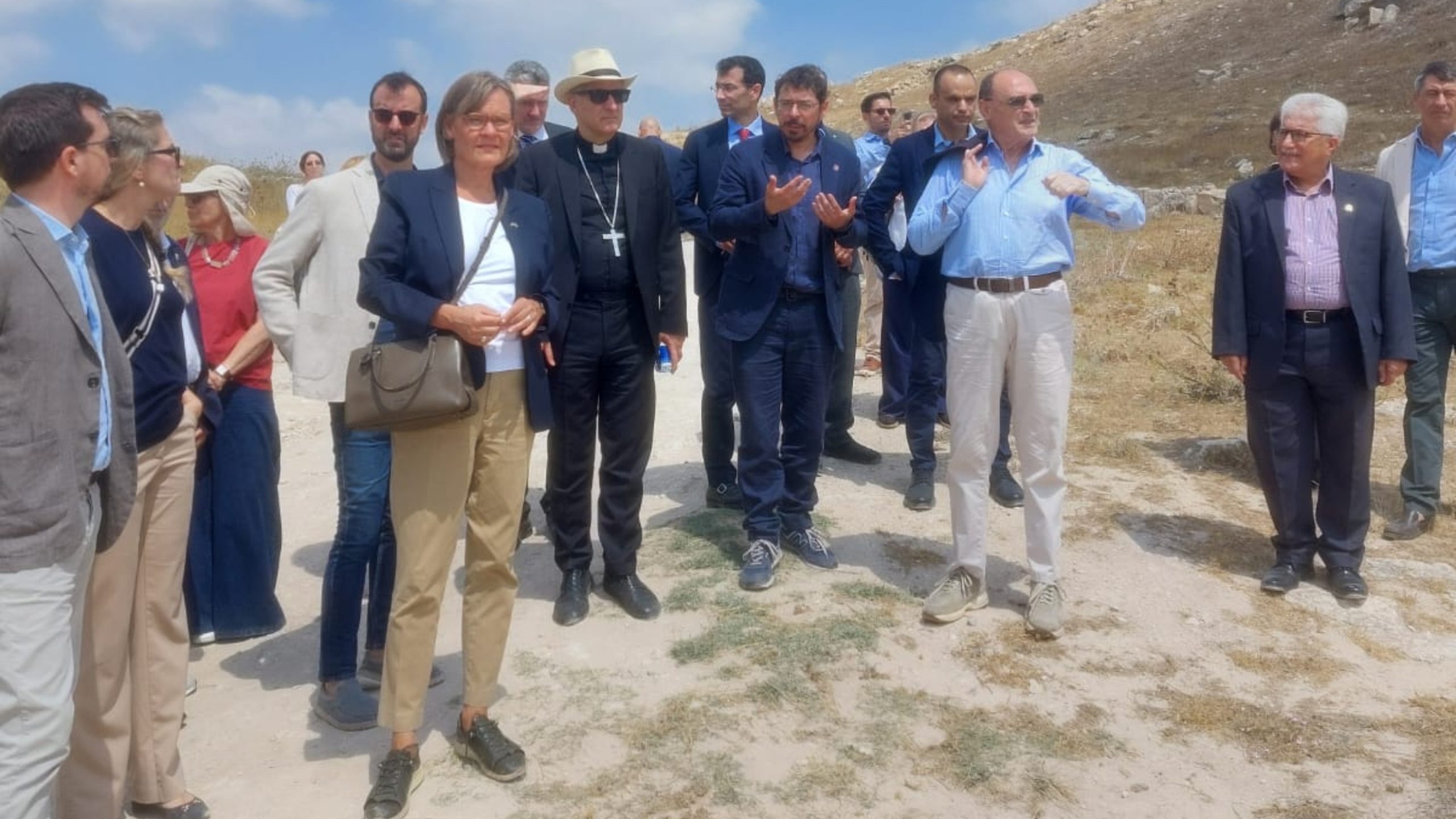
Irbid, July 5 (Petra) — The implementation phase of a project to
upgrade the archaeological site of Qweilbeh (Abila) officially
commenced on Sunday under a European Union-funded initiative aimed at
supporting socio-economic recovery and promoting sustainable local
development through the preservation of cultural heritage.
The project, titled “Supporting Socio-Economic Recovery and
Strengthening Sustainable Local Development through the Enhancement
of Cultural Heritage Sites,” is financed by the European Union and
implemented by the Italian Agency for Development Cooperation in
Amman in partnership with the Department of Antiquities and the
University of Perugia.
Director General of the Department of Antiquities Dr. Fawzi Abu
Deneh, who inaugurated the project on behalf of the Minister of
Tourism and Antiquities, described the initiative as an important
milestone for both the region and Jordan.
He said the archaeological site of Qweilbeh (Abila) holds exceptional
historical and archaeological significance and is expected to emerge
as a major destination on Jordan’s tourism and cultural map following
the project’s completion.
European Union Ambassador to Jordan Pierre-Christophe Chatzisavas
said the project’s primary objectives include enabling local
communities to benefit from tourism activity, preserving and
enhancing the archaeological site and increasing its visibility as a
tourism destination while highlighting its historical importance.
Italian Ambassador to Jordan Luciano Pezzotti said Qweilbeh is among
Jordan’s most significant archaeological sites and possesses strong
potential to become a leading heritage and tourism destination. He
added that the project is expected to generate employment
opportunities for local communities while delivering wider economic
and development benefits.
Andrea Polcaro, representing the University of Perugia, presented an
overview of the archaeological site, highlighting its historical
value, key archaeological features and the ongoing fieldwork being
carried out under the project. He also expressed the university’s
appreciation for participating in the initiative.
The launch ceremony was attended by Assistant Governor of Bani Kenana
District Nael Ibdah, Chairman of the Kafarat Municipality Committee
Jamal Batayneh and representatives of the local community.
//Petra// RZ