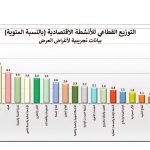
Jordan’s Q2 2026 GDP Expands 3.0%, Outperforming Regional Headwinds, International Forecasts
ENV-KUWAIT-SUSTAINABLITYKuwait strengthens environmental sustainability through strategic initiativesBy Zahra Al-Kadhmi

HLT-KUWAIT-SURGERYKuwait advances health sector with robotic, remote surgeryBy Mohammad Al-Moseb

Saudi Arabia’s Voluntary Carbon Market Fuels the Shift to a Low-Carbon


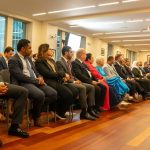
Khartoum, (SUNA) – Minister of Finance and Economic Planning and leader of the Sudanese Justice and Equality Movement (JEM), Dr. Gebreil Ibrahim Mohamed, affirmed that the Sudanese economy is capable of withstanding the deep repercussions of the war and the pressures facing the country. He made the remarks during a meeting on Saturday with leaders of the native administration and tribal figures and notables in Omdurman, in response to an invitation from Prince Awad Al-Jeed Al-Naeima, Emir of the Kawahla, in the presence of Al-Mak Mohamed Ajeeb Al-Hadi and a number of Maks, Sultans, Nazirs, Omdas, princes, and business and financial leaders. The Finance Minister said that, in addition to the military war, Sudan is facing an economic and media war, as well as speculation in the foreign-exchange market aimed at weakening and subjugating the state. He stressed that the current economic conditions place a heavy burden on citizens and that overcoming them requires concerted national efforts, preservation of state institutions, and the continuation of production and services. For his part, Prince Awad Al-Jeed Al-Naeima affirmed the Kawahla native administration’s support for the state and its institutions, commending the national positions and role played by the Finance Minister during the war. He said the economic hardship should be viewed in the context of the exceptional circumstances imposed by the war, noting that macroeconomic management is a shared responsibility among state institutions, particularly the Ministry of Finance and the Central Bank of Sudan. He called for stronger coordination between fiscal and monetary policies and cautioned against reducing economic challenges to the performance of a single institution. Kawahla leaders at the meeting affirmed their support for state institutions and saluted the Sudanese Armed Forces, the Joint Force, and supporting formations, commending their sacrifices in military operations and the advances they have made in Singa, Al-Dinder, Wad Madani, and Khartoum. The meeting also addressed what participants described as attempts to cast doubt on the role of the Joint Force by attributing certain individual practices to the force as a whole. They stressed the need to distinguish between any individual violations and the overall role and sacrifices of the force. Participants commended the sacrifices made by the Sudanese Armed Forces, the Joint Force, and supporting formations, affirming their support for efforts to restore security and stability and preserve Sudan’s unity. The meeting concluded by underscoring the importance of national unity, strengthening social cohesion, and the role of the native administration in supporting the state during the war and mitigating its social and economic repercussions.BH/BH