Jordan’s Q2 2026 GDP Expands 3.0%, Outperforming Regional Headwinds, International Forecasts
ENV-KUWAIT-SUSTAINABLITYKuwait strengthens environmental sustainability through strategic initiativesBy Zahra Al-Kadhmi

HLT-KUWAIT-SURGERYKuwait advances health sector with robotic, remote surgeryBy Mohammad Al-Moseb
Saudi Arabia’s Voluntary Carbon Market Fuels the Shift to a Low-Carbon

Amman, June 1 (Petra) — The opening of six new factories in
Al-Qatrana is a strong message of confidence in Jordan’s investment
environment with a capacity to attract high-quality, value-added
industrial investments that generate job opportunities and support
exports, said industrialists.
Investment in industry helps to transfer industrial technology and
knowledge to the Kingdom and boost exports, as it aims to produce
goods with competitiveness in foreign markets, they said in
interviews with Petra.
The opening of the factories is a clear indicator that the country is
effectively moving from a logic of isolated projects to building
integrated industrial clusters capable of creating sustainable job
opportunities and driving development across the governorates, they
pointed out.
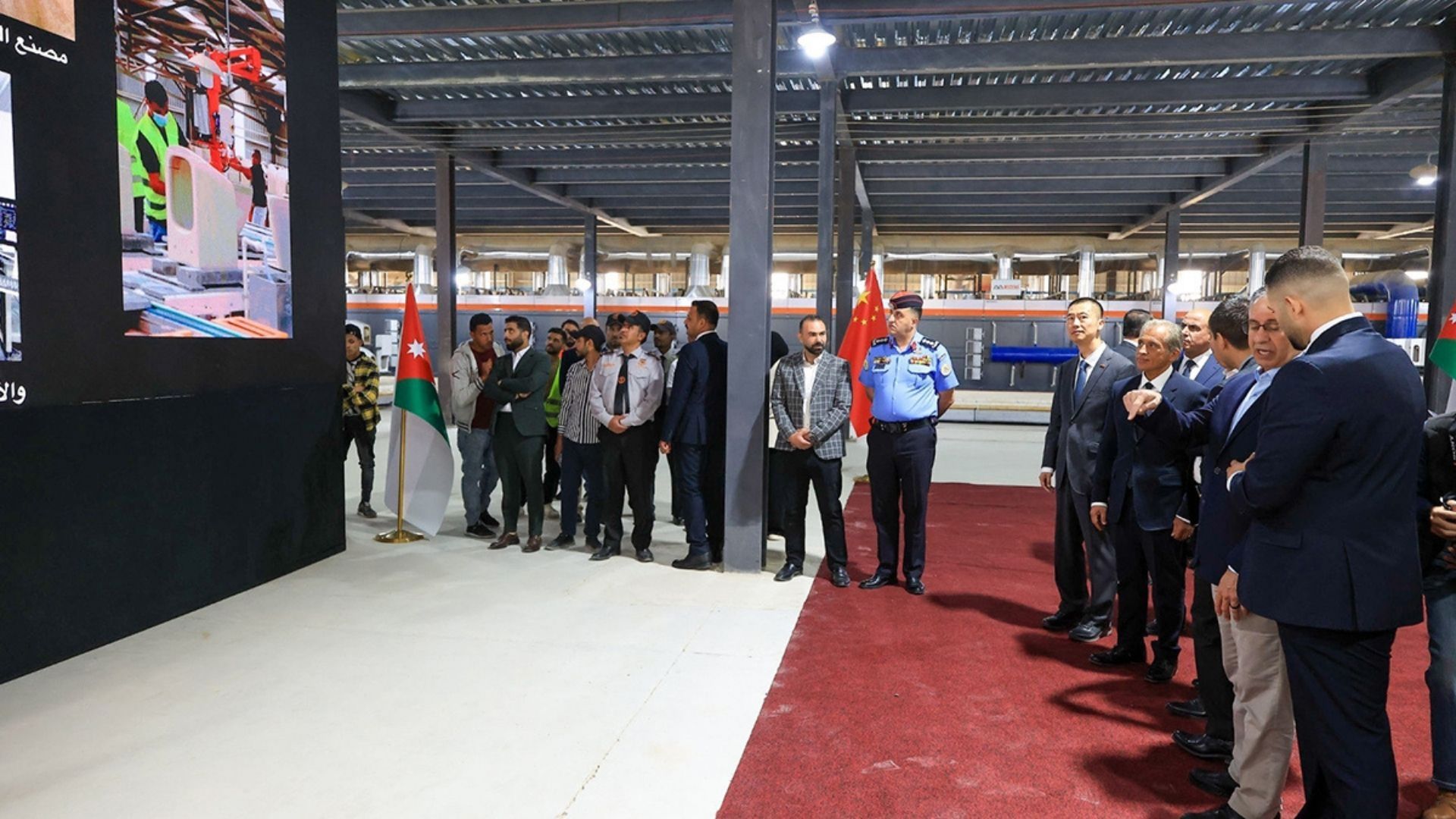
Prime Minister Jafar Hassan inaugurated six factories of the Jinsheng
International Group in the Al-Qatrana in the Karak Governorate on
Sunday.
The facilities, as the nucleus of an integrated industrial complex,
will provide 700 job opportunities for residents of the region and
surrounding areas.
Jinsheng International is a Chinese investment specializing in the
manufacture of porcelain, electrical appliances, stainless steel,
lighting, sanitary ware, cardboard products, and other goods. The
company is currently building three additional factories in
Al-Qatrana for the production of glass, porcelain, and plastic
products.
The opening of the factories is a successful model for strategic
projects targeted by Jordan’s new investment environment, said Iyad
Abu Haltam, Chairman of the East Amman Industrial Investors
Association.
The project is a practical application of the incentives and
facilities offered by the Investment Environment Law to attract major
industrial investments, he added.
“The importance of this industrial project extends beyond its
investment size and the number of jobs it creates, but also plays a
crucial role in transferring modern industrial technology and
knowledge to the Kingdom,” he said.
He added the the choice of Al-Qatrana for the massive industrial
complex carries significant developmental dimensions, as it
contributes to directing investments towards governorates and regions
far from traditional economic centers.
Haltam said the success of the Chinese investment sends a message to
international investors about the viability of industrial investment
in Jordan, given the Kingdom’s economic stability, strategic
location, and extensive network of free trade agreements.
These agreements grant Jordanian-made products preferential access to
numerous global markets, thus strengthening the Kingdom’s position as
a regional manufacturing and export hub, he said.
Head of the Jordanian Investors Association, Mujahid Al-Rajabi,
commented that Jordan has numerous advantages to become a regional
industrial hub, notably its strategic geographic location, free trade
agreements that guarantee access to more than 1.6 billion consumers
worldwide, and skilled manpower and advanced industrial
infrastructure that has seen remarkable development in recent years.
The next phase requires a focus on high-tech industries with high
added value, particularly pharmaceuticals and medical supplies,
specialized food industries, engineering and electronics industries,
renewable energy components manufacturing, digital transformation
technologies, and industries related to the green economy, recycling,
and environmental sustainability, he said.
Mohammad Smadi, CEO of Business Development at Al-Amal Industrial
Group, said the new factories are not merely a new investment
expansion, but a significant shift in Jordan’s standing as a regional
industrial hub capable of attracting long-term productive
investments.
Fawaz Al-Shak’a, a Jordan Chamber of Industry board member, said
major investment ventures currently receive tangible government
support, whether through energy incentives, development zones, or
legislative facilitations.
The influx of major industrial investments into the Kingdom is not a
mere coincidence, but is the fruit of an integrated system of
established structural assets and competitive advantages, he said.
Foremost among these is a set of free trade agreements that grant
Jordanian products preferential access to the markets of the United
States, the European Union, Arab countries, and many other foreign
countries, he added.
Ihab Qadri, representative of the leather and garment sector at the
Jordan Chamber of Industry, said moving from isolated projects to
integrated industrial clusters is a major boost to national exports,
as integrated industrial complexes ensure more consistent production
and higher logistical efficiency, thus enhancing Jordan’s credibility
as an attractive industrial location capable of efficiently accessing
global markets.
Jordan needs not only additional production capacity, but also
industrial depth and vertical and horizontal integration, he added.
//Petra//SS