Jordan’s Q2 2026 GDP Expands 3.0%, Outperforming Regional Headwinds, International Forecasts
ENV-KUWAIT-SUSTAINABLITYKuwait strengthens environmental sustainability through strategic initiativesBy Zahra Al-Kadhmi

HLT-KUWAIT-SURGERYKuwait advances health sector with robotic, remote surgeryBy Mohammad Al-Moseb

Saudi Arabia’s Voluntary Carbon Market Fuels the Shift to a Low-Carbon

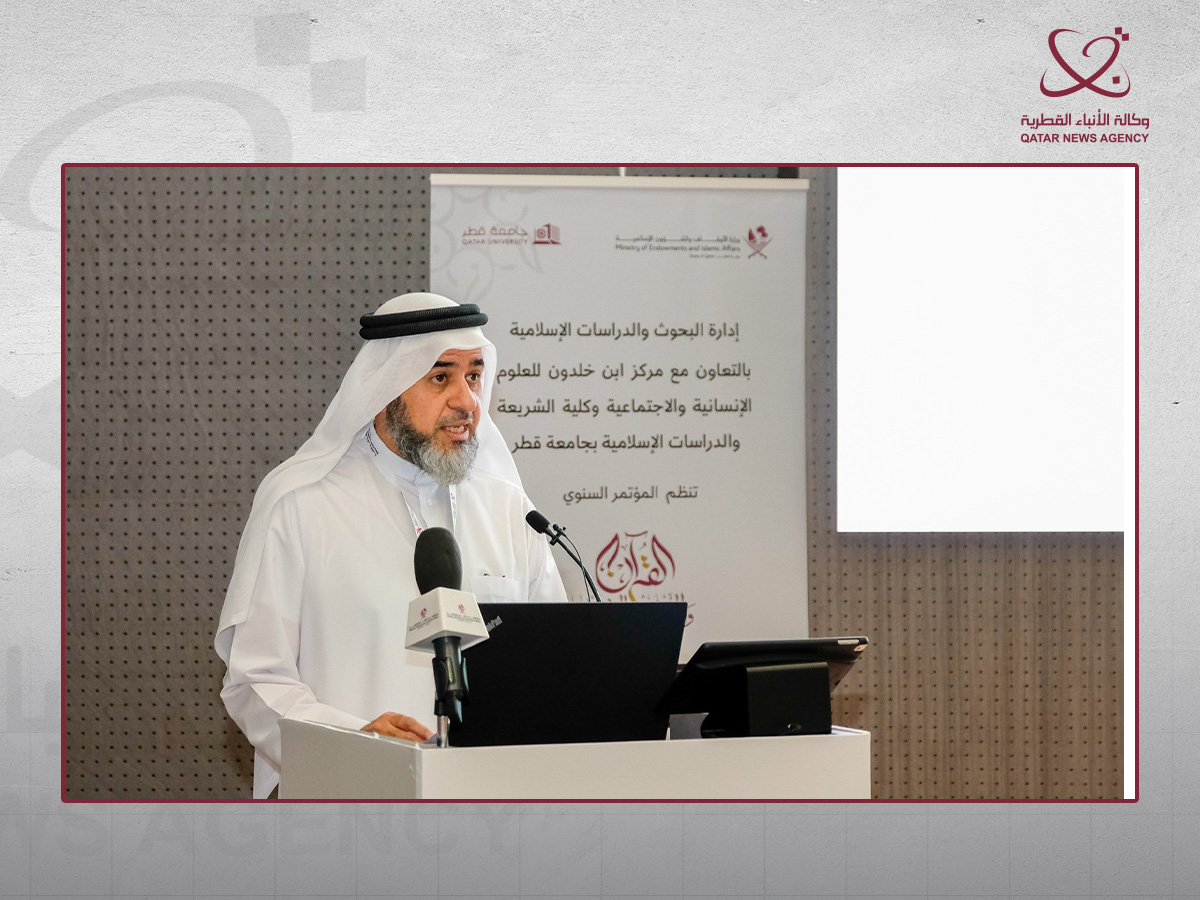
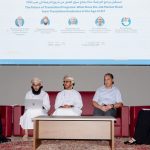
Doha, October 05 (QNA) – The second conference on the Holy Quran and Human Knowledge convened in Doha on Monday.
The event aims to advance sound human knowledge when it comes to the Holy Quran. It was kicked off concurrently with the opening of the Book of the Ummah Forum, bringing together a pantheon of researchers, academics and specialists from nine countries, underscoring the strong academic interest in the event.
The event is being organized as part of a longstanding institutional partnership between the Ministry of Endowments (Awqaf) and Islamic Affairs, through its Department of Islamic Research and Studies, and Qatar University (QU), through the Ibn Khaldun Center for Humanities and Social Sciences and the College of Sharia and Islamic Studies.
The partnership broadly aligns with Awqaf’s 2025-2030 strategy and Qatar National Vision 2030, emphasizing a shared commitment to supporting scientific research and building a knowledge-based society.
Dean of the College of Sharia and Islamic Studies at QU Dr. Ibrahim bin Abdullah Al Ansari heaped praise on the Awqaf-QU scientific partnership, asserting that it constitutes a quintessential national model when it comes to joint efforts for the advancement of scientific research and knowledge-building.
This forged partnership highlights the significance of joint efforts among scientific institutions to navigate contemporary intellectual challenges, Al Ansari pointed out.
Al Ansari noted that bringing together efforts centered on the Book of Allah, the Almighty, and drawing inspiration from its guidance across various fields of knowledge is one of the most profound forms of impactful scholarly work.
He pointed out that the Holy Quran has throughout history served as a foundation for Islamic civilization and a source of inspiration for scholars and researchers, contributing to a scientific and intellectual renaissance whose impact has been felt across diverse fields of civilization, science and the arts.
The Muslim Ummah attained its civilizational standing when it made the Holy Quran an imam to guide its scientific and intellectual journey, drawing from it the values of knowledge, faith and action, Al Ansari recalled.
He suggested that what matters more is to persistently deepen the connection with revelation, drawing on its guidance to build human knowledge, promote sound thinking and strengthen the Ummah’s civilizational contribution in a world undergoing rapid intellectual and knowledge transformations.
Director of Ibn Khaldon Center for Social and Human Sciences Dr. Badrane Benlahcene said the conference aims to reconnect the sciences with their ethical and human purposes and move beyond merely citing Quranic texts to examining their epistemological structure and value system.
He revealed that the organizing committee received approximately 2,000 research abstracts covering the conference’s four areas – philosophy, linguistics, law and politics. The abstracts underwent rigorous screening and peer review, ultimately resulting in the selection of 17 final papers to be presented by researchers from Qatar, Morocco, Algeria, Egypt, Turkiye, Yemen, Oman, Iraq and Sudan.
Meanwhile, the second forum garnered widespread attention to examine the scholarly experience of this series and highlight its role in laying the intellectual foundations over the course of decades.
Director of Research and Islamic Studies at Awqaf Sheikh Dr. Ahmed bin Mohammed Al-Thani highlighted that both the conference and forum materialize Awqaf’s commitment to leveraging Sharia knowledge in building people, indicating that the current edition invariably keeps building on the inaugural one, which had produced three scientific volumes. (QNA)