Jordan’s Q2 2026 GDP Expands 3.0%, Outperforming Regional Headwinds, International Forecasts
ENV-KUWAIT-SUSTAINABLITYKuwait strengthens environmental sustainability through strategic initiativesBy Zahra Al-Kadhmi
HLT-KUWAIT-SURGERYKuwait advances health sector with robotic, remote surgeryBy Mohammad Al-Moseb

Saudi Arabia’s Voluntary Carbon Market Fuels the Shift to a Low-Carbon

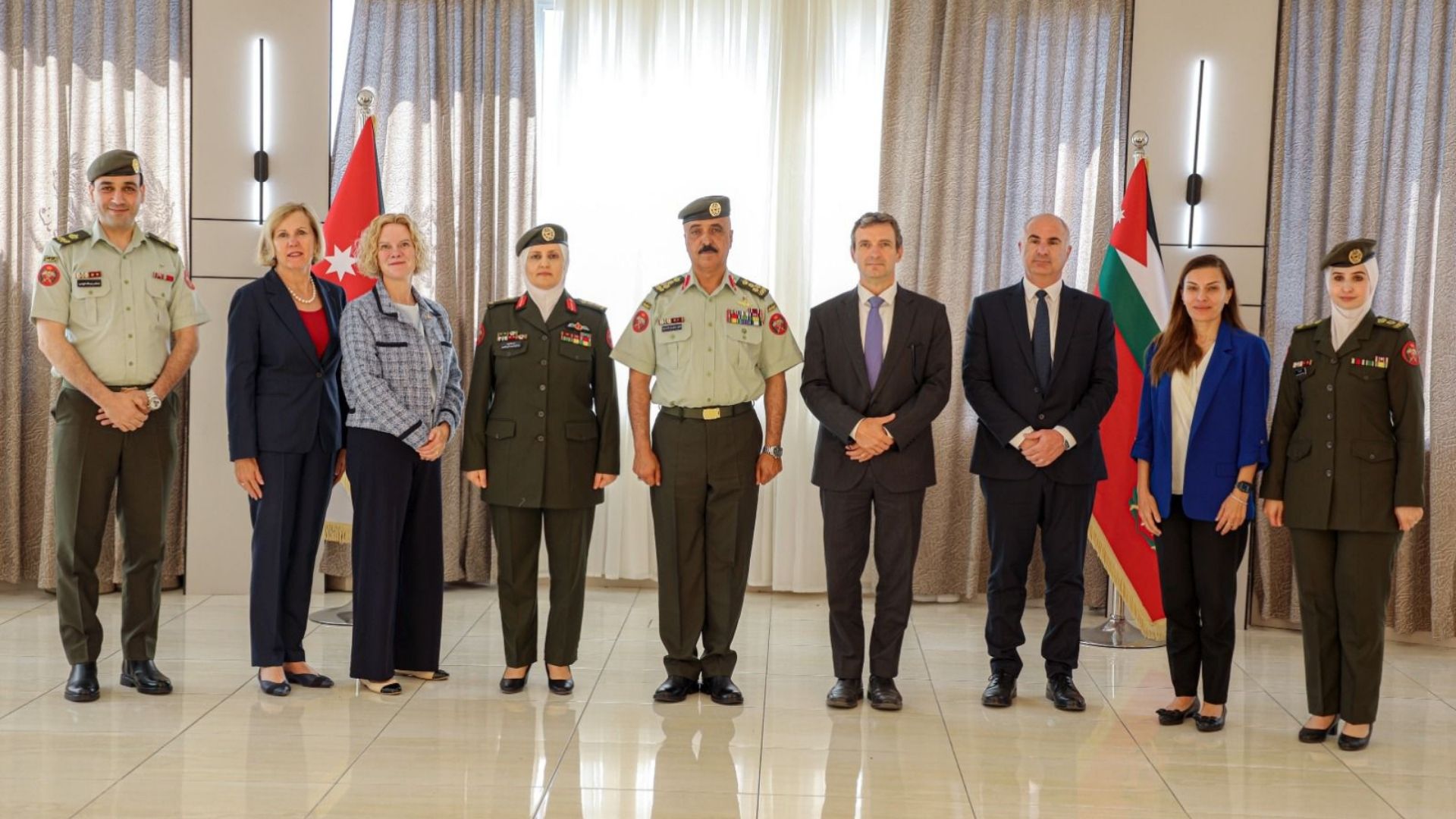
Amman, June 18 (Petra) — Jordan Armed Forces-Arab Army (JAF) on
Thursday launched its second Gender Mainstreaming Strategy for
2026-2030, developed in cooperation with UN Women, to strengthen
women’s presence and advance equal opportunities across the military
institution.
Representing Chairman of the Joint Chiefs of Staff Maj. Gen. Yousef
Huneiti, JAF Assistant for Administration and Human Resources Brig.
Gen. Khalil Al-Da’jah sponsored the launch ceremony of the strategy,
which was prepared by the Directorate of Military Women’s Affairs, in
cooperation with UN Women.
Da’jah said Jordanian women have demonstrated their “competence and
ability to perform a wide range of military duties,” adding that the
new strategy provides a “comprehensive” institutional framework to
enhance participation, build capacities, and promote justice and
equal opportunities.
He said the strategy would contribute to improving JAF’s efficiency
and strengthen their ability to carry out national and humanitarian
missions.
Da’jah added that the JAF views gender mainstreaming as an
“essential” component of institutional development, enabling the
optimal use of human resources and enhancing readiness, effectiveness
and operational performance in line with the military’s vision and
mission.
In turn, UN Women Representative in Jordan Nicolas Burniat said the
JAF have demonstrated “sustained institutional” commitment to gender
mainstreaming, which helped build a strong foundation for the next
phase through a participatory gender audit conducted in partnership
with UN Women.
He commended efforts of the JAF and the Directorate of Military
Women’s Affairs in advancing gender mainstreaming as an institutional
priority.
Attendees were briefed by Lt. Col. Baraa Abu Qaoud, head of the
Gender Division at the Directorate of Military Women’s Affairs, on
the strategy’s objectives and key pillars, mainly gender
mainstreaming considerations into policies and institutional
practices, promoting equal opportunities, and creating a supportive
work environment for military women.
Attended by senior officers, ambassadors and defense attachés from
supporting countries, the ceremony also featured a documentary
highlighting women’s contributions in the army across military
duties, humanitarian operations, training programs, and peacekeeping
missions at regional and international levels.
The strategy aims to build on achievements from the previous phase by
providing a clear and actionable roadmap to translate the armed
forces’ vision into practical programs and initiatives that enhance
the role of military women and maximize their contribution across the
institution.
Strategy implementation will be annually reviewed and assessed by the
Directorate of Military Women’s Affairs to ensure effective execution
and alignment with emerging priorities.
//Petra// NQ