Saudi Arabia’s Voluntary Carbon Market Fuels the Shift to a Low-Carbon

Under UAE President’s directives, UAE launches urgent relief response for Ghana flood victims
Combating Desertification and Drought: Qatar a Model in Preserving Natural Resources, Establishing Environmental Stability
UAE allocates US$30 million for emergency humanitarian response in El Obeid, calls for civilian protection, safe humanitarian aid access in Sudan

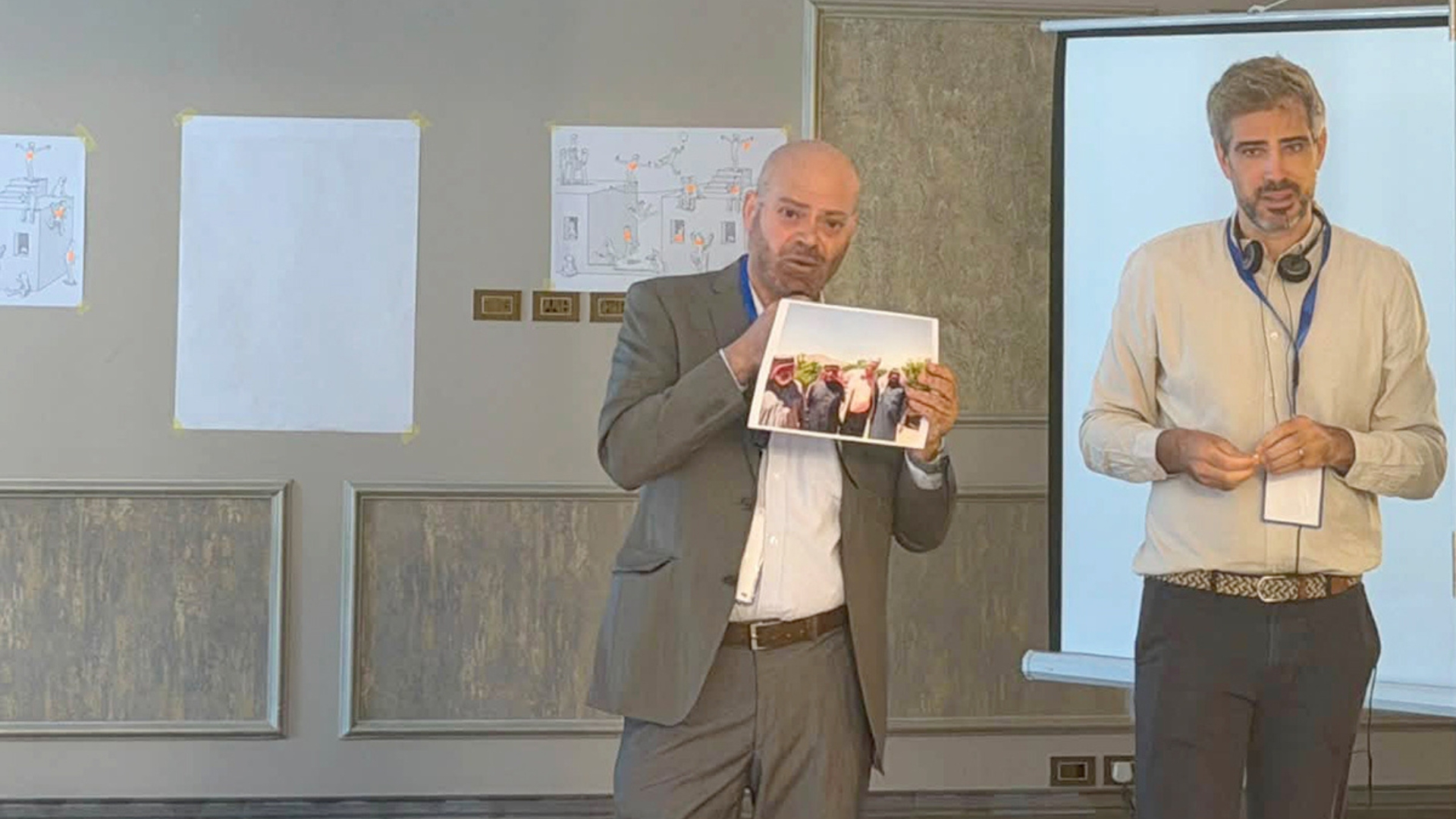
Amman, Sept. 13 (Petra) – The Ministry of Water and Irrigation/Water
Authority on Sunday held a regional training workshop on developing
risk-management plans for the reuse of treated wastewater in
agriculture, bringing together experts from eight Arab countries.
The ministry said the workshop was organized in cooperation with the
Scientific and Technical Committee for Agricultural Water (COSTEA)
initiative, with support from the AdaptAction program of the French
Development Agency (AFD), co-financed by the European Union.
Experts from Jordan, Palestine, Syria, Lebanon, Egypt, Tunisia,
Algeria, and Morocco participated in the workshop, which focused on
exchanging expertise and disseminating scientific knowledge based on
the World Health Organization’s “multiple-barrier” approach to
promote the safe reuse of non-conventional water resources and
adaptation to water scarcity.
Water Authority Reuse Department Director Hamza Qudah said Jordan’s
water sector is working to advance integrated water resources
management and expand the use of treated wastewater as a key
component in addressing water scarcity, in line with the National
Water Strategy 2023–2040.
EU Delegation to Jordan Program Officer Marwan Saad reaffirmed the
European Union’s support for the development of water sectors across
the Mediterranean region.
Guillaume Merere, head of the Water and Energy Department at the
French Development Agency, said the agency supports projects aimed at
providing high-quality water, expanding its reuse in agriculture, and
improving the management of treated wastewater.
COSTEA Regional Coordinator for Morocco and the Mediterranean Ehssan
Meknassi outlined the initiative’s objectives and its role in
improving agricultural water management efficiency.
The AdaptAction program, established in 2017, provides technical
assistance to partner countries implementing the adaptation component
of the Paris Agreement through research, strategies, master plans,
feasibility studies, and training.
The program operates in 20 climate-vulnerable countries across
Africa, the Indian Ocean, the Middle East, and Southeast Asia. In
North Africa and the Middle East, it is co-financed by the European
Commission.
In Jordan, the program supports the water and agriculture sectors,
particularly efforts to improve treated wastewater reuse and mobilize
green investment.
//Petra// AO