Jordan’s Q2 2026 GDP Expands 3.0%, Outperforming Regional Headwinds, International Forecasts
ENV-KUWAIT-SUSTAINABLITYKuwait strengthens environmental sustainability through strategic initiativesBy Zahra Al-Kadhmi

HLT-KUWAIT-SURGERYKuwait advances health sector with robotic, remote surgeryBy Mohammad Al-Moseb

Saudi Arabia’s Voluntary Carbon Market Fuels the Shift to a Low-Carbon

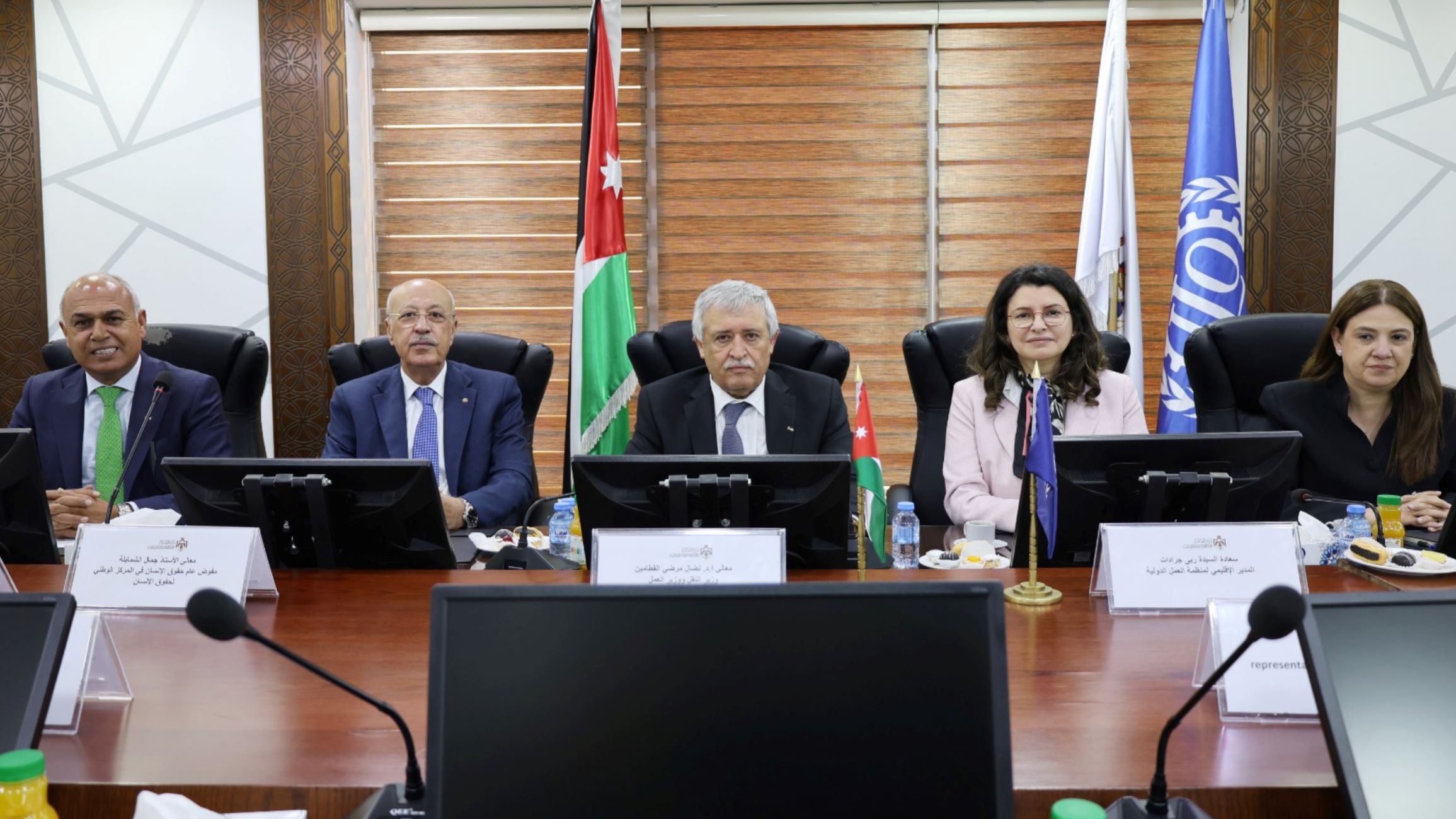
Amman, Oct. 19 (Petra) – The Ministry of Labor and the International
Labour Organization (ILO) on Monday signed an agreement launching the
“Better Work and Labor Governance to Support Jordan’s Garment Sector”
project to improve working conditions, protect workers’ rights, and
boost labor governance across the industry.
The agreement was signed by Labor Minister Nidal Qatamin and ILO
Regional Director for Arab States Ruba Jaradat.
The project will provide practical support to factories to improve
compliance with labor standards. It will also bolster national
efforts to prevent forced labor, promote fair recruitment, expand
access to reliable worker support and representation mechanisms, and
reinforce institutions responsible for protecting workers’ rights.
The initiative also seeks to improve access to support services,
including through the establishment of a dedicated worker service
center, particularly for migrant workers and women.
The agreement establishes the framework for the next phase of
cooperation, building on a letter of intent signed by the government
and the ILO in July.
Implementation will begin with a three-month preparatory phase to
establish governance arrangements, complete baseline and
institutional capacity assessments, approve detailed work plans,
formalize partnerships and finalize monitoring mechanisms. This phase
will allow the government, the ILO, and social partners to coordinate
activities according to national priorities and available resources.
Alongside factory-level support, the project will improve systems for
handling complaints and resolving labor disputes, while expanding
workers’ access to effective grievance and representation mechanisms,
particularly for women and migrant workers.
It will also support the establishment and activation of the National
Joint Council for the Jordan Garment and Textile Industry, which will
serve as a platform for coordination, social dialogue and monitoring
progress among stakeholders.
Qatamin said the agreement showcases Jordan’s commitment to
protecting workers’ rights, improving working conditions and
bettering governance in the garment sector through clear programs and
dedicated funding.
He added that the project would provide practical support to
factories and national inspection and complaints systems, delivering
tangible improvements for workers while ensuring manufacturers
receive the guidance and accountability mechanisms needed to meet
labor standards.
Qatamin also mentioned the strategic importance of the garment and
textile sector under the Economic Modernization Vision, describing it
as a “priority industry with significant potential” for growth,
higher value-added production and job creation.
Jaradat, for her part, said the ILO was committed to continuing its
support for the government in creating a safe and fair working
environment and building a strong, internationally competitive
garment sector.
The ILO will work closely with the government, employers and workers
to strengthen labor market systems, institutional capacity and
partnerships that promote better working conditions, according to
Jaradat. The aim, she added, is to keep decent work at the center of
the sector’s growth while supporting its long-term resilience and
competitiveness.
//Petra// HA