Jordan’s Q2 2026 GDP Expands 3.0%, Outperforming Regional Headwinds, International Forecasts
ENV-KUWAIT-SUSTAINABLITYKuwait strengthens environmental sustainability through strategic initiativesBy Zahra Al-Kadhmi

HLT-KUWAIT-SURGERYKuwait advances health sector with robotic, remote surgeryBy Mohammad Al-Moseb

Saudi Arabia’s Voluntary Carbon Market Fuels the Shift to a Low-Carbon

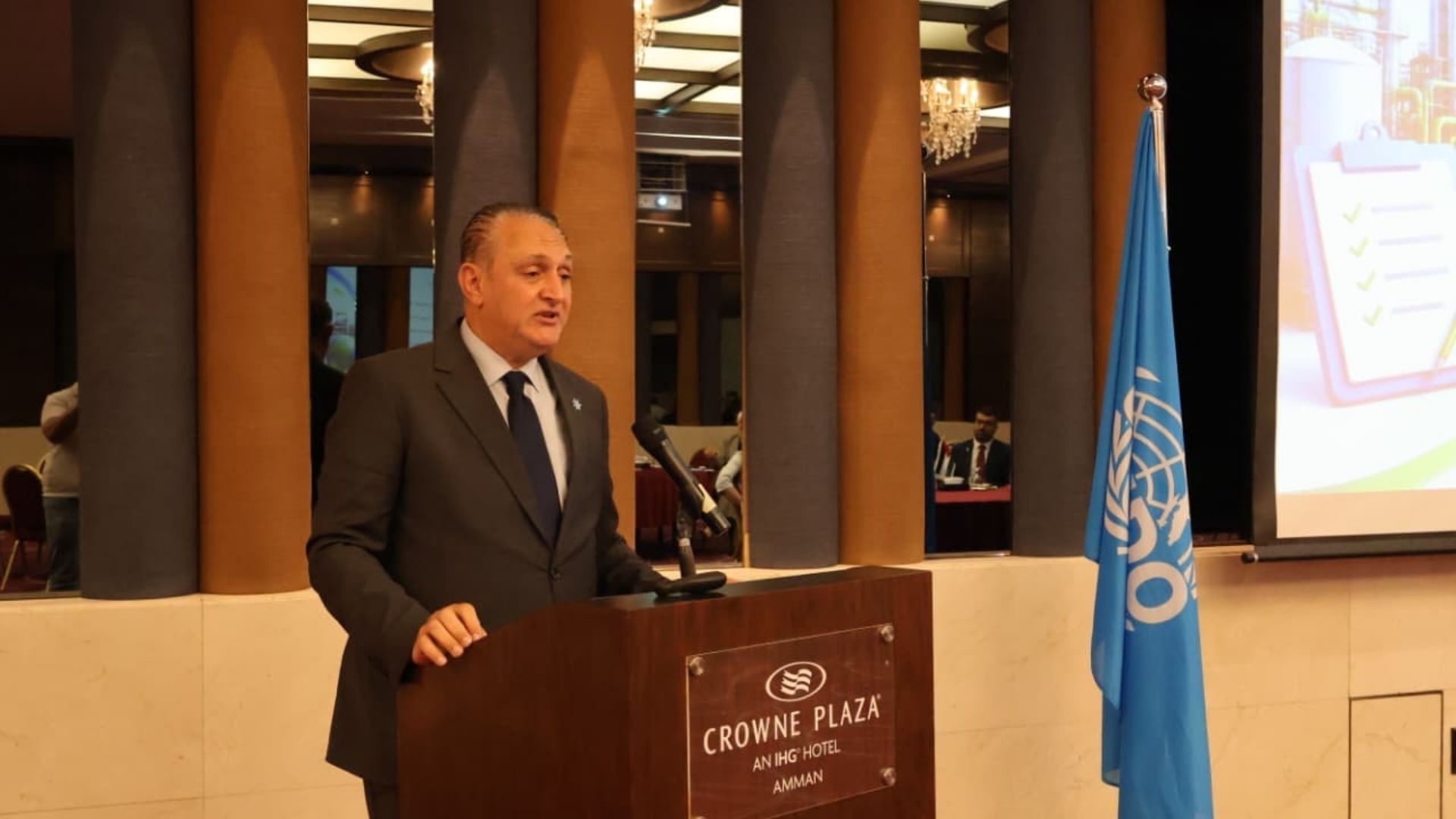
Amman, June 24 (Petra) — Ministry of Environment, in cooperation
with the United Nations Industrial Development Organization (UNIDO),
convened a consultative meeting for partners involved in Montreal
Protocol projects in Jordan to align priorities for future planning
and implementation.
The discussions brought together representatives from the Ministry of
Industry, Trade and Supply, the Jordan Customs Department, the
Vocational Training Corporation and the private sector.
Addressing the audienece, Environment Minister Ayman Suleiman said
the event reflects Jordan’s ongoing efforts to meet its obligations
under the Montreal Protocol and the Kigali Amendment.
Suleiman stressed the ministry’s commitment to a participatory
approach based on continuous engagement with national and
international partners.
He said action to protect ozone layer and advance the green economy
is a “strategic” investment in the future competitiveness of national
industry, public health and environmental sustainability, in line
with the Kingdom’s Economic Modernization Vision.
In turn, UNIDO Resident Representative Sulafa Madanat reiterated the
organization’s commitment to supporting Jordan in implementing its
obligations under the Montreal Protocol and the Kigali Amendment and
working with national partners to achieve tangible results in the
industrial and service sectors.
Regina Vellmer, Project Management Consultant at UNIDO’s Montreal
Protocol Division, urged continued technical and institutional
support and the implementation of projects related to the Kigali
Amendment and the phase-out management of ozone-depleting substances
to advance national and global ozone protection goals.
The meeting program featured a presentation on key findings of
Jordan’s national report on the consumption of substances regulated
under the Montreal Protocol (CP Report).
Participants were also briefed by UNIDO National Montreal Protocol
Projects Coordinator Awwad Salameh on the implementation of Montreal
Protocol projects, key achievements and the technical, administrative
and regulatory challenges associated with implementation.
The discussions also saw an interactive session involving government
agencies and private-sector representatives to identify training and
capacity-building priorities, assess lessons learned and propose
practical measures to support implementation during the next phase.
Participants said the consultative approach strengthens coordination
among national and international stakeholders, improves
implementation efficiency and supports institutional and national
priorities.
Concluding activities, agreement was reached on a set of
implementation steps, including “prioritizing” training and
capacity-building programs, expanding knowledge-sharing efforts and
supporting private-sector companies benefiting from Montreal Protocol
projects as Jordan advances its commitments under the protocol and
the Kigali Amendment.
//Petra// NQ