Jordan’s Q2 2026 GDP Expands 3.0%, Outperforming Regional Headwinds, International Forecasts
ENV-KUWAIT-SUSTAINABLITYKuwait strengthens environmental sustainability through strategic initiativesBy Zahra Al-Kadhmi
HLT-KUWAIT-SURGERYKuwait advances health sector with robotic, remote surgeryBy Mohammad Al-Moseb

Saudi Arabia’s Voluntary Carbon Market Fuels the Shift to a Low-Carbon

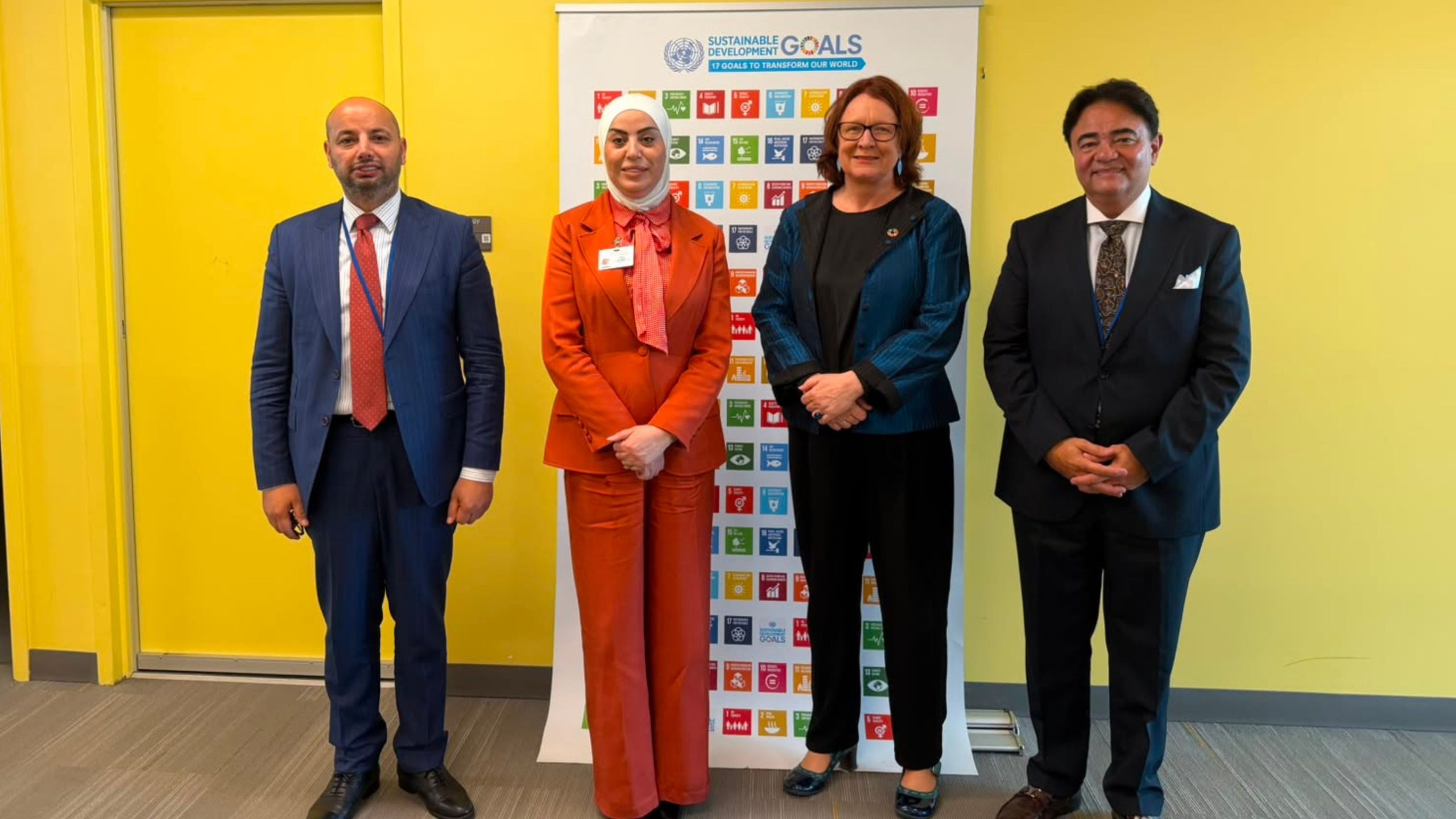
New York, June 11 (Petra)– Minister of Social Development and Chair
of the 45th Session of the Arab Council of Social Affairs Ministers,
Wafa Bani Mustafa, met on Thursday in New York with Bjørg Sandkjær,
Assistant Secretary-General for Policy Coordination at the United
Nations Department of Economic and Social Affairs (UNDESA), to
discuss enhancing regional cooperation on key social priorities
across the Arab world.
The meeting focused on supporting joint Arab efforts to address
social challenges, strengthen social protection systems, and advance
sustainable development pathways.
Bani Mustafa emphasized the importance of continued support for the
Arab Center for Social Policy Studies and the Eradication of
Multidimensional Poverty, describing it as a specialized Arab
platform for developing evidence-based social policies and promoting
the exchange of expertise and knowledge among Arab countries.
She noted that the center plays a vital role in efforts to reduce
multidimensional poverty and foster inclusive social development.
The discussions also highlighted the need to prepare Arab countries’
priorities for the post-2030 development agenda, building on progress
achieved under the Sustainable Development Goals (SDGs). Both sides
stressed the importance of integrating social issues into future
development frameworks and strengthening Arab cooperation in social
protection, poverty reduction, and the empowerment of vulnerable
groups.
The meeting further addressed support for implementing the Arab
Strategy for Older Persons and enhancing cooperation in developing
policies and programs aimed at improving the quality of life of older
adults, expanding social and care services, and promoting their
rights and inclusion in society.
Participants also underscored the importance of advancing the
implementation of the Amman Declaration on the Implementation of the
Outcome of the Second World Summit for Social Development, describing
it as a key framework for strengthening joint Arab social action and
translating commitments into practical and actionable programs.
During the meeting, Bani Mustafa highlighted Jordan’s experience in
empowering and integrating persons with disabilities, noting that the
Kingdom is among the region’s leading countries in adopting a
rights-based approach grounded in equality and equal opportunities.
She pointed to Jordan’s advanced legislative and institutional
framework, which supports inclusive access and improved service
delivery.
She also cited Jordan’s flagship initiative, “Disability-Friendly
Institutions,” implemented across both the public and private sectors
to create inclusive environments that encourage active participation,
further reinforcing Jordan’s position as a regional model for social
inclusion and comprehensive social protection policies.
For her part, Sandkjær emphasized the importance of strengthening
partnerships with Arab countries in the field of social policy and
commended regional efforts to enhance social protection systems and
promote knowledge sharing.
She reaffirmed the United Nations’ support for initiatives aimed at
strengthening joint Arab action, building national capacities to
combat multidimensional poverty, empowering vulnerable populations,
and developing sustainable social policies capable of addressing
current and future social and development challenges.
//Petra// MF