Jordan’s Q2 2026 GDP Expands 3.0%, Outperforming Regional Headwinds, International Forecasts
ENV-KUWAIT-SUSTAINABLITYKuwait strengthens environmental sustainability through strategic initiativesBy Zahra Al-Kadhmi
HLT-KUWAIT-SURGERYKuwait advances health sector with robotic, remote surgeryBy Mohammad Al-Moseb

Saudi Arabia’s Voluntary Carbon Market Fuels the Shift to a Low-Carbon

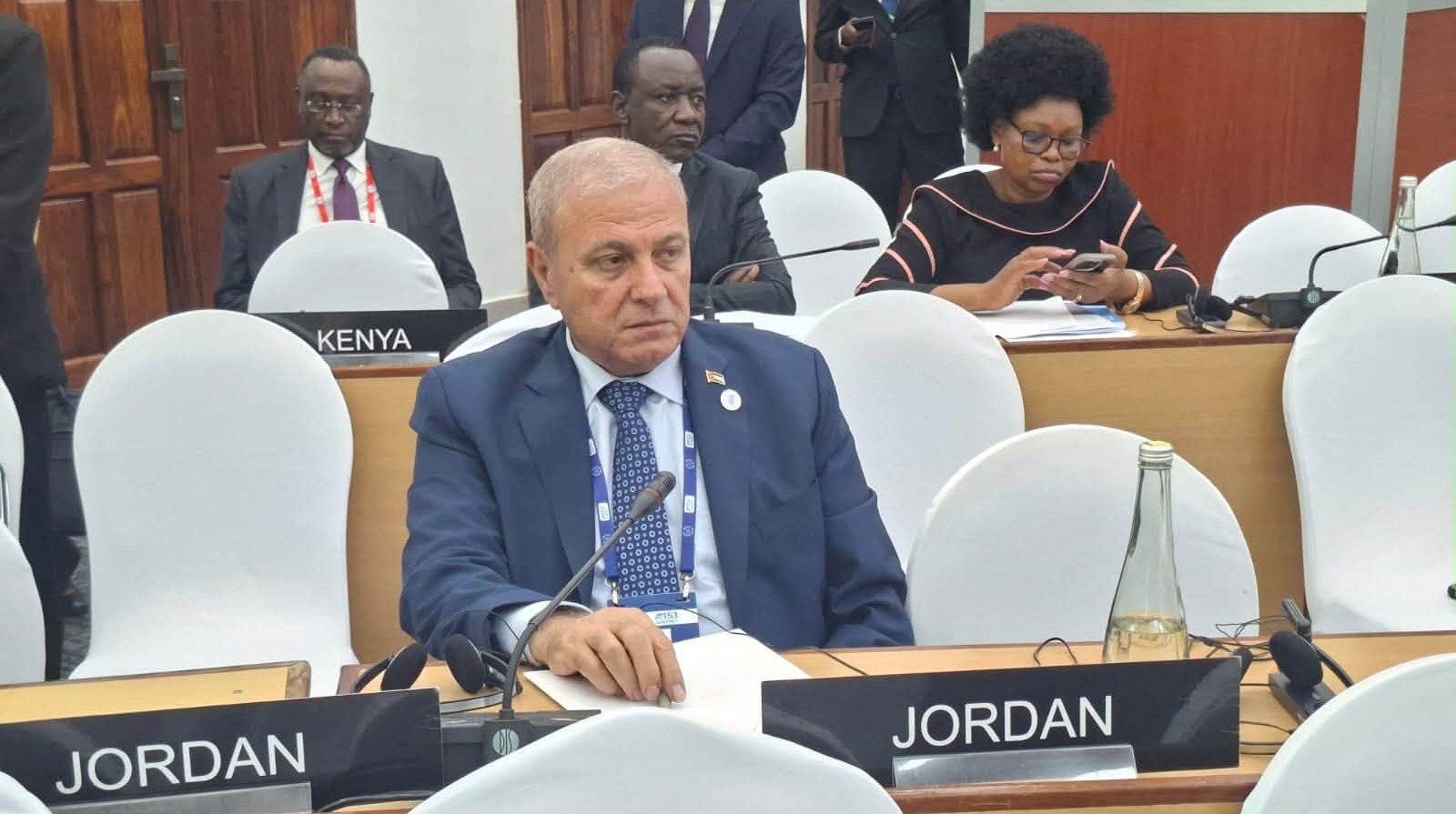
Amman, Oct. 6 (Petra) — The Jordanian parliamentary delegation,
headed by First Deputy Speaker of the Lower House of Representatives
Khamis Hussein Atieh, continued its participation in the 153rd
General Assembly of the Inter-Parliamentary Union (IPU) in the United
Republic of Tanzania, alongside delegations from more than 140 member
countries.
Atieh attended the IPU Governing Council meeting, the organization’s
highest decision-making body, which comprises representatives from
member parliaments to discuss operational matters, approve
memberships, adopt draft resolutions, and elect standing committees
and governing bodies.
Speaking during a meeting of the IPU Standing Committee on Democracy
and Human Rights, MP Samer Al-Azaideh emphasized the need to step up
parliamentary cooperation to construct robust legislative frameworks
that translate human rights, democracy, and inclusive social
development into action particularly measures protecting the rights
of persons with disabilities and guaranteeing equal opportunities.
Al-Azaideh stated that the Jordanian House of Representatives works
continuously to highlight the Kingdom’s principled stance on regional
and international issues, foremost among them the Palestinian cause.
Recalling the address of His Majesty King Abdullah II before the
United Nations General Assembly (UNGA), Al-Azaideh noted that the
speech laid out a clear roadmap reflecting Jordan’s firm positions
regarding regional developments, the Palestinian cause, and the
Hashemite Custodianship over Islamic and Christian holy sites in
Jerusalem. He stressed His Majesty’s call to protect innocent lives,
enforce international law and international humanitarian law without
double standards, and create conditions for a just and comprehensive
peace.
Al-Azaideh reaffirmed Jordan’s commitment to collaborating with all
parties based on the outcomes of the committee’s 152nd session in
Istanbul, working in a spirit of teamwork to advance human rights
values.
Addressing the Standing Committee on Peace and International
Security, MP Arwa Al-Hajaya warned that the succession of global
crises is putting international law and diplomacy to a critical test.
She asserted that peace cannot be achieved by remaining silent in the
face of injustice or merely managing crises until the temporary
becomes permanent, but rather through political will that prioritizes
law and human dignity over force.
Al-Hajaya highlighted His Majesty King Abdullah II’s statement at
UNGA that the international community has spent too long managing
conflict rather than resolving it, causing the temporary to become
permanent and an imposed policy. She added that international law
loses its meaning when violations are ignored for decades and the
international community hesitates to hold perpetrators accountable.
While noting that parliamentary diplomacy is not a substitute for
official government channels, Al-Hajaya described it as a vital
bridge between peoples and decision-making bodies that can keep
communication open during formal impasses. She urged parliaments to
adhere to the UN Charter, state sovereignty, international
humanitarian law, the right to self-determination, the protection of
civilians, and the rejection of forced displacement, annexation,
settlement activity, and collective punishment.
Al-Hajaya proposed that the IPU establish a permanent program on
parliamentary diplomacy and preventive mediation to provide legal
expertise, practical skills, early warning mechanisms, and civilian
protection. She stressed that sustainable peace requires legitimate
institutions and equal enforcement of rules, adding: “There is no
peace without justice, no justice without law, and no law of value
unless it is respected and enforced.”
During a discussion on strengthening parliamentary responses to
terrorism, MP Ayatullah Freihat noted that Jordan, under His Majesty
King Abdullah II, was among the earliest nations to develop a
comprehensive legislative and institutional counter-terrorism
framework. He stressed that combating terrorism is a legislative,
legal, and moral responsibility centered on the rule of law and human
rights.
Freihat warned against double standards in the global
counter-terrorism framework, questioning how public trust in
international law can be maintained when legal standards condemning
certain actions are not applied consistently to identical actions
committed by others. He pointed to severe violations against
civilians under Israeli occupation and the surrounding international
legal debate on accountability and impunity.
Changing legal standards based on the actor undermines justice,
generates frustration, and feeds violence and extremism, Freihat
warned, adding that equal justice under the law is the primary
prerequisite for a reliable international system.
Meanwhile, MP Noor Abu Ghoush, President of the Board of Young
Parliamentarians of the IPU, chaired the board’s meeting to discuss
youth participation in the General Assembly, preparations for the
upcoming Youth Forum and the 154th General Assembly, and initiatives
to enhance the forum’s impact.
In the general debate, Abu Ghoush highlighted that while youth are
central to the challenges faced by parliaments, individuals under 30
account for only 2.8 percent of parliamentarians worldwide. She
called for youth quotas, greater involvement in committee work prior
to legislative enactment, legislative impact assessments, and
political education.
Abu Ghoush showcased the Jordanian experience, noting that despite
regional and global turmoil, Jordan has pressed ahead with political
modernization to expand opportunities for youth in political parties
and parliament, alongside economic modernization to address labor
market needs. Delivering her speech in Arabic, she noted that
inclusion does not mean uniformity but rather making space for
difference and listening to all voices.
Later in the day, Abu Ghoush chaired the Forum of Young
Parliamentarians, which featured a dialogue with World Health
Organization (WHO) Director-General Dr. Tedros Adhanom Ghebreyesus on
global health challenges and the role of young legislators, as well
as a hearing session with candidates for the IPU presidency.
The 153rd IPU General Assembly is convening under the theme
“Harnessing science, technology, and innovation for a more peaceful
and sustainable future,” addressing key global parliamentary issues.
//Petra// AF