
Jordan’s Q2 2026 GDP Expands 3.0%, Outperforming Regional Headwinds, International Forecasts
ENV-KUWAIT-SUSTAINABLITYKuwait strengthens environmental sustainability through strategic initiativesBy Zahra Al-Kadhmi

HLT-KUWAIT-SURGERYKuwait advances health sector with robotic, remote surgeryBy Mohammad Al-Moseb

Saudi Arabia’s Voluntary Carbon Market Fuels the Shift to a Low-Carbon

Amman, June 9 (Petra) — The government is moving ahead with plans to
modernize its public transport system and improve services for
citizens, with 100 electronic services set to be launched as part of
a broader digital transformation of the land transport sector,
Director General of the Land Transport Regulatory Commission (LTRC)
Riyad Al-Kharabsheh said on Tuesday.
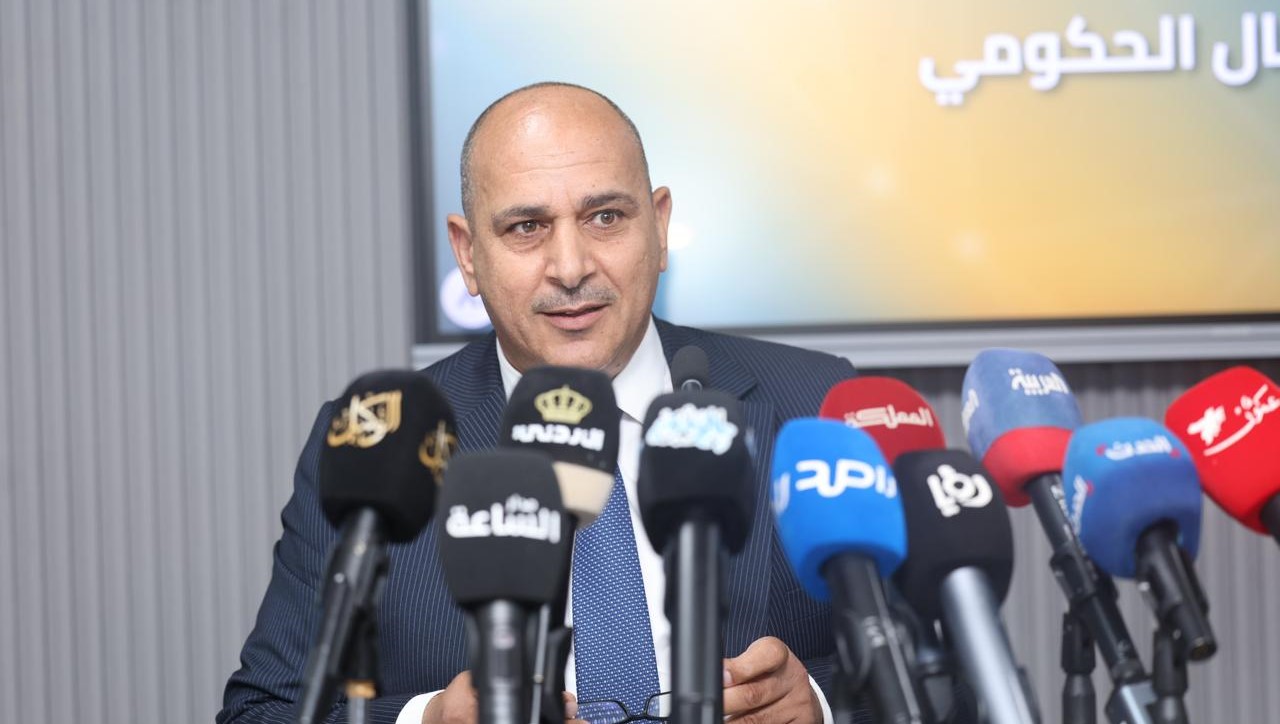
Speaking at the Government Communication Forum, organized by the
Ministry of Government Communication and attended by the ministry’s
Secretary-General, Zaid Nawaiseh, Al-Kharabsheh said all measures
being pursued by the commission are aligned with the Economic
Modernization Vision and are aimed at improving service quality and
increasing public reliance on mass transit.
He said the LTRC is preparing to launch 100 electronic services,
including 50 passenger transport services and 50 freight transport
services, as part of efforts to digitize the land transport sector.
Al-Kharabsheh said the commission, in cooperation with its partners,
has prepared several regulations currently under review by the
relevant authorities with the aim of improving services through the
development of a safe and comfortable public transport system.
Reviewing the current state of the sector, he said Jordan’s passenger
and freight transport fleet totals around 100,000 vehicles.
On freight transport indicators, he said the Kingdom has 31,975
trucks, of which 74% are individually owned and 26% belong to
companies. Tractor units account for 60.7% of the fleet, while cargo
vehicles make up 39.3%.
Public transport indicators include 990 service taxis, 5,202 public
transport vehicles, 683 large buses, 90 Bus Rapid Transit (BRT)
buses, and 3,529 medium-sized buses. Jordan’s public transport
network comprises 1,950 routes, including 1,378 local routes and 572
main routes.
Company-operated buses and scheduled transport services account for
15% of the public transport fleet, while 27 school transport
operators manage a fleet of 2,413 vehicles.
Al-Kharabsheh said five ride-hailing companies currently operate in
Jordan, employing around 15,000 drivers. Two additional companies
have completed licensing requirements and are expected to receive
operating licenses soon.
He stressed that electronic integration of the sector will be
implemented to enhance compliance with licensing requirements and
ensure regulated operations, noting that licensing, regulation and
permitting remain key demands of both citizens and transport
operators.
Al-Kharabsheh said providing citizens with high-quality public
transport services is a priority for the commission and that customer
satisfaction remains central to efforts to improve the sector.
He added that the commission is working to generate additional
employment opportunities and contribute to the goals of the Economic
Modernization Vision, describing transport as a major job-creating
sector.
The commission is also working to improve both operational and
regulatory frameworks, he said, noting that eight draft regulations
and instructions related to the railway project are currently being
reviewed by the Legislation and Opinion Bureau. These measures are
intended to lay the groundwork for a new phase in the transport
sector.
Additional draft regulations address passenger transport services,
smart mobility services, the Passenger Support Fund, vehicle rental
services, yellow taxi offices, electronic ticketing systems and
regulations governing transport services between Jordan and other
countries.
Regarding the Passenger Support Fund, Al-Kharabsheh said it would
institutionalize support mechanisms for public transport users. He
added that smart transport applications have delivered significant
results in organizing the sector and placing ride-hailing services on
a more structured footing.
He noted that yellow taxi operators will be able to establish their
own applications through their union or licensed offices and
highlighted incentives and exemptions introduced to support the
initiative.
On freight transport modernization, Al-Kharabsheh stressed the
importance of digitizing the freight fleet to facilitate access to
regional markets. He said improving the sector requires opening
external markets, which in turn depends on fleet modernization and
digital transformation.
Only about 6,000 Jordanian trucks were able to access foreign markets
last year, he said, adding that expanding international market access
would generate significant economic benefits and justify investment
in fleet modernization. He expressed confidence that positive results
would emerge by the first half of 2027.
As part of future development plans, Al-Kharabsheh said a new
transport terminal in Zarqa, adjacent to the BRT station, will be
completed soon. All public transport modes serving the city will be
relocated to the new complex to facilitate passenger movement and
integrate services with the BRT network.
He said a similar project is planned in Salt and noted that the
commission is working to complete these projects as quickly as
possible.
Al-Kharabsheh also outlined a new initiative aimed at giving public
transport buses priority at traffic signals. Under the project,
titled “Development Coupled with Public Transport Priority,” traffic
lights at congested intersections would be redesigned to provide
priority passage for buses.
He said the BRT route linking Amman and Al-Balqa Applied University,
implemented in cooperation with the World Bank and the Greater Amman
Municipality, has achieved positive results among passengers.
The commission is also considering additional BRT routes connecting
Madaba and Amman and Salt and Amman, as well as surrounding areas
such as Sahab, Naour and Russeifa.
Al-Kharabsheh said the commission plans to issue weekly operating
tenders for underserved or unserved areas, with fares set at 500
fils.
He also highlighted the importance of fleet age in relation to the
broader economy and emphasized the role of natural gas in reducing
operating costs within the transport system.
Government transport projects, he said, are helping establish regular
and reliable services between Amman and the governorates through
fixed schedules and frequencies. They also include the use of smart
systems for electronic fare collection, reducing cash transactions,
and installing electronic tracking systems to ensure operators adhere
to schedules and service frequencies.
These efforts are part of an integrated operational plan that
includes publishing route schedules and identifying departure and
arrival points.
Al-Kharabsheh said the commission is addressing key challenges facing
public transport, including irregular services, the absence of fixed
schedules, unauthorized private transport operations, traffic
congestion and public confidence in the reliability of mass transit.
For his part, Nawaiseh opened the forum by extending congratulations
on the anniversary of King Abdullah II’s accession to the throne, the
Great Arab Revolt, and Arab Army Day.
He said the LTRC continues to make sustained efforts to develop
Jordan’s public transport network and improve passenger services
across the Kingdom.
Nawaiseh noted that the commission is implementing a package of smart
transport systems and expanding digital services to improve
efficiency, adding that travel between governorates has become easier
as a result of ongoing modernization efforts.
He also said the commission is working to encourage investment in the
land transport sector in line with economic and social development
goals and to create a more effective and sustainable operating
environment.
//Petra// AF