Jordan’s Q2 2026 GDP Expands 3.0%, Outperforming Regional Headwinds, International Forecasts
ENV-KUWAIT-SUSTAINABLITYKuwait strengthens environmental sustainability through strategic initiativesBy Zahra Al-Kadhmi
HLT-KUWAIT-SURGERYKuwait advances health sector with robotic, remote surgeryBy Mohammad Al-Moseb
Saudi Arabia’s Voluntary Carbon Market Fuels the Shift to a Low-Carbon
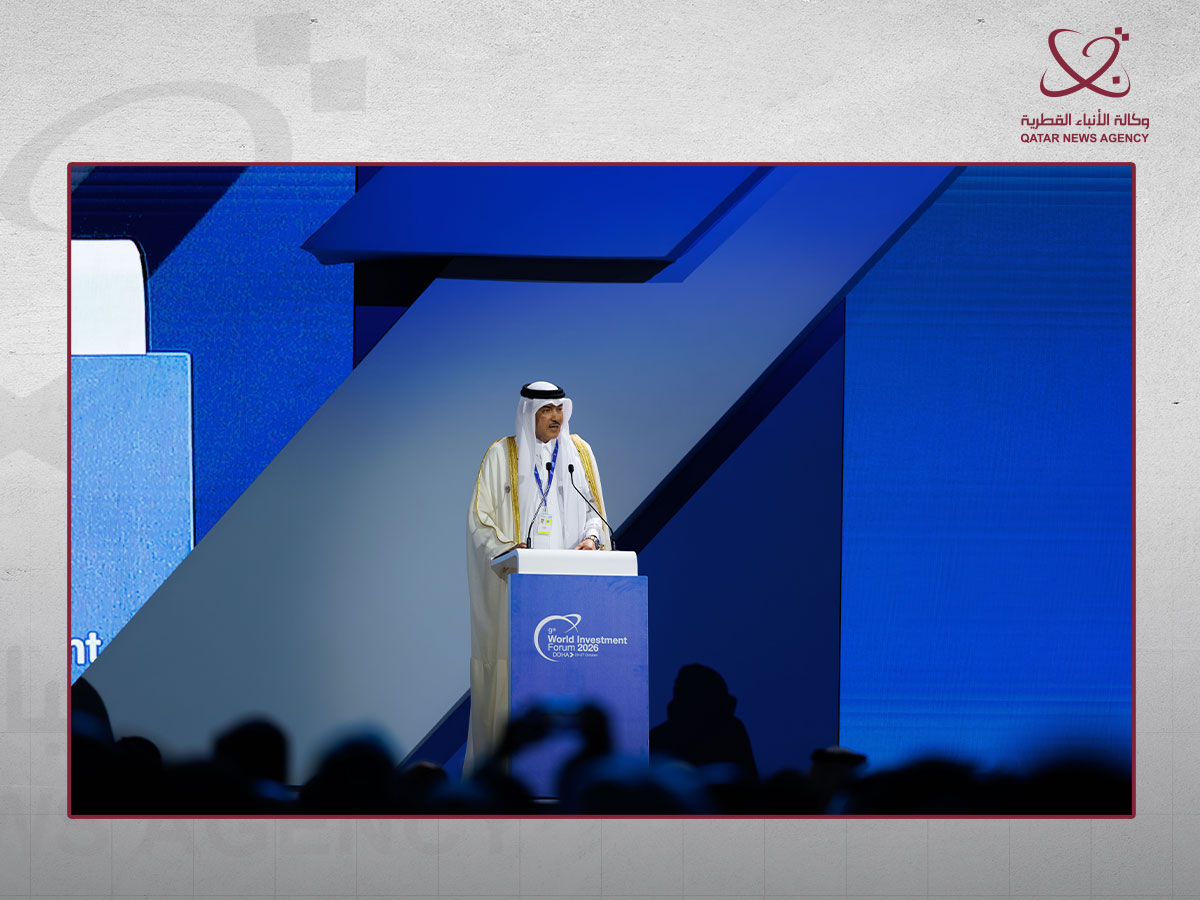
Doha, October 25 (QNA) – HE Minister of State for Foreign Trade Affairs at the Ministry of Commerce and Industry, Dr. Ahmed bin Mohammed Al Sayed, said the State of Qatar has chosen openness, flexibility and partnership as a crystal-clear approach to navigating the transformation of the global economy and the uncertainty that has grown out of it.
Speaking at the opening of the 9th World Investment Forum 2026, hosted by the State of Qatar in partnership with UN Trade and Development (UNCTAD) under the theme Investing in the Future, HE Dr. Al Sayed said geopolitical tensions, evolving supply chains, rapid technological advances, artificial intelligence and the shift toward a more sustainable economy are substantially reshaping the global trade and investment landscape.
He noted that this year’s forum theme goes beyond the traditional concept of investment, explaining that markets may look to the next quarter, but countries plan for future generations. From this perspective, the State of Qatar has invested over decades in people, infrastructure, institutions, technology and innovation, while forging partnerships grounded in mutual trust and shared interests, HE Dr. Al Sayed underlined.
Drawing on the State of Qatar’s experience, HE Dr. Al Sayed emphasized that trade and investment aren’t separate tracks but complementary drivers of growth and economic diversification.
Through the National Foreign Trade Strategy, he said, the State of Qatar is working to strengthen the security and sustainability of supply chains, foster greater resilience in its imports, open new markets for its goods and services exports, diversify its economic partnerships and deepen its ties to global markets.
HE Dr. Al Sayed highlighted the State of Qatar’s enduring efforts to build an attractive investment and regulatory environment underpinned by high-end infrastructure, robust institutions and open economic policies. He outlined that these efforts have strengthened the business climate, fostered innovation and encouraged investment in the industries of the future, substantially bolstering investor confidence.
The State of Qatar attracted 373 foreign direct investment projects last year, a 50 percent increase from the previous year, HE Dr. Al Sayed noted, stating that the projects generated more than 15,000 new job opportunities, underscoring the consequentiality of the State of Qatar’s investment policies and their role in sustaining phenomenal investment growth and advancing economic diversification.
To maintain this momentum, the State of Qatar launched a USD 1 billion investment incentives program targeting several priority sectors, including advanced manufacturing, logistics, technology, digital services and financial services, he said.
HE Dr. Al Sayed underscored how these strategic priorities are translating into concrete investment opportunities. The State of Qatar recently announced a package of new infrastructure projects worth a combined USD 38.5 billion over the next five years, alongside an expected USD 22 billion in private-sector investment in real estate and hospitality.
These figures represent far more than headline investment totals; they signal tangible opportunities for investors and companies to establish long-term ventures and build lasting economic value, HE the Minister underscored.
HE Dr. Al Sayed said Doha aims to consolidate its position as a platform for channeling investment and partnerships into regional and global markets, contending that the State of Qatar isn’t merely an investment destination but also an international investor and partner committed to fostering long-term economic relationships.
Through investments across diverse markets, the State of Qatar has gained insight into investors’ needs and aspirations from two complementary perspectives: as a country working to attract and enable investment, and as an international investor building lasting economic relationships, HE Dr. Al Sayed said.
He elaborated that investment must be measured not by capital alone but by the added economic value it generates, the knowledge it transfers, the capabilities it builds, the jobs it creates and the opportunities it unlocks for future generations. These outcomes are the corollary of investment that prioritizes sustainable growth over short-term gains.
HE Dr. Al Sayed added that trade and investment can thrive only in an international environment grounded in trust, stability, cooperation and clear, predictable rules. He noted that as the world grapples with mounting uncertainty and economic fragmentation, the State of Qatar’s message is quite clear: more dialogue, not more isolation; more cooperation, not deeper divisions; and new economic bridges, not additional barriers to trade and investment.
He stressed that investment in the future is inseparable from investment in peace and stability. Trade can’t flourish, nor can long-term investments realize their full potential, without a secure and stable environment.
HE Dr. Al Sayed further noted that global foreign direct investment reached approximately USD 1.6 trillion in 2025, yet more than 80 percent of those flows were concentrated in the 20 largest recipient economies. This conspicuous concentration highlights the criticality of broadening access to investment and ensuring that its benefits extend beyond the world’s largest economies.
The real challenge, he added, lies not merely in increasing investment flows but in substantially broadening the circle of beneficiaries, particularly among the least developed economies, and channeling capital toward productive activities that foster innovation and build the industries of the future.
Dr. Al Sayed urged partners around the world to view the State of Qatar as a long-term economic, trade and investment partner, a platform for trade and investment, and a gateway to new opportunities and promising markets.
He emphasized that the future is shaped not by the challenges countries face but by the decisions they make today, reemphasizing that the State of Qatar has chosen a clear path of openness, partnership and innovation, with trade and investment serving as complementary drivers of growth and shared prosperity. (QNA)