
Jordan’s Q2 2026 GDP Expands 3.0%, Outperforming Regional Headwinds, International Forecasts
ENV-KUWAIT-SUSTAINABLITYKuwait strengthens environmental sustainability through strategic initiativesBy Zahra Al-Kadhmi

HLT-KUWAIT-SURGERYKuwait advances health sector with robotic, remote surgeryBy Mohammad Al-Moseb

Saudi Arabia’s Voluntary Carbon Market Fuels the Shift to a Low-Carbon

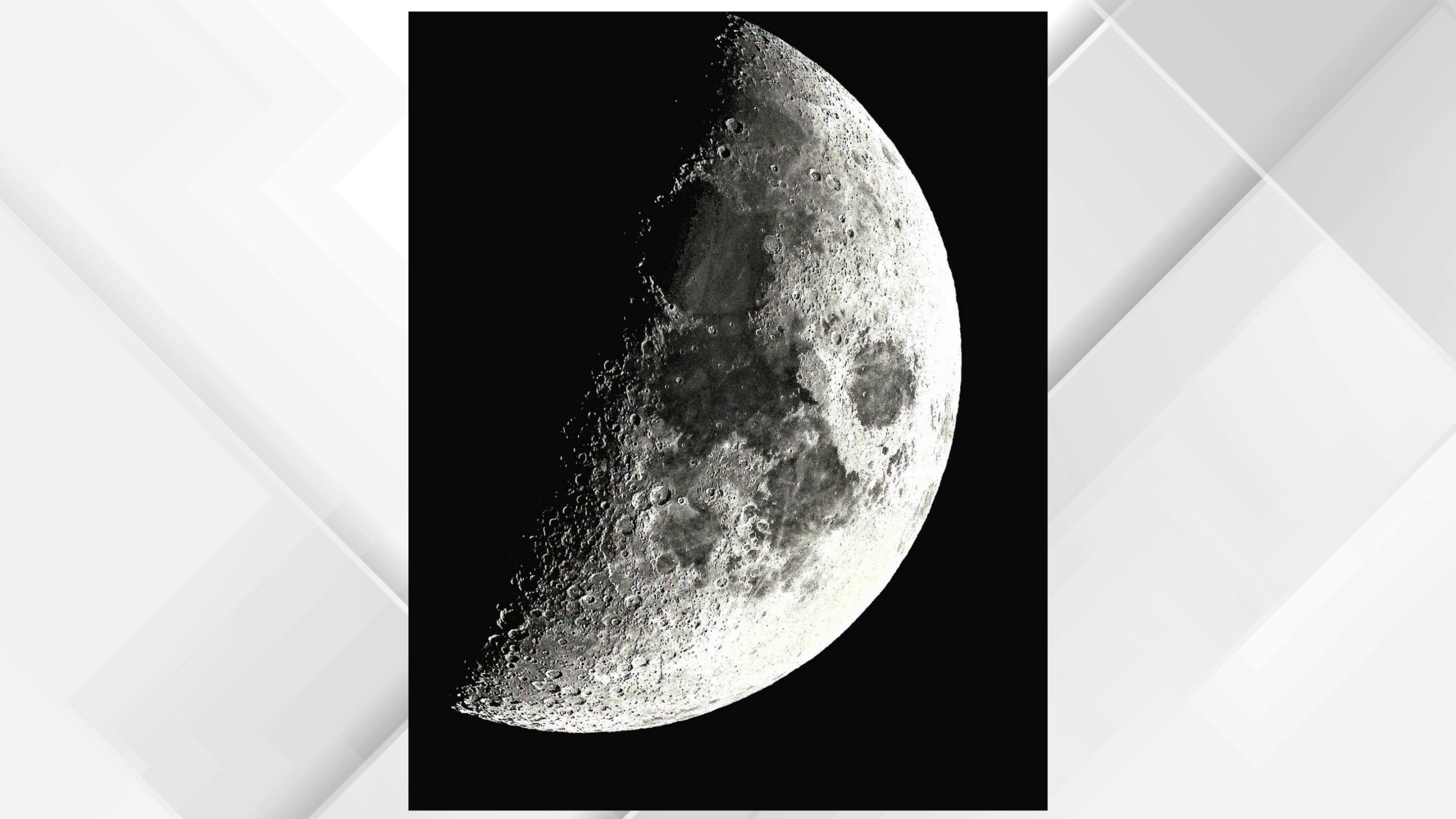
Amman, June 22 (Petra) — Skywatchers across the Kingdom and the Arab
region will have the chance to observe a notable astronomical display
on Tuesday evening, as the Moon appears in close proximity to the
bright star Spica.
The Jordanian Astronomical Society said the event, known as a
conjunction, occurs when two celestial bodies appear close together
from Earth’s perspective despite being separated by vast distances in
space. In this case, the Moon will pass near Spica at a separation of
roughly two degrees, making it an attractive opportunity for
observation and photography.
Spica, the brightest star in the Virgo constellation and one of the
most recognizable stars in the night sky, shines with an apparent
magnitude of around +1.0, allowing it to be seen clearly with the
naked eye even in moderately light-polluted areas.
The closest approach will occur at 11:11 p.m. Jordan time, when Spica
will appear just north of the Moon at a distance of about 2.2
degrees. The star Arcturus will also be visible higher in the sky
along the same celestial region.
The pairing will be visible starting from early evening after sunset
in the southwestern sky, with the Moon in its waxing gibbous phase,
appearing brightly illuminated.
Astronomers emphasized that the event is purely visual, as the Moon
is relatively close to Earth at about 378,000 kilometers, while Spica
lies approximately 250 light-years away.
Such lunar alignments with bright stars are valued by astronomers and
enthusiasts for helping identify constellations and track the Moon’s
motion across the sky, which shifts by about 13 degrees each day.
Spica also holds historical significance in Arab astronomy, where it
was used in traditional methods for determining seasons and
agricultural cycles and appears in early Arabic astronomical
literature. Its name later entered European scientific terminology
through medieval translations.
Observers are encouraged to view the phenomenon from dark locations
away from city lights for the best visibility, although it can still
be seen with the naked eye under clear skies. Binoculars or cameras
with zoom lenses can enhance the experience.
In the same week, the Moon will align with Antares on Saturday, June
27, at a separation of about 2.6 degrees, while the Pleiades star
cluster will appear near Mars before sunrise on the same day.
The full moon will occur on Tuesday, June 30 at 3:00 a.m., known by
various names including the “Strawberry Moon,” “Honey Moon,” and
“Mide Moon.” It will also be the final micromoon of the year.
//Petra//WH