Jordan’s Q2 2026 GDP Expands 3.0%, Outperforming Regional Headwinds, International Forecasts
ENV-KUWAIT-SUSTAINABLITYKuwait strengthens environmental sustainability through strategic initiativesBy Zahra Al-Kadhmi

HLT-KUWAIT-SURGERYKuwait advances health sector with robotic, remote surgeryBy Mohammad Al-Moseb

Saudi Arabia’s Voluntary Carbon Market Fuels the Shift to a Low-Carbon

Irbid, June 7 (Petra) – The wheat harvest for National Seed
Multiplication Project (SMP) began on Sunday at Maru Agricultural
Station in Irbid governorate, affiliated with National Agricultural
Research Center (NARC).
The event was attended by crop expert Dr. Muhammad Ayad from the
Saudi National Center for Sustainable Agriculture Research and
Development, alongside a number of researchers and agricultural
engineers.
Inaugurating the harvest, Dr. Ibrahim Rawashdeh, NARC Director
General, said results of the current agricultural season are
“promising and reflect the success” of the Jordanian center’s
research programs in developing wheat varieties and improving their
productivity and adaptability to different environmental conditions.
He noted the average yield per dunam (0.25 acres) of some research
varieties reached approximately 400 kilograms, while more than 70
tons of wheat are expected to be produced this season.
This quantity is a positive indicator that enhances opportunities for
expanding the cultivation of superior varieties and supports efforts
to achieve national food security, he pointed out.
On its policy, he stated NCAR “prioritizes” the seed multiplication
project as a “strategic” initiative aimed at providing farmers with
improved, high-quality seeds, which would contribute to increased
productivity and enhanced efficiency in the agricultural sector.
Rawashdeh noted NCAR is working to leverage outputs of scientific
research and its “advanced” research infrastructure to support
“pioneering” agricultural projects, while continuously upgrading
research stations to ensure “optimal” research and development
outcomes.
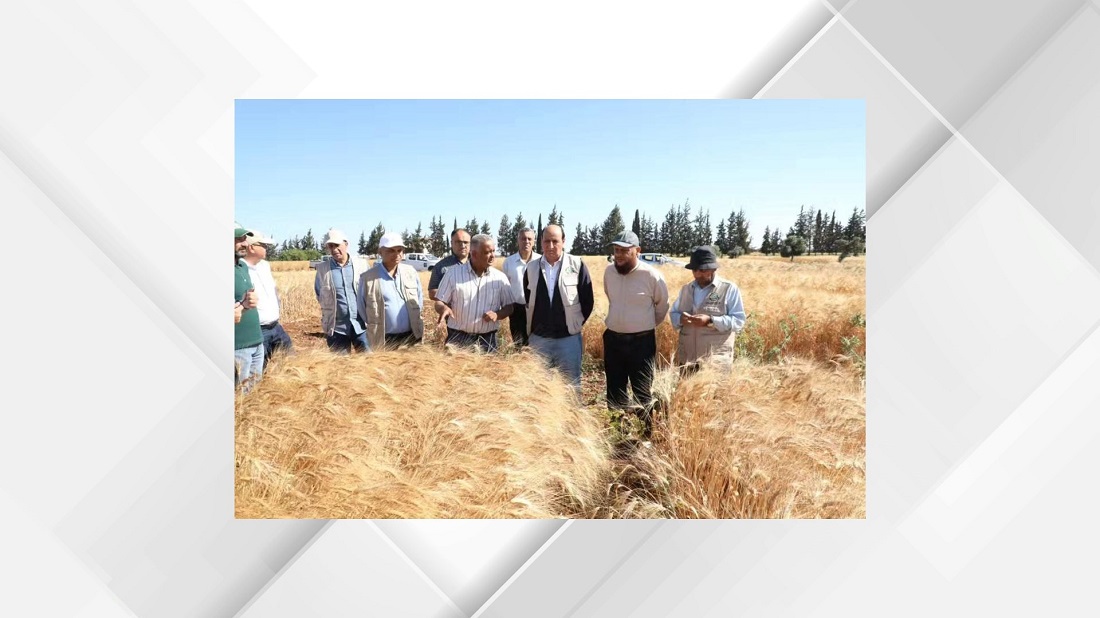
During the event, attendees toured the research fields and observed
the cultivated varieties.
The participants were also briefed on the implemented research
projects and their preliminary results, which demonstrated the
“outstanding” performance of several promising strains and varieties
in diverse Jordanian agricultural environments.
//Petra// AG