ENV-KUWAIT-SUSTAINABLITYKuwait strengthens environmental sustainability through strategic initiativesBy Zahra Al-Kadhmi

HLT-KUWAIT-SURGERYKuwait advances health sector with robotic, remote surgeryBy Mohammad Al-Moseb

Saudi Arabia’s Voluntary Carbon Market Fuels the Shift to a Low-Carbon

Under UAE President’s directives, UAE launches urgent relief response for Ghana flood victims

Seminar
to Review Thought of Abu Al Abbas Mohammed bin Yazeed Al Mubarrad in Sohar
Muscat,
28 Sep 2026 (ONA) — The scientific seminar “Readings in the Thought of
Abu Al Abbas Mohammed bin Yazeed Al Mubarrad,” which will be held at the
University of Technology and Applied Sciences in the Wilayat of Sohar on 5-6
October, will focus on one of the most prominent figures of Arabic language,
grammar, and literature in the third century AH. He is considered one of the
scientific figures of Omani origins who made a prominent contribution to the
progression of Arabic linguistic and literary studies.
Al
Mubarrad was able to occupy a lofty scientific status among the scholars of his
time and those who came after them, leaving behind a scientific legacy that has
remained present in the sources of language, literature, and grammar across the
centuries.
The
symposium comes within the framework of the Ministry of Culture, Sports and
Youth’s interest in safeguarding Omani intellectual and scientific heritage,
and highlighting the contributions of prominent figures in building the Arab
and Islamic civilization. Furthermore, the Literary Forum, through the
Department of Cultural Programs and Studies, continues to implement the project
of symposia on scholars and thinkers. This serves as a cultural and scientific
trajectory concerned with introducing figures who left a prominent mark in the
fields of thought, science, and literature, while elucidating their roles in
enriching human knowledge and consolidating their presence in both national and
Arab cultural memory.
The
seminar seeks to present a comprehensive scientific reading of Al Mubarrad’s
legacy and thought by reviewing his scientific biography and his standing among
the luminaries of his era. It examines the political, intellectual, and
scientific environment that contributed to shaping his personality and
formulating his cognitive output. This is alongside studying his relationship
with the Abbasid era and the intellectual and cultural transformations it
witnessed, which had a clear impact on scientific life at the time.
The
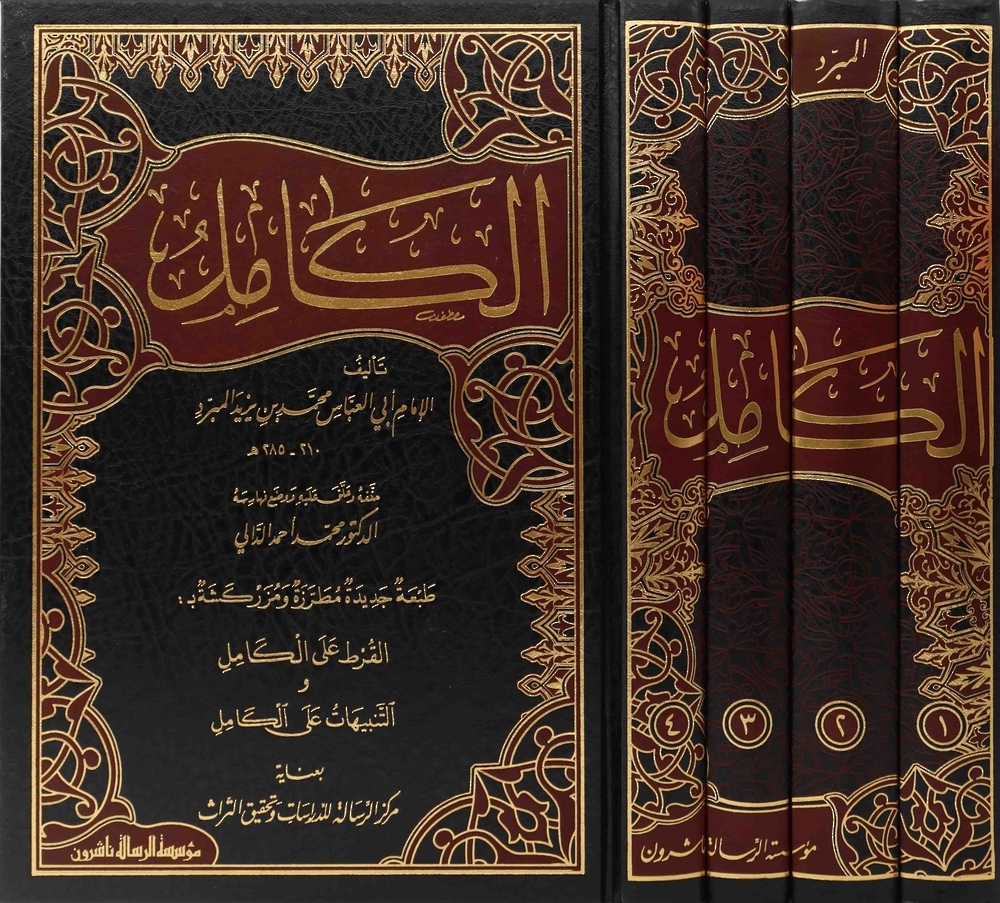
event addresses his works and scientific contributions, foremost of which is
the book “Al Kamil,” considered one of the most important sources of
Arab linguistic and literary heritage. This is done through studying its
scientific structure, authoring methodology, and cognitive value, as well as
exploring the linguistic, literary, and historical dimensions it entails, which
made it one of the most prominent books of Arab heritage and the most
influential in the movement of authorship and study.
The
symposium’s themes extend to studying Al Mubarrad’s methodology in linguistic
argumentation and the construction of grammatical rules, as well as his adopted
principles of inference and methods of weighting between transmission (Samaa)
and analogy (Qiyas). Moreover, it investigates his position in the grammatical
dispute between the Basra and Kufa schools, analyzing the impact of this on
shaping his scientific views and choices.
The
seminar also covers his contributions to literary and rhetorical criticism and
reviews a number of grammatical issues in his legacy, revealing his scientific
independence and his impact on the development of Arabic linguistic studies.
The
symposium does not stop at the boundaries of studying Al Mubarrad’s works and
views; rather, it goes beyond that to trace the presence of his legacy in
ancient linguistic studies. It reveals the nature of how subsequent scholars
received his thought and scientific stances, monitoring his impact on efforts
of authorship, criticism, and linguistic codification throughout the ages,
thereby contributing to highlighting his position as one of the major
references in the history of Arab culture.
Collectively,
these studies present an integrated vision of Al Mubarrad’s personality and his
scientific and intellectual legacy. They highlight his contributions to the
development of linguistic, grammatical, and literary studies, and reveal his
impact on subsequent generations of scholars and researchers.
This
symposium is poised to contribute to a contemporary scientific rereading of
this legacy. It aims to enhance awareness of the prominent position Al Mubarrad
occupied in the history of Arab-Islamic culture, as well as the presence of the
Omani contribution to knowledge creation and the enrichment of human
civilization across the ages.
—Ends/AG