Jordan’s Q2 2026 GDP Expands 3.0%, Outperforming Regional Headwinds, International Forecasts
ENV-KUWAIT-SUSTAINABLITYKuwait strengthens environmental sustainability through strategic initiativesBy Zahra Al-Kadhmi

HLT-KUWAIT-SURGERYKuwait advances health sector with robotic, remote surgeryBy Mohammad Al-Moseb

Saudi Arabia’s Voluntary Carbon Market Fuels the Shift to a Low-Carbon

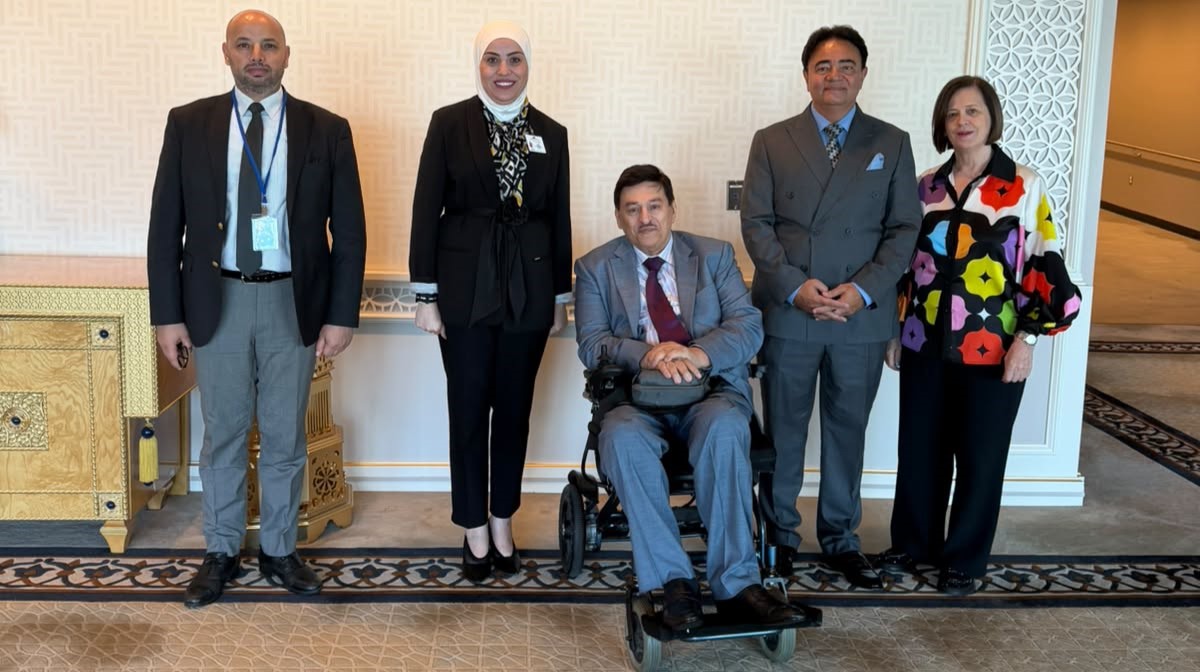
New York, June 9 (Petra)– Minister of Social Development Wafa Bani
Mustafa met with the Chair of the International Disability Alliance
(IDA) and President of the Arab Organization of Persons with
Disabilities (AOPD), Nawaf Kabbara, alongside AOPD Director-General
Jahda Abou Khalil, to discuss strategic cooperation pathways.
The meeting took place on Tuesday on the sidelines of Bani Mustafa’s
participation in the 19th Conference of States Parties to the
Convention on the Rights of Persons with Disabilities (COSP19),
hosted by the United Nations at its headquarters in New York.
During the meeting, Bani Mustafa emphasized that under the leadership
of His Majesty King Abdullah II, Jordan places social justice,
inclusivity, and the empowerment of persons with disabilities at the
core of its national priorities.
She underscored the importance of advancing joint Arab initiatives
related to disability rights and boosting regional cooperation to
adopt pioneering inclusive practices across the Arab world.
Bani Mustafa reviewed the Ministry of Social Development’s ongoing
efforts to transition from traditional institutionalized care models
to human rights-based models centered on empowerment and social
integration.
She detailed Jordan’s progress in developing alternative care systems
for persons with disabilities, which include expanding family
reintegration programs, early intervention services, and inclusive
day care centers as qualitative alternatives to institutionalization.
This transition, she noted, marks a strategic shift toward community-
and family-based care that fosters dignity, independence, and full
inclusion.
The discussions also explored future fields of cooperation, including
working with global leaders to design inclusive social policies and
exchanging expertise in capacity building and community service
development.
Bani Mustafa praised the leadership roles of both the IDA and the
AOPD in championing disability rights and advancing full civic
participation across the Arab region. She highlighted that Jordan has
successfully integrated disability issues into its broader national
development plans, aligning them with the Economic Modernization
Vision and social protection programs in tandem with local
stakeholders.
For his part, Kabbara lauded Jordan’s pioneering experience in
shifting away from institutional care toward inclusive alternative
care, describing it as an advanced model for the Arab region that
reflects a genuine commitment to integration.
Abou Khalil also noted the value of joint programs aimed at
empowering and fully integrating persons with disabilities into
society, looking forward to broader future collaboration.
//Petra// AF