Jordan’s Q2 2026 GDP Expands 3.0%, Outperforming Regional Headwinds, International Forecasts
ENV-KUWAIT-SUSTAINABLITYKuwait strengthens environmental sustainability through strategic initiativesBy Zahra Al-Kadhmi
HLT-KUWAIT-SURGERYKuwait advances health sector with robotic, remote surgeryBy Mohammad Al-Moseb

Saudi Arabia’s Voluntary Carbon Market Fuels the Shift to a Low-Carbon

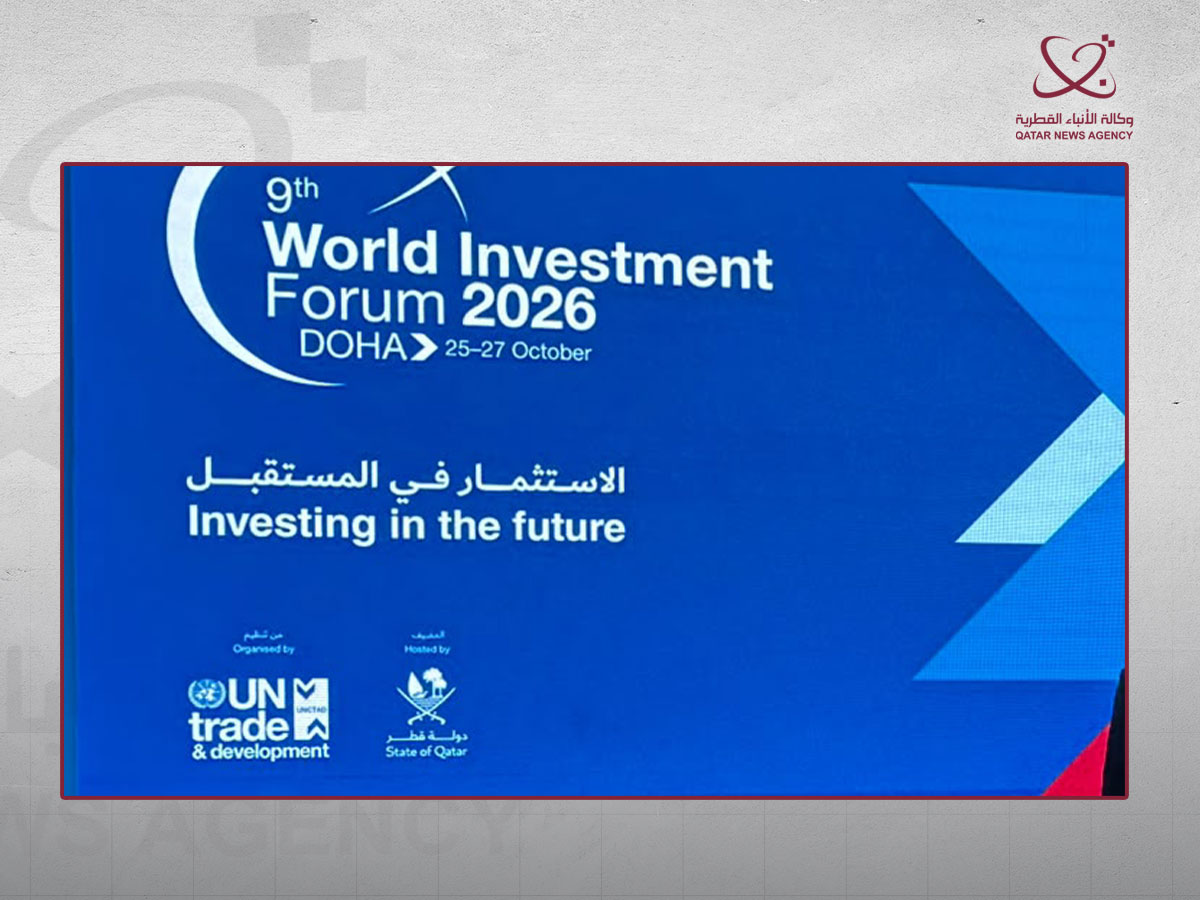
Doha, October 25 (QNA) – Participants in a session titled ” From Climate Priorities to Investment: Accelerating the Energy Transition Project Pipeline,” held as part of the World Investment Promotion Conference on the sidelines of the 9th World Investment Forum (WIF), discussed how governments and investment promotion agencies can create an enabling environment for investors, including by preparing and promoting projects and establishing risk-sharing arrangements with development finance institutions. The discussions also addressed what is needed to move energy transition projects from national planning to financing.
The 9th WIF is being hosted by the State of Qatar in partnership with United Nations Trade and Development (UNCTAD).
Speakers shared practical experiences and examined the obstacles to promoting energy transition projects, highlighting approaches that can turn climate priorities into actionable investment opportunities.
In her opening remarks, head of the World Investment Forum and chair of the UN Sustainable Stock Exchanges Initiative Nan Li Collins said the energy and digital transitions are reshaping economies, industries, and investment decisions.
The primary challenge lies in ensuring that these transitions create sustainable development opportunities for all nations, she said, adding that achieving the Sustainable Development Goals requires substantial private investment in developing countries, particularly in strategic sectors related to climate, digital infrastructure, and digital services.
She noted that the required level of capital inflows cannot be achieved without supportive policy and regulatory frameworks, a credible pipeline of bankable projects, and effective risk management mechanisms.
Investment promotion agencies and special economic zones, she further said, play a pivotal role in translating national priorities into investment opportunities by preparing and promoting projects, facilitating investment, and connecting governments with investors and development finance institutions.
Delivering the conference’s keynote address, HE Chief Executive Officer of Investment Promotion Agency Qatar (Invest Qatar) Sheikh Ali Alwaleed Al-Thani emphasized that investors need more reliable data, transparent regulatory frameworks, and clear answers to their questions.
He also stressed the importance of continued support for investors after their projects are established, noting that such investors are likely to expand existing operations, invest in new ventures, and encourage others to follow.
His Excellency added that Invest Qatar have built its operations on this foundation, and assigned a dedicated relationship manager to every investor, covering the entire journey from initial contact to post-investment services. Invest Qatar portal offers licensing, banking, visa, and labor recruitment services, among many others, through a single digital platform, he added, noting that it also provides an official channel for investors to raise inquiries with the government and receive assistance in resolving them.
Calling on investment promotion agencies to collaborate, he said that Artificial intelligence, the energy transition, and future infrastructure will require capital that transcends borders, flows through regional value chains, and reaches areas that do not yet appear on most investors’ maps.
He added: Let us, therefore, collaborate where it matters most, share our insights into investor needs, and connect our special economic zones and ecosystems, so that companies growing in one market can gain access to the next.
The Invest Qatar CEO reviewed findings from the World Investment Report 2026, which shows that global foreign direct investment (FDI) grew last year, ending a two-year decline. The recovery, however, remains uneven, with most capital flowing to a small number of major economies.
Global FDI inflows rose by 6 percent to $1.6 trillion. Inflows to developed economies grew by 11 percent, compared with just 2 percent for developing economies, while the 20 largest economies accounted for more than 80 percent of total FDI. (QNA)