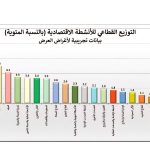
Jordan’s Q2 2026 GDP Expands 3.0%, Outperforming Regional Headwinds, International Forecasts
ENV-KUWAIT-SUSTAINABLITYKuwait strengthens environmental sustainability through strategic initiativesBy Zahra Al-Kadhmi

HLT-KUWAIT-SURGERYKuwait advances health sector with robotic, remote surgeryBy Mohammad Al-Moseb

Saudi Arabia’s Voluntary Carbon Market Fuels the Shift to a Low-Carbon
Despite losing 7.6 points compared to the last ranking in October 2024, Morocco climbed the rankings thanks to Kazakhstan (7th) dropping 2 spots (-60.91 points).
With 1468.4 points, Morocco maintains its position as leader of the African ranking, followed by Egypt (37th), Libya (46th), South Africa (49th, up 2) and Angola (58th).
Concerning the world Top 5, Brazil remains first ahead of Portugal by over 100 points. Spain (3rd, +1) has overtaken Argentina (4th, -1), while Iran (5th, +1) and Morocco (6th, +1) have also progressed at the expense of Kazakhstan (7th, -2).
Meanwhile, Poland (19th, +3) and Armenia (20th, +11) make their first appearance in the top 20.
In addition to Armenia, several teams have improved their ranking by more than 10 places since last October: Bosnia-Herzegovina (36th, +12), Andorra (55th, +13), Latvia (60th, up 11) and Greece (88th, +19).
With regards to women’s Futsal ranking, also published by FIFA, Morocco ascended through 18 spots to become one of the top-ranked nations.
Now ranked 47th worldwide, the Moroccan women’s national team tops the African ranking, followed by Senegal, 78th (+753 points).