ENV-KUWAIT-SUSTAINABLITYKuwait strengthens environmental sustainability through strategic initiativesBy Zahra Al-Kadhmi

HLT-KUWAIT-SURGERYKuwait advances health sector with robotic, remote surgeryBy Mohammad Al-Moseb

Saudi Arabia’s Voluntary Carbon Market Fuels the Shift to a Low-Carbon
Under UAE President’s directives, UAE launches urgent relief response for Ghana flood victims

Azraq, June 29 (Petra) — A scientific study conducted by a team from
the Azraq Wetland Reserve, affiliated with the Royal Society for the
Conservation of Nature (RSCN), has documented a significant recovery
in natural vegetation cover across the Azraq Valley less than a
decade after the area was incorporated into the reserve and placed
under environmental protection and management measures.
According to the RSCN, the study, prepared by reserve Director Hazem
Harisha and environmental researcher Tamer Aqili, analyzed satellite
imagery using the Normalized Difference Vegetation Index (NDVI) and
remote sensing techniques to compare vegetation cover between 2015
and 2025.
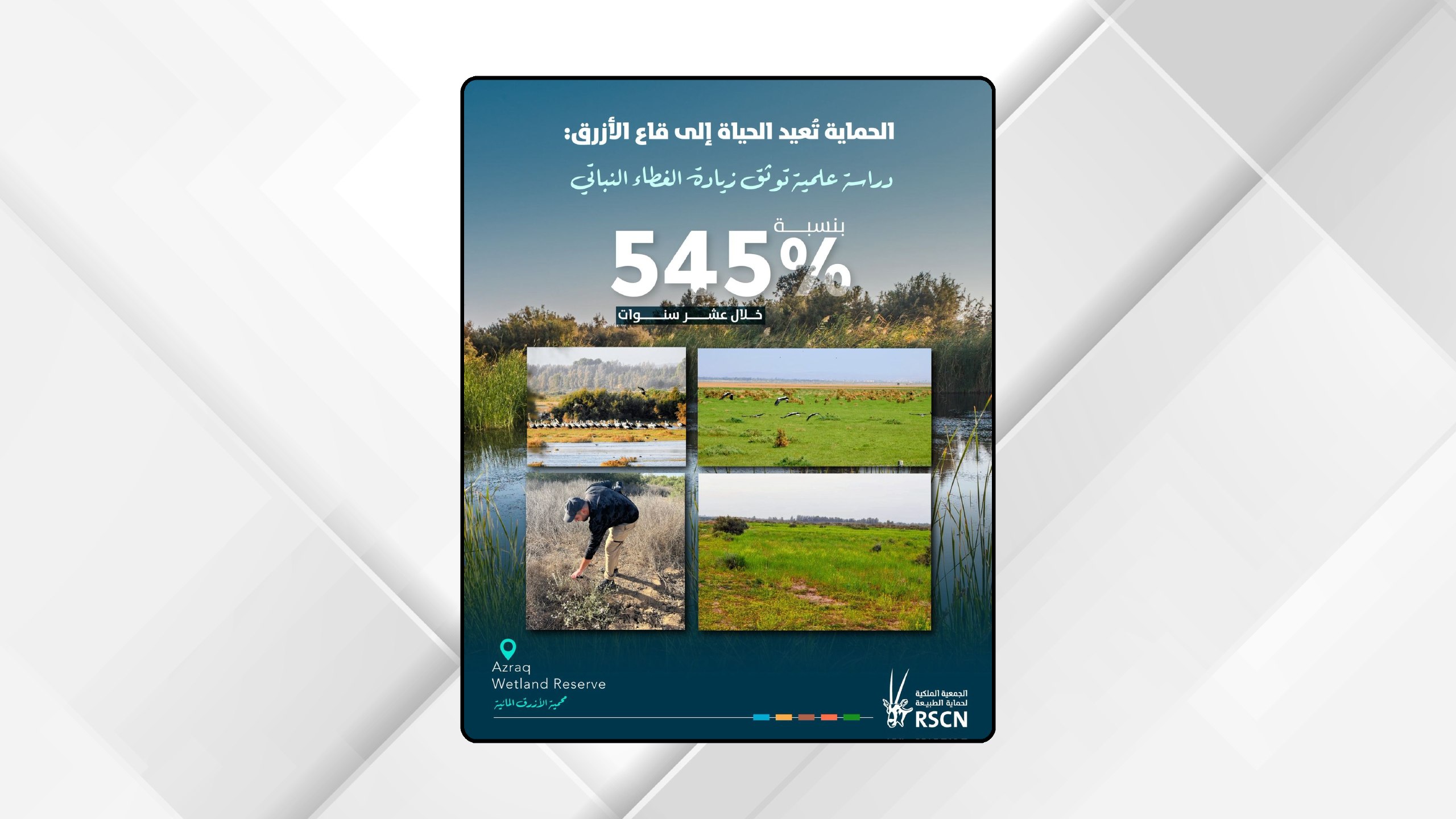
The findings showed that vegetation cover expanded from 2.30 square
kilometers (2,300 dunams) in 2015 to 14.83 square kilometers (14,830
dunams) in 2025, an increase of 12.53 square kilometers (12,530
dunams), or 54.5%. The expansion coincided with a decline in arid
land, reflecting the transformation of extensive barren areas into
natural vegetation as a result of environmental protection and
management measures.
The RSCN said the study also recorded a substantial increase in
scattered vegetation, shrubs, and grasslands, indicating widespread
natural regeneration and a marked improvement in the Azraq Basin
ecosystem. The recovery has enhanced habitats for migratory and
resident birds and other wildlife while helping mitigate
desertification, stabilize soil, and increase the area’s
environmental and tourism value.
Harisha said the findings reflect years of fieldwork and the
dedication of protection and management teams, noting that the
progress achieved in the Azraq Valley demonstrates the success of the
RSCN’s science-based approach to protected area management.
He said the sharp increase in vegetation cover confirms that
protection measures, coupled with efforts to curb overgrazing and
encroachments, have played a decisive role in restoring the
ecosystem. “This is an achievement we are proud of and consider a
national model that can be applied to ecosystem restoration projects
across Jordan,” he said.
Harisha added that the reserve will continue implementing
environmental monitoring programs using advanced technologies while
expanding protection and habitat restoration initiatives to ensure
the sustainability of the ecological recovery and preserve
biodiversity.
Aqili said the study provides clear scientific evidence that
investment in protecting natural habitats delivers measurable
environmental benefits. “Remote sensing technologies and satellite
imagery have demonstrated that the Azraq Valley is experiencing
genuine environmental recovery, confirming that scientific management
and continuous protection can successfully restore desert
ecosystems,” he said.
He added that the study serves as an important scientific reference
for monitoring future environmental changes and provides quantitative
indicators to support decision-making on protected area management
and desertification control.
The study recommended maintaining protection and inspection programs,
enhancing environmental monitoring methods, conducting a grazing
capacity assessment in the al-Qa’a area, monitoring plant diversity
and invasive species, and documenting the Azraq Basin experience as a
successful national model for restoring arid ecosystems and combating
desertification.
According to the RSCN, the research is among the first local studies
to document, through scientific evidence and quantitative data, the
impact of environmental protection on restoring vegetation cover in
Jordan’s desert environments, further reinforcing the Azraq Wetland
Reserve’s role as a leading model for effective protected area
management and biodiversity conservation.
//Petra// AJ