ENV-KUWAIT-SUSTAINABLITYKuwait strengthens environmental sustainability through strategic initiativesBy Zahra Al-Kadhmi

HLT-KUWAIT-SURGERYKuwait advances health sector with robotic, remote surgeryBy Mohammad Al-Moseb

Saudi Arabia’s Voluntary Carbon Market Fuels the Shift to a Low-Carbon

Under UAE President’s directives, UAE launches urgent relief response for Ghana flood victims

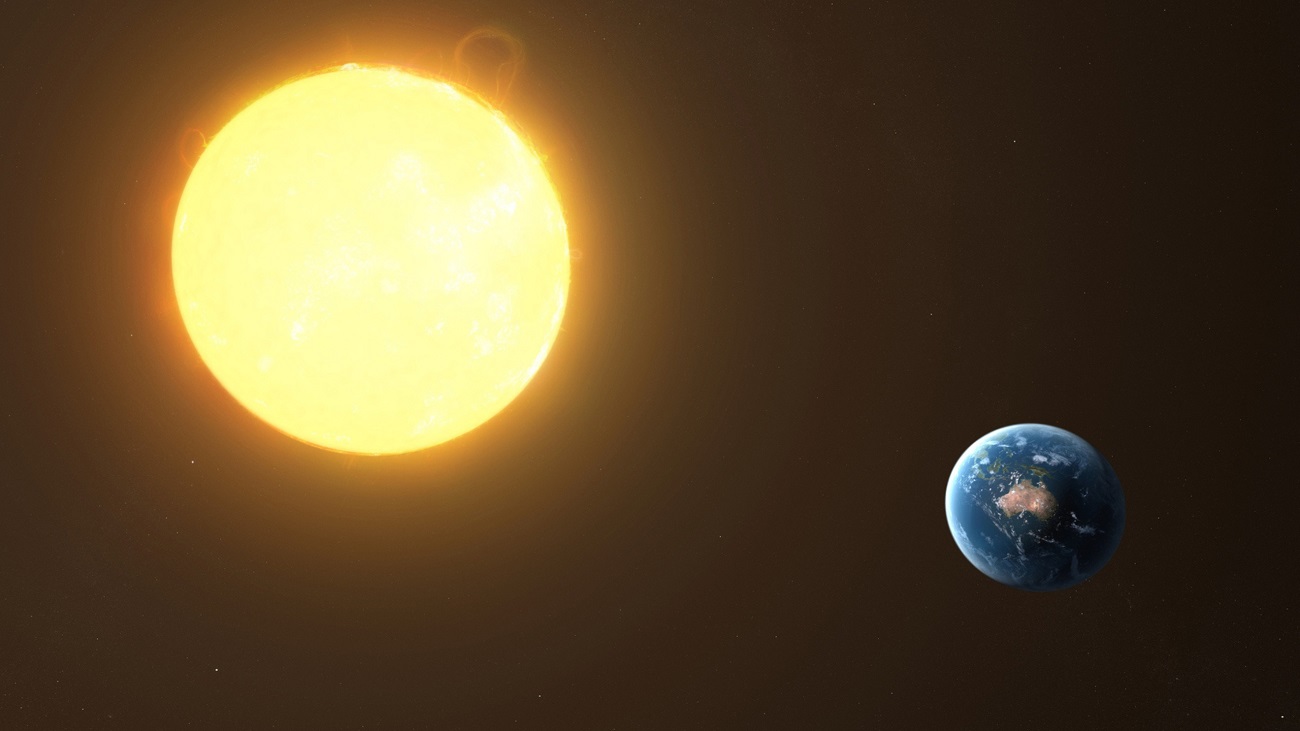
Amman, July 5 (Petra) — Earth will reach aphelion, the farthest
point in its orbit around the Sun, at 8:30 p.m. on Monday, when the
distance between the two will be about 152.1 million kilometers,
according to the Jordan Astronomical Society.
The Society’s president, Dr. Ammar Al-Sakji, said Earth’s orbital
speed at that point will be approximately 29.3 kilometers per second.
He said Earth will be nearly 5 million kilometers farther from the
Sun than it was at perihelion, its closest point to the Sun, which
occurred on January 3, 2026. However, he noted that the greater
distance does not lead to lower temperatures in the Northern
Hemisphere.
Al-Sakji explained that the seasons are determined by the Earth’s
23.5-degree axial tilt, which affects the angle of sunlight and the
length of daylight, rather than by the varying distance between Earth
and the Sun.
Earth’s orbit is slightly elliptical, causing the distance between
the planet and the Sun to change throughout the year. As a result,
Earth reaches perihelion in early January and aphelion in early July.
Al-Sakji added that the timing of aphelion and perihelion changes
slightly from year to year due to the dynamics of Earth’s orbit, the
gravitational influence of the Moon and the planets, and gradual
changes in the orbit’s eccentricity.
He said the annual aphelion illustrates that seasonal changes and
summer and winter temperatures are governed by the tilt and
orientation of Earth’s axis during its orbit, rather than by the
distance between Earth and the Sun.
//Petra// WH