ENV-KUWAIT-SUSTAINABLITYKuwait strengthens environmental sustainability through strategic initiativesBy Zahra Al-Kadhmi

HLT-KUWAIT-SURGERYKuwait advances health sector with robotic, remote surgeryBy Mohammad Al-Moseb

Saudi Arabia’s Voluntary Carbon Market Fuels the Shift to a Low-Carbon

Under UAE President’s directives, UAE launches urgent relief response for Ghana flood victims

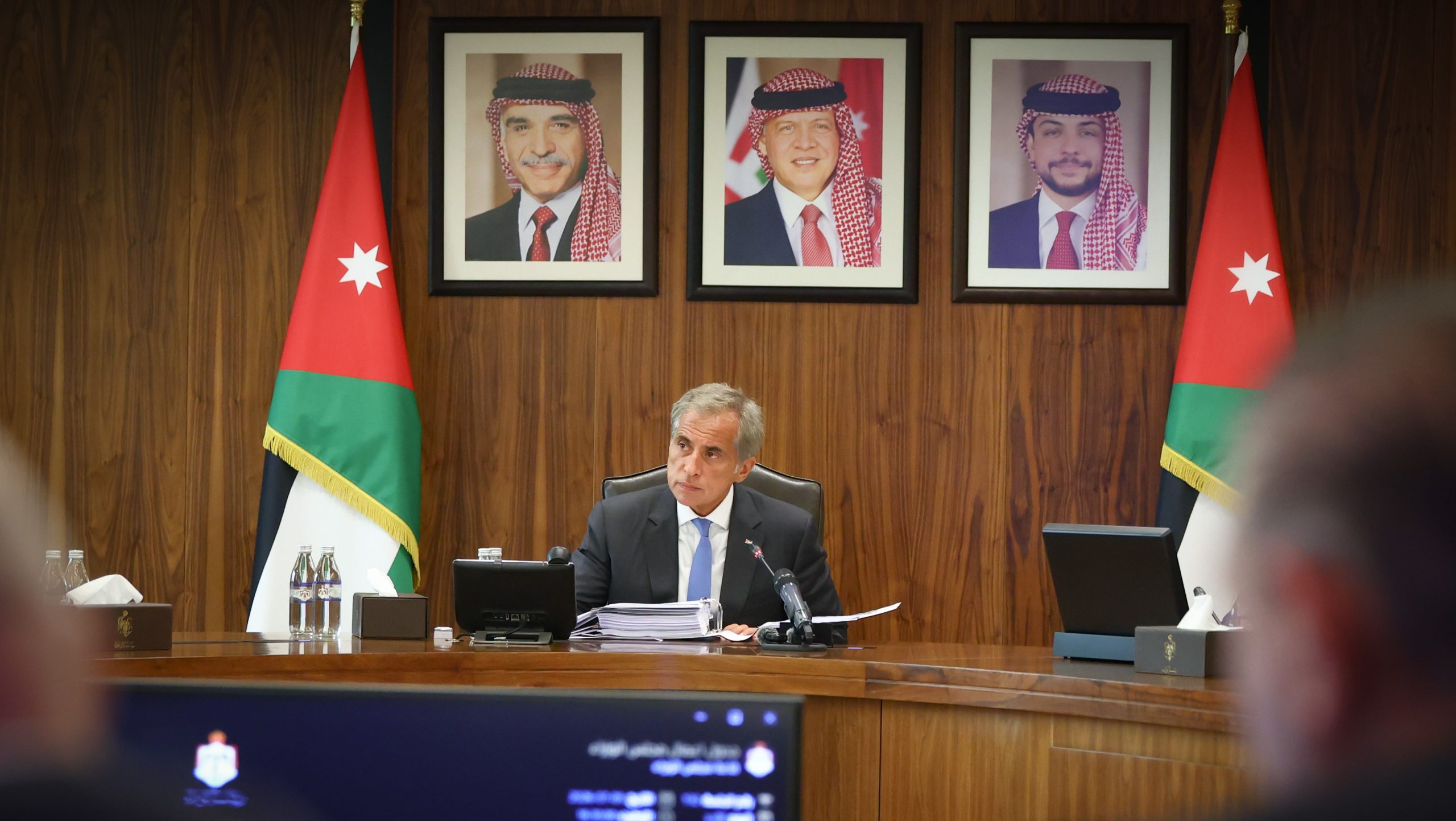
Amman, July 5 (Petra) — Prime Minister Jafar Hassan on Sunday
directed the government to fast-track a draft regulation governing
ministerial conduct to prevent conflicts of interest, safeguard
ministerial neutrality and strengthen integrity and transparency in
public office.
Chairing a Cabinet meeting, Hassan instructed that the regulation be
granted expedited status. It will establish a legal framework to
prevent ministers from pursuing personal gains or securing direct or
indirect benefits for themselves or their relatives.
The draft regulation will introduce legal mechanisms governing public
tenders and oversight procedures to prevent conflicts of interest
involving ministers.
It will set binding rules governing ministers’ dealings with entities
and institutions that conduct business with the government, including
through projects, tenders and procurement processes.
The regulation will prohibit ministers from exploiting confidential
information obtained through their official positions for personal or
family benefit.
The proposed rules reinforce constitutional provisions that prohibit
ministers, while in office, from purchasing or leasing state
property, even through public auction.
Ministers are barred from serving on company boards, engaging in
commercial or financial activities or receiving salaries from private
companies.
The Prime Minister instructed the Minister of Justice, who chairs the
Ministerial Legal Committee, to review legislation and regulations
governing the professional neutrality of all public sector employees
to strengthen integrity, transparency, accountability and good
governance across the public service.
Judicial digital transformation
The Cabinet approved the 2026 Law on the Use of Electronic Means in
Judicial Procedures at Sharia Courts, aimed at modernising judicial
services and supporting the government’s digital transformation
agenda.
The law establishes a legal framework for conducting judicial
procedures electronically, including filing lawsuits, applications,
pleadings, memoranda and statements, as well as notifications,
correspondence and witness testimony.
Virtual attendance in judicial proceedings will carry the same legal
effect as physical attendance, while ensuring privacy,
confidentiality and data protection.
The law authorises electronic service of judicial notifications
through the government’s Sanad application, text messages, email and
addresses registered with the national digital authentication system.
Judicial inspection reforms
The Cabinet approved the justifications for the 2026 Judicial
Inspection System for Regular Courts and Their Subordinate
Departments, referring the draft to the Legislation and Opinion
Bureau.
The proposed system seeks to enhance the efficiency, speed, quality,
transparency and fairness of judicial oversight by reorganising the
Judicial Inspection Authority and redefining its responsibilities.
Among its provisions, inspecting judges must hold a higher judicial
rank than the judges they evaluate.
The reforms introduce updated performance assessment criteria
covering technical competence, professional conduct and skills, while
strengthening governance, judicial ethics, training and capacity
building.
The system regulates complaint procedures and expands judicial
oversight to include administrative and judicial courts, with the aim
of improving litigation procedures and ensuring fair trials.
Judicial Institute reforms
The Cabinet approved amendments to the 2026 Jordanian Judicial
Institute Bylaw, referring the draft to the Legislation and Opinion
Bureau.
The amendments would introduce postgraduate programmes, including a
Master’s degree in Judicial and Legal Studies, in partnership with
Jordanian public universities and accredited international
institutions.
The reforms expand eligibility for the institute’s training programs
to include a broader range of justice sector employees.
Admission standards will be raised, requiring applicants to achieve
at least 80% in the General Secondary Education Certificate
Examination and a “very good” university average to attract
high-achieving candidates.
The amendments establish a new Judicial Assistant position within the
Judicial Council Secretariat to provide graduates of the Judicial
Studies Diploma with a structured career path before appointment as
judges.
Trainee judges
The Cabinet likewise endorsed amendments to the 2026 Regulations
Governing the Work of Trainee Judges, referring the draft for legal
review.
The proposed changes expand the practical responsibilities of trainee
judges under judicial supervision, allowing them to represent the
Public Prosecution before courts of first instance and conduct
inspections and expert assessments where authorised.
The reforms aim to strengthen practical training through a “learning
by doing” approach, while improving monitoring, evaluation and
professional development.
Healthcare licensing.
The Cabinet approved amendments to the 2026 regulations governing the
renewal of healthcare professionals’ licenses.
The changes authorise the Minister of Health to extend renewal
deadlines when necessary, allowing practitioners additional time to
complete licensing requirements while ensuring uninterrupted
healthcare services.
The amendments are intended to improve flexibility, enhance stability
in the healthcare sector and enable professionals to regularise their
status in accordance with the Public Health Law.
Construction sector support
The Cabinet approved amendments to the 2026 Amman Building and Zoning
Regulations, aimed at stimulating the construction sector, supporting
investment and simplifying licensing procedures.
The amendments were developed following consultations with
stakeholders, including the Housing Investors Association, the
Engineering Offices Association and the Jordan Engineers Association
and extend various procedural deadlines to facilitate building
permits.
Administrative reforms
The Cabinet approved amendments to the 2026 Administrative
Organisation Bylaw of the Ministry of Political and Parliamentary
Affairs, designed to modernise the ministry’s organisational
structure and improve institutional performance.
Other decisions
Separately, the Cabinet decided to extend the postponement of
municipal council and Greater Amman Municipality elections for an
additional six months, pending parliamentary approval of the new
Local Administration Law during the extraordinary parliamentary
session scheduled to begin on July 12.
The Cabinet appointed Ahmed Assasleh as Director General of the
Maritime Authority after he ranked first in the government’s
competitive leadership selection process.
The Cabinet decided to terminate the services of Ibrahim Rawashdeh as
Director General of the National Centre for Agricultural Research.
//Petra// AK