ENV-KUWAIT-SUSTAINABLITYKuwait strengthens environmental sustainability through strategic initiativesBy Zahra Al-Kadhmi

HLT-KUWAIT-SURGERYKuwait advances health sector with robotic, remote surgeryBy Mohammad Al-Moseb

Saudi Arabia’s Voluntary Carbon Market Fuels the Shift to a Low-Carbon

Under UAE President’s directives, UAE launches urgent relief response for Ghana flood victims

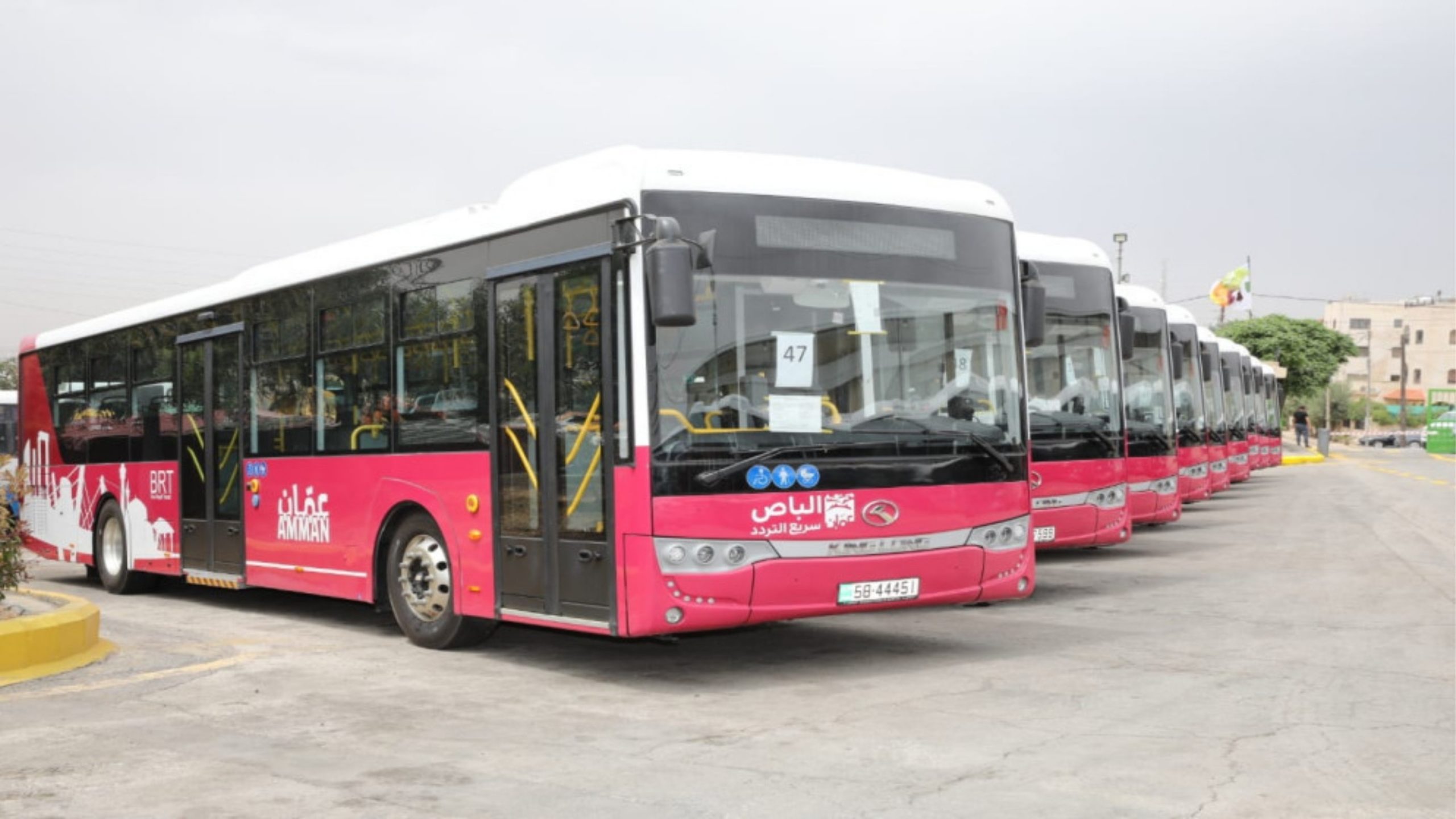
Amman, July 6 (Petra) — Jordan is pressing ahead with an ambitious
expansion of its public transport network as part of a nationwide
effort to build an integrated, safe and efficient system linking all
governorates, in line with the objectives of the Economic
Modernization Vision.
The government’s recent approval of the second phase of the
inter-governorate regular public transport project marks a
significant step toward strengthening connectivity between Amman and
the governorates while maintaining current fare levels without any
increase.
The project reflects the Royal vision of establishing a comprehensive
national public transport network that improves mobility, enhances
service quality and provides citizens, particularly students, with
safer and more reliable transportation while reducing household
transportation costs.
The agreement for the project’s second phase was recently signed by
Director General of the Land Transport Regulatory Commission Eng.
Riyad Al-Kharabsheh, Chairman of Integrated Multi-Transport Company
Eng. Salah Al-Louzi and Chief Executive Officer of Amman Vision
Transport Eng. Mohammad Al-Laimoun.
The second phase includes the operation of nine routes, including
seven main corridors connecting Amman with Ma’an, Tafilah and Ajloun,
in addition to direct inter-governorate services linking Irbid with
Zarqa, Zarqa with Mafraq, Jerash with Irbid, Jerash with Mafraq, and
two additional routes connecting Karak with Zarqa and Aqaba.
Upon completion, the project will operate a fleet of 210 buses with
an expected daily capacity of approximately 13,500 passengers.
The expansion is designed to deliver a more efficient, reliable and
accessible transport service while accelerating digital
transformation through the deployment of intelligent transport
systems, including real-time vehicle tracking, electronic ticketing
and onboard surveillance systems. These technologies are expected to
improve operational efficiency, enhance passenger safety and provide
users with accurate travel information.
The project also supports economic and social development by
strengthening connectivity between Jordan’s regions, facilitating
mobility and reinforcing public-private partnerships in implementing
national infrastructure projects.
The first phase, launched in 2025, introduced scheduled public
transport services across four governorates using 127 buses operating
according to fixed timetables supported by central monitoring and
surveillance systems, laying the operational foundation for the
project’s expansion.
The annual operating cost of the second phase is estimated at JD5.76
million, fully allocated through government operational support to
improve service quality and ensure long-term sustainability.
Services under the second phase are expected to begin by the end of
this month, extending scheduled transport services between Amman and
the southern governorates while strengthening connections among
northern and central governorates.
Minister of Transport Dr. Nidal Al-Qatamin said the government
considers public transport a national priority and remains committed
to implementing high-quality projects that improve services in line
with the Economic Modernization Vision.
He said the second phase represents an advanced step toward
establishing an integrated public transport system based on modern
technologies that provides safe, reliable and efficient services
while reducing travel time, easing traffic congestion, encouraging
greater use of public transportation and improving operational
efficiency and sustainability.
Director General of the Land Transport Regulatory Commission Eng.
Riyad Al-Kharabsheh said the decision to proceed with the second
phase followed the positive performance and public feedback achieved
during the first phase.
He noted that the expanded network will feature fixed schedules,
extended operating hours, increased trip frequencies, central
monitoring and electronic ticketing through a dedicated mobile
application.
The commission plans to expand the network to approximately 1,000
buses in the future, with the second phase expected to serve around
15,000 passengers each day.
Chairman of Integrated Multi-Transport Company Eng. Salah Al-Louzi
said the company has signed a new agreement with the Land Transport
Regulatory Commission to provide operational management and oversight
for the second phase of the project.
He said the agreement builds on the first-phase restructuring project
signed in May 2025 and will remain in effect for three years from the
commencement order issued by the commission.
Under the agreement, the company will oversee daily operational
management and service quality across the seven principal routes
included in the second phase, while Amman Vision Transport will
operate the intelligent transport systems and electronic payment
platform.
Al-Louzi said the progress achieved so far reflects clear political
commitment and sustained government efforts to place public transport
at the forefront of national development priorities, adding that the
next phase will further expand inter-governorate connectivity and
improve services in accordance with the highest operational
standards.
The commission will retain overall responsibility for project
supervision, contract management and implementation oversight.
Performance indicators from the first phase underscore the project’s
success and support the decision to proceed with expansion. More than
1.3 million passengers benefited from scheduled transport services
linking Irbid, Jerash, Karak and Ma’an with Amman through modern
transport operators equipped with electronic payment systems, GPS
tracking and onboard cameras.
The Integrated Multi-Transport Company also transported approximately
43 million passengers across the transport systems it manages during
2025, averaging around 177,000 passengers daily. The Amman Bus Rapid
Transit system alone currently serves between 120,000 and 130,000
passengers each day, highlighting the growing reliance on public
transportation across the Kingdom.
//Petra// RZ