Saudi Arabia’s Voluntary Carbon Market Fuels the Shift to a Low-Carbon

Under UAE President’s directives, UAE launches urgent relief response for Ghana flood victims

Combating Desertification and Drought: Qatar a Model in Preserving Natural Resources, Establishing Environmental Stability

UAE allocates US$30 million for emergency humanitarian response in El Obeid, calls for civilian protection, safe humanitarian aid access in Sudan

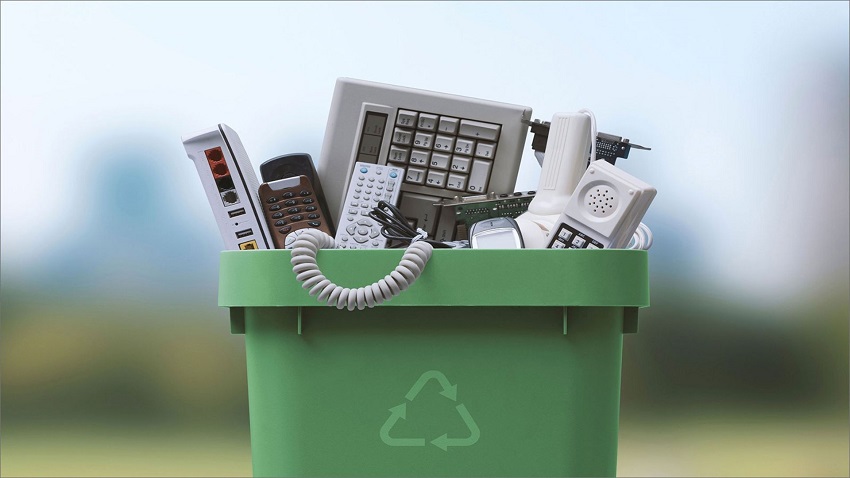
Amman, July 13 (Petra) — Jordan is ramping up its electronic waste
recycling infrastructure and implementing strict import regulations
as part of its strategy to mitigate environmental hazards and capture
the economic potential of the circular economy, officials said on
Monday.
The rapid expansion of electrical and electronic equipment has made
e-waste one of the fastest-growing waste streams globally. While
untreated e-waste poses severe health risks due to toxic materials
like lead, mercury, and cadmium, it also presents a lucrative
economic opportunity through the recovery of valuable metals such as
copper, aluminum, and rare earth elements.
Mahmoud Al-Zaboun, Acting Director of the Hazardous Waste Directorate
at the Ministry of Environment, told Petra that the German Jordanian
University is collaborating with the ministry, the Jordan Customs
Department, the Jordan Standards and Metrology Organization, and the
Public Security Directorate to develop a tracking system for electric
and hybrid vehicle batteries throughout their lifecycle.
Al-Zaboun added that the joint study proposes establishing an
accredited laboratory to test the efficiency and safety of electric
and hybrid vehicle batteries to support the technical and regulatory
oversight of the sector.
To regulate current waste streams, the Ministry of Environment has
licensed three specialized companies to collect and export used
electric and hybrid vehicle batteries, Al-Zaboun said. He added that
the ministry has equipped a dedicated warehouse at the hazardous
waste treatment center with specialized testing devices to analyze
toxic materials in incoming electronic waste.
Furthermore, Al-Zaboun revealed that the ministry has banned the
import of used electrical and electronic equipment, used batteries
for electric and hybrid vehicles, and mercury-containing lighting
units, effective from the beginning of 2026.
As part of its shift toward a circular economy that transforms waste
into valuable secondary resources, the ministry has established nine
designated e-waste collection sites across Amman, Irbid, Zarqa, and
Aqaba in cooperation with local and international partners.
Additionally, Jordan has licensed eight specialized e-waste recycling
factories and 34 collection centers.
According to Al-Zaboun, these initiatives include launching Jordan’s
first “recycling bank” facility on a 3,000-square-meter plot in
Amman’s Tla’ Al-Ali district, alongside an electric vehicle battery
recycling project at the German Jordanian University with an annual
processing capacity of 6,000 tons.
The President of the National Center for Environmental Justice
(NCEJ), Mohammad Eyadat, warned that global e-waste is projected to
reach 82 million tons by 2030, driven by rising consumption, shorter
product lifespans, and rapid replacement rates.
Eyadat noted that Jordan possesses an advanced legislative framework
to regulate waste management, anchored by the Environmental
Protection Law of 2017, the Waste Management Framework Law of 2020,
and the Hazardous Waste Management Regulation of 2020.
Nidal Al Ouran, Commissioner for Environment and Public Safety at the
Aqaba Special Economic Zone Authority, emphasized that sustainable
e-waste projects not only protect public health but also drive
economic growth by creating new jobs and attracting green investments
into the country’s circular economy.
//Petra// AF