ENV-KUWAIT-SUSTAINABLITYKuwait strengthens environmental sustainability through strategic initiativesBy Zahra Al-Kadhmi

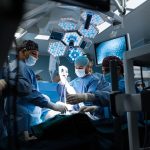
HLT-KUWAIT-SURGERYKuwait advances health sector with robotic, remote surgeryBy Mohammad Al-Moseb
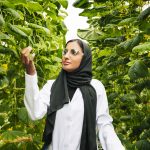
Saudi Arabia’s Voluntary Carbon Market Fuels the Shift to a Low-Carbon
Under UAE President’s directives, UAE launches urgent relief response for Ghana flood victims
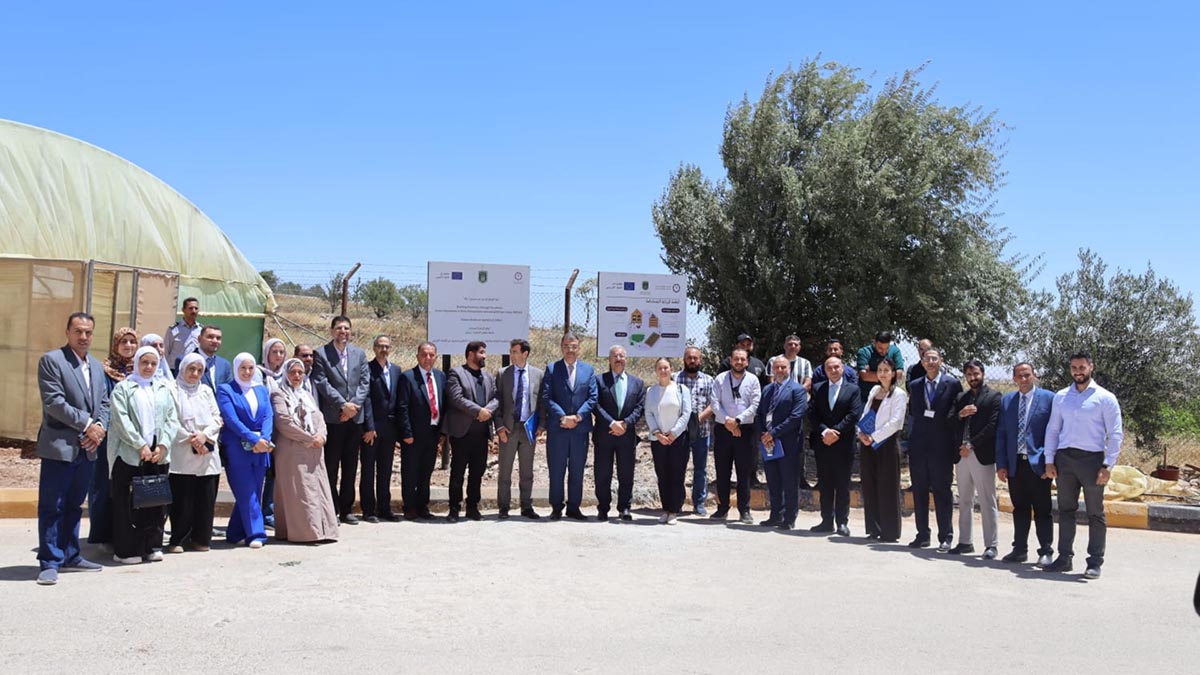
Amman, July 21 (Petra) — The Royal Scientific Society (RSS)
inaugurated on Tuesday a pioneering educational model for
permaculture at Ajloun National University, as part of the “Baraka”
project funded by the European Union, to promote sustainable
agriculture adapted to climate change.
The permaculture intervention, implemented by the RSS on the
university campus, aims to provide an educational and practical
platform to train students, researchers, and the local community in
innovative agricultural practices based on the integration of humans
and nature, thus supporting efforts to protect natural resources and
enhance food security.
President of Ajloun National University, Feras Hanandeh, expressed
his appreciation to the European Union and the RSS for implementing
this initiative at the university, emphasizing the project’s
importance in training future generations in sustainable agricultural
practices capable of addressing the challenges of climate change and
promoting the vision of the “Ajloun: The Oxygen of Jordan” initiative
by supporting green environmental practices.
Vice President of the Royal Scientific Society, Rafat Assi,
highlighted the fruitful partnership with the European Union and its
support for development projects in Jordan, particularly those that
translate scientific knowledge into practical applications serving
vital sectors and local communities. He also thanked Ajloun National
University for its cooperation and for hosting this applied model
that combines education, innovation, and sustainability.
European Union Ambassador to the Kingdom, Pierre-Christophe
Chatzisavas, expressed his appreciation for the pioneering role
played by the RSS in employing applied science and innovation to
serve sustainable development, through implementing initiatives that
adopt the principles of the circular economy and promote adaptation
to the effects of climate change.
He praised the role of Jordanian universities, especially Ajloun
National University, in disseminating knowledge, fostering scientific
and environmental initiatives, and preparing a generation of young
agricultural engineers capable of leading the transition towards more
sustainable development practices. He also commended the RSS’s role
in networking with research institutions and Jordanian universities,
as well as with civil society organizations, to solidify the concept
of science in service to society.
Anne Laure Roche-Rault, Acting Head of International Cooperation at
the EU Delegation to Jordan, highlighted the importance of
partnerships with research and academic institutions in Jordan to
promote the green transition by implementing sustainable initiatives
and models that can be built upon and scaled up. She affirmed the
EU’s continued support for Jordan’s development plans, particularly
those related to climate resilience and the green transition.
Almoayied Assayed, Director of the Water, Environment, and Climate
Change Center at the RSS, presented the key activities of the
“Baraka” project, implemented by the RSS over the past three years
with EU support. He explained that the project focuses on enhancing
resilience through circular solutions and green innovations.
He noted that the project has worked to support climate-resilient
agriculture, promote cleaner production, improve resource use
efficiency, enhance water management efficiency, and disseminate
circular economy concepts by applying practical models that combine
scientific research, innovation, and community service.
The opening ceremony included a presentation by technical specialists
from the RSS and the National Center for Agricultural Research on the
concept of permaculture as an integrated and sustainable approach
based on mimicking natural systems, enhancing biodiversity, improving
soil health, and optimizing resource use.
The permaculture model at Ajloun University includes agricultural
terraces, ponds for producing azolla as poultry feed, and a system
for raising poultry and treating its waste using earthworms to
produce organic fertilizer, thus achieving an integrated cycle for
resource reuse in accordance with the principles of the circular
economy.
The implementation of this model aligns with the Royal Scientific
Society’s commitment to promote the application of science and
knowledge in addressing environmental and climate challenges, and
supporting the transition to more resilient and sustainable
agricultural systems through national and international partnerships.
//Petra// AJ