Saudi Arabia’s Voluntary Carbon Market Fuels the Shift to a Low-Carbon

Under UAE President’s directives, UAE launches urgent relief response for Ghana flood victims

Combating Desertification and Drought: Qatar a Model in Preserving Natural Resources, Establishing Environmental Stability
UAE allocates US$30 million for emergency humanitarian response in El Obeid, calls for civilian protection, safe humanitarian aid access in Sudan

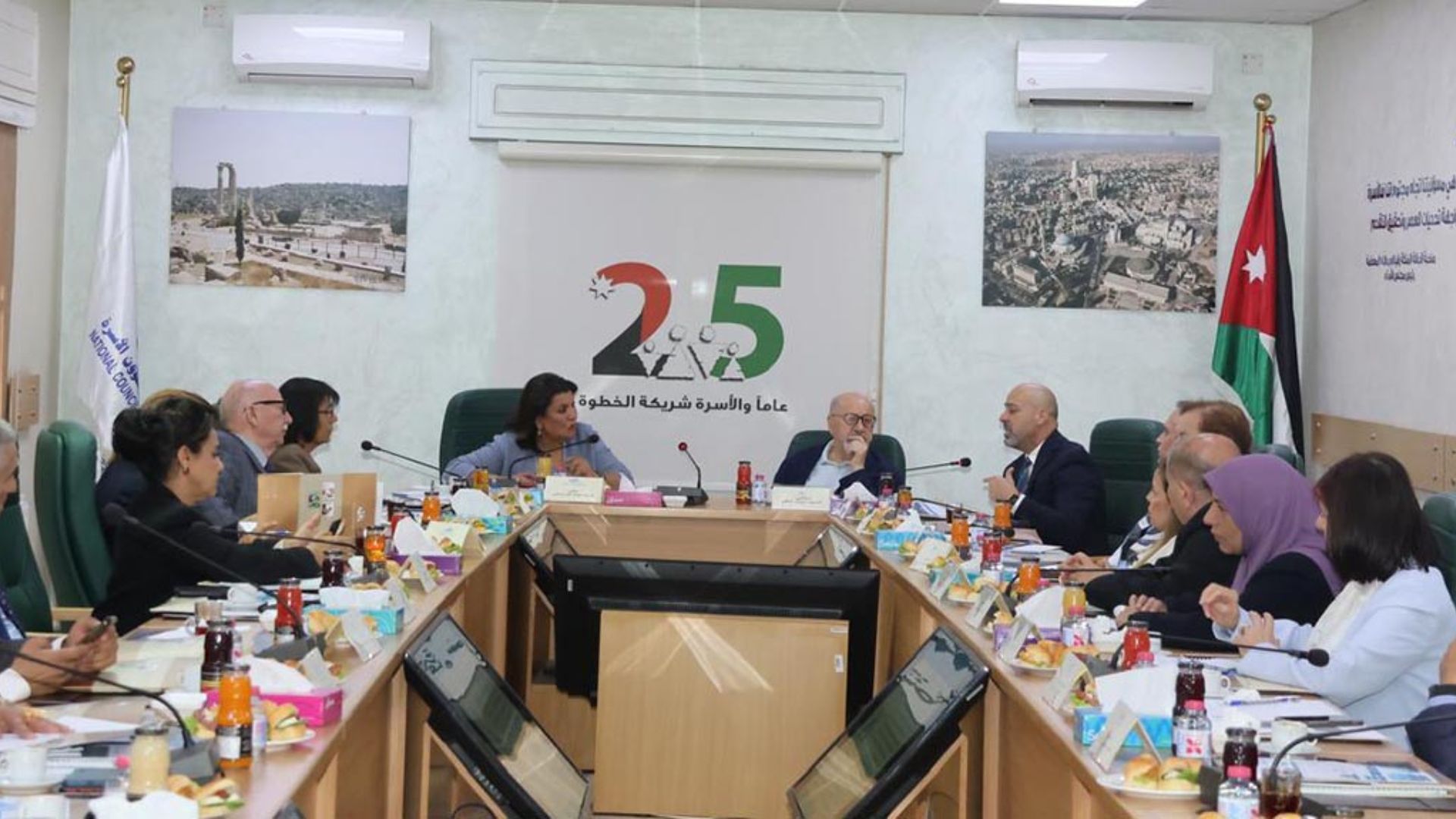
Amman, July 22 (Petra) – The Senate’s Women’s Committee on Wednesday
reviewed national efforts to strengthen Jordan’s family protection
system during a visit to the National Council for Family Affairs,
focusing on the implementation of a new national plan to prevent and
respond to violence against children, women and families.
Chaired by Senator Khawla Armouti, the committee met with members of
the council’s Board of Trustees to discuss the council’s role in
institutionalizing the family protection system and enhancing
national efforts to safeguard families, children and women.
The meeting reviewed the National Multi-Sectoral Action Plan for the
Prevention of and Response to Child Protection, Domestic Violence,
and Violence Against Women and Girls (2026-2030), which was launched
last month by the National Council for Family Affairs in partnership
with the United Nations Population Fund (UNFPA) and the United
Nations Children’s Fund (UNICEF) under the supervision of the
National Team for Family Protection from Violence.
Participants also discussed key national achievements and future
priorities for advancing Jordan’s protection system.
Armouti praised the council’s role in strengthening family protection
mechanisms, promoting prevention and family counseling, and
implementing programs and initiatives under the national action plan.
She said achieving the plan’s objectives requires coordinated efforts
among all relevant institutions to ensure effective implementation
and strengthen the stability of Jordanian families.
Armouti highlighted the council’s role in enhancing coordination,
cooperation and accountability among institutions working on family
and child issues. She said the committee shares the council’s vision
of achieving a Jordan free from violence through a roadmap extending
to 2030, strengthening the capacities of professionals in the field
and shifting from reactive interventions to a comprehensive
prevention-based approach centered on survivors of domestic violence.
She said the visit focused on three key areas: identifying the
legislative, institutional and financial requirements needed to
ensure the plan’s success; strengthening coordination among partner
institutions; and assessing whether current legislation adequately
supports the plan’s objectives and the effectiveness of the national
family protection system.
Armouti affirmed that the Senate remains committed to supporting
legislative and policy initiatives that strengthen family protection
in line with Royal directives and the Economic Modernization Vision.
National Council for Family Affairs Secretary-General Mohammad
Miqdadi said the council continues to lead the development of
national policies, strategies and plans addressing family issues in
cooperation with relevant partners, with protection from violence
remaining one of its highest priorities.
He said the multisectoral action plan serves as a national roadmap
for strengthening the protection system and was developed through a
participatory process based on international best practices. The plan
focuses on improving multisectoral services, strengthening
legislation and policies, enhancing institutional coordination, and
advancing prevention and empowerment efforts.
Miqdadi added that the council has developed a national framework for
family protection from violence, along with accreditation standards,
quality assurance measures, and unified national procedures to
improve coordination and the quality of services provided to
survivors.
He also highlighted the launch of the “Aman” electronic system, which
automates case management procedures, links relevant institutions and
streamlines referral and follow-up processes. The system is designed
to improve response times, enhance service quality and provide a
national database to support planning and decision-making.
At the conclusion of the visit, committee members reaffirmed their
support for the council’s efforts to build an integrated national
family protection system, stressing the importance of continuing
these initiatives to strengthen family cohesion, safeguard the rights
of family members and reinforce institutional approaches to
protection.
//Petra// AJ