ENV-KUWAIT-SUSTAINABLITYKuwait strengthens environmental sustainability through strategic initiativesBy Zahra Al-Kadhmi
HLT-KUWAIT-SURGERYKuwait advances health sector with robotic, remote surgeryBy Mohammad Al-Moseb

Saudi Arabia’s Voluntary Carbon Market Fuels the Shift to a Low-Carbon
Under UAE President’s directives, UAE launches urgent relief response for Ghana flood victims
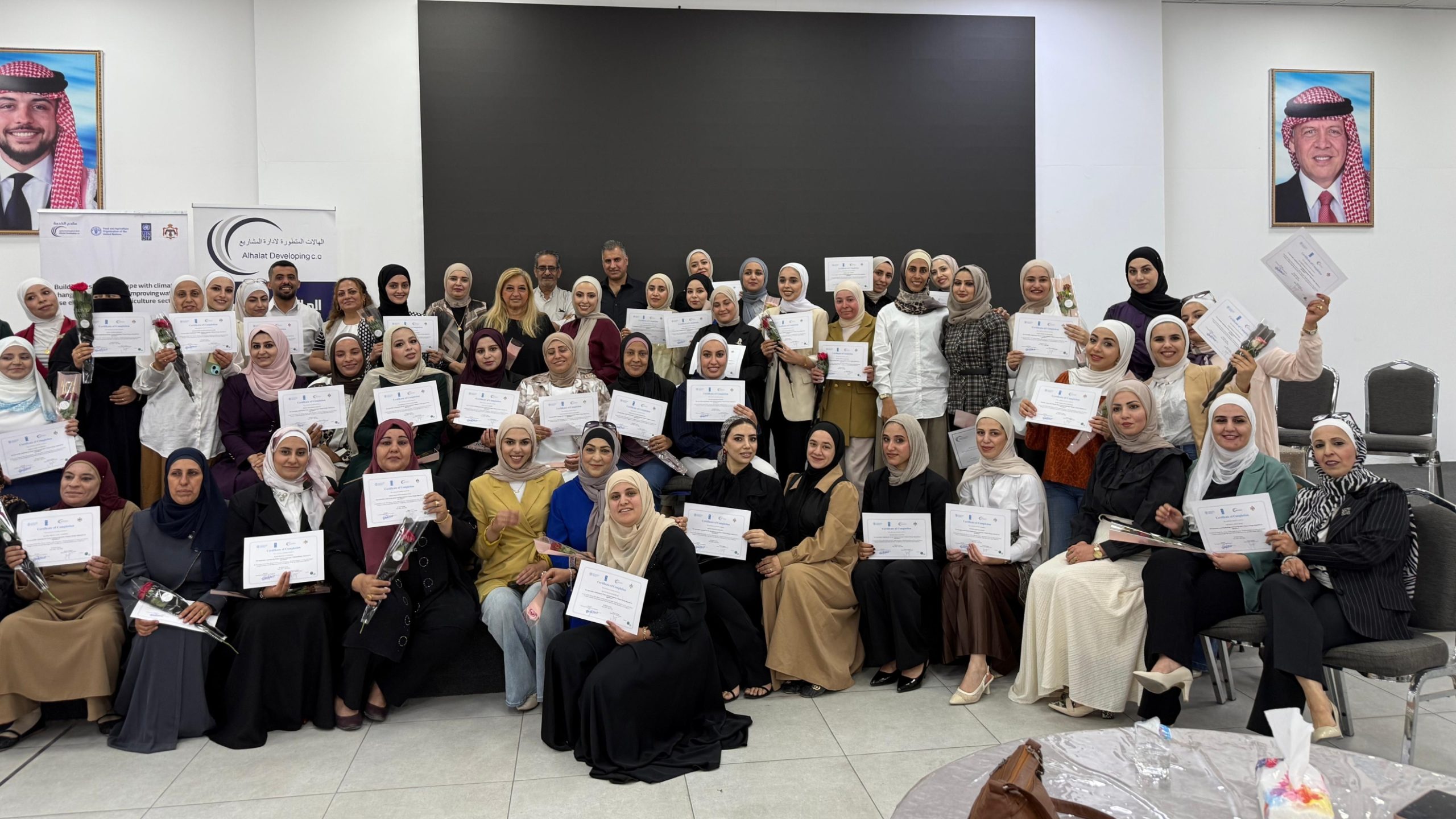
Madaba, Aug. 2 (Petra) — The Food and Agriculture Organization of
the United Nations (FAO) has graduated 200 women who completed a
specialized training program on climate change adaptation under the
“Building Resilience to Cope With Climate Change in Jordan through
Improving Water Use Efficiency in the Agriculture Sector (BRCCJ)”
project.
The project is funded by the Green Climate Fund (GCF) and implemented
by FAO in cooperation with Alhalat Developing C.O. Graduation
ceremonies were held simultaneously in the four project governorates
of Madaba, Karak, Tafilah and Ma’an, with the participation of
officials, representatives of partner organizations and members of
the local community.
Project Manager Maisoon Zoubi said the training program is one of the
project’s main activities and forms part of a plan to establish a
network of 400 women working in climate change adaptation across the
four governorates. She said the graduation of 200 participants marks
the completion of the first phase of that objective, with the
trainees expected to contribute to raising awareness of sustainable
climate practices in their communities.
Zoubi said Jordan is facing increasing climate-related challenges,
including water scarcity, rising temperatures and recurring droughts,
which affect the agricultural sector, food security and livelihoods,
particularly in rural areas.
Karak Agriculture Director Mamoun Al-Adayleh said strengthening the
role of rural women in development is an important element of
sustainable agricultural development. He said the program provides
participants with knowledge and skills to promote climate-smart
agricultural practices and increase awareness of climate change
adaptation.
Mamoun Bqour, Director of Alhalat Developing C.O, said the training
was delivered through an interactive approach using specialized
materials developed under the project to prepare participants to
transfer knowledge and apply climate adaptation practices within
their communities.
Deputy Chair of the Greater Karak Municipality Committee Maisoon
Mubaideen said investment in women’s capacity-building in climate
change adaptation contributes to sustainable development and benefits
families and local communities.
One of the participants, Shorouq Owaisat, said the training
highlighted that climate change affects all segments of society and
requires broad participation. She added that she intends to use the
knowledge and experience gained through the program to raise
awareness among other women in her community.
The first phase of the program included 200 participants: 52 from
Karak, 50 from Madaba, 50 from Tafilah and 48 from Ma’an. The
training was delivered over 30 training days across a two-month
period using materials developed specifically for the project.
The project is implemented by FAO with funding from the Green Climate
Fund, in partnership with the ministries of Water and Irrigation,
Agriculture and Environment, and the United Nations Development
Programme (UNDP).
//Petra// WH