ENV-KUWAIT-SUSTAINABLITYKuwait strengthens environmental sustainability through strategic initiativesBy Zahra Al-Kadhmi

HLT-KUWAIT-SURGERYKuwait advances health sector with robotic, remote surgeryBy Mohammad Al-Moseb

Saudi Arabia’s Voluntary Carbon Market Fuels the Shift to a Low-Carbon

Under UAE President’s directives, UAE launches urgent relief response for Ghana flood victims

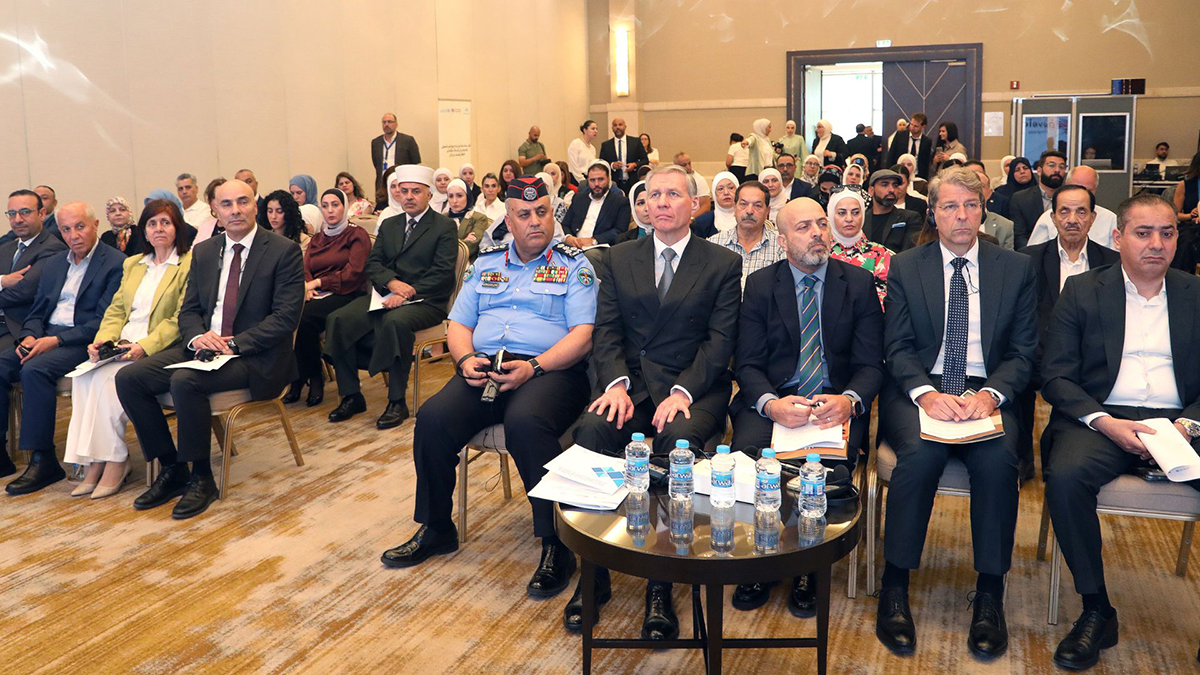
Amman, August 3 (Petra) – The National Council for Family Affairs
(NCFA) and the United Nations Children’s Fund (UNICEF) launched a
study Monday on integrating social and behavioral change approaches
into preventive interventions for children and youth in Jordan.
Titled “Generating Scientific Evidence to Build a Comprehensive
Substance-Use Prevention Program for Children and Youth in Jordan,”
the study was launched in the presence of representatives from the
Public Security Directorate, government ministries, national
institutions, and international partners.
The study covered the age groups 10–14, 15–17, and 18–25 recruited
from schools, universities, vocational and youth centers, and
community institutions. It examined individual, family, community,
and institutional factors affecting risky behaviors and how these
factors interact, with the aim of supporting more effective
prevention and response measures.
The findings showed that seven in 10 participants had used at least
one commonly used product, including cigarettes, hookahs, electronic
smoking products, and energy drinks. About half of those participants
reported that energy drinks were the first product they tried, while
nearly four in five cited curiosity as the reason for their first
use.
The study also found that awareness of the potential harm associated
with many substances was high among a broad segment of participants,
indicating that information alone was insufficient to prevent
experimentation. Peer and family influence, ease of access,
psychological pressure, and a limited ability to refuse were
identified as key factors affecting substance-use behavior.
NCFA Secretary-General Mohammad Miqdadi noted that the study provides
a national scientific reference based on a mixed-method approach
combining a quantitative survey with qualitative research.
He explained that the survey covered 1,043 children and young people
aged 10–25 from Amman, Irbid, and Karak governorates, including those
enrolled in formal education and those outside the education system.
Miqdadi stressed that prevention is a shared national responsibility
requiring coordinated efforts by government institutions,
international partners, and civil society organizations, alongside
stronger family involvement.
He indicated that the study’s findings would support decision-makers
and relevant institutions in developing preventive policies and
programs and strengthening national efforts to protect children and
youth from risky behaviors.
Miqdadi emphasized that protecting children and youth requires an
evidence-based understanding of their circumstances. Citing data
collected between 2018 and 2022 under cooperation with the Gender and
Adolescence: Global Evidence research program, he reported that 12
percent of adolescents showed symptoms of moderate to severe anxiety,
11 percent showed symptoms of moderate to severe depression, and 35
percent reported low levels of coping and resilience.
He observed that the findings demonstrate that preventing substance
use and other risky behaviors cannot be separated from mental health,
family support, social relationships, a sense of belonging, and the
ability to manage pressure.
Miqdadi continued that children and young people who receive
emotional support and learn to manage stress are better able to
resist risk factors and make responsible decisions.
UNICEF Representative to Jordan Marc Rubin remarked that the study
confirms that young people are generally aware of the risks, but that
their decisions are also influenced by their peers, families, and
surrounding communities.
Rubin stressed that every adolescent has the right to grow up in a
safe environment protected from harm, noting that the evidence
provides Jordan with a clearer basis for coordinated action involving
families, schools, communities, and service providers.
The evidence also highlighted the role of families, trusted adults,
and safe support systems in protecting young people.
Participating youth emphasized the importance of building trust,
promoting open communication, and providing confidential,
nonjudgmental support services.
The findings will contribute to developing a social and behavioral
change strategy to prevent harmful substance use in Jordan and
translate the evidence into coordinated measures involving families,
schools, local communities, and relevant services.
British Ambassador to Jordan Philip Hall stated that the study would
deepen understanding of harmful substance use among young people and
help reduce its impact on them, their families, and their
communities.
//Petra// AO