ENV-KUWAIT-SUSTAINABLITYKuwait strengthens environmental sustainability through strategic initiativesBy Zahra Al-Kadhmi

HLT-KUWAIT-SURGERYKuwait advances health sector with robotic, remote surgeryBy Mohammad Al-Moseb

Saudi Arabia’s Voluntary Carbon Market Fuels the Shift to a Low-Carbon

Under UAE President’s directives, UAE launches urgent relief response for Ghana flood victims

Amman, Aug. 9 (Petra) — The Executive Program of the Economic
Modernization Vision (2026–2029) has recorded a number of
achievements during the first half of 2026 under the future Services
Engine in the Information and Communications Technology (ICT) sector,
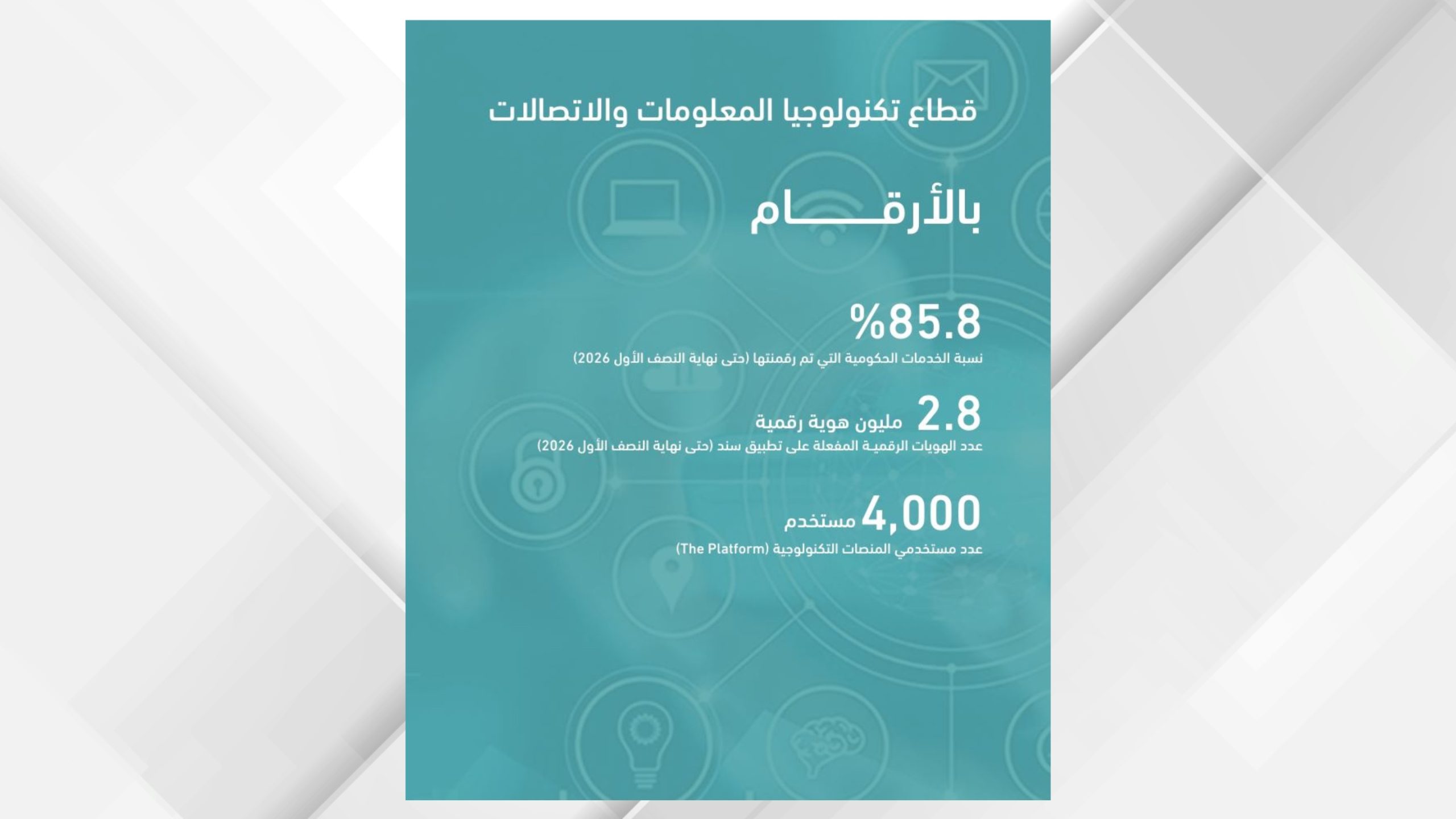
most notably the digitization of 85.8 percent of government services.
According to the program’s progress report, 2.8 million digital
identities have been activated through the Sanad application, while
the number of users of technology platforms reached 4,000.
The report also noted the digitization of activity books for the
Digital Skills subject developed for students from grades one through
six and their availability through the Ajyal platform. Around 2,047
Digital Skills teachers were also trained.
Under the Technology Platforms Project, technical centers in Irbid
and Aqaba were established and equipped, with pilot operations
launched at the two centers.
As part of the Training for Employment project, 247 beneficiaries
were employed through the Hafez program, which provides temporary
employment opportunities in the digital and entrepreneurial sectors
to work on digital transformation projects at government ministries
and institutions.
The report said 39 ICT companies were approved under the “Tech Story
2026” initiative, which supports the training and employment of
female graduates in the telecommunications and technology sector.
Agreements were signed with the companies following the review and
matching of applications submitted through the initiative’s
electronic platform, supporting expanded training and employment
opportunities in the digital sector.
Within the Sanad application, a campaign was carried out to activate
inactive accounts by making a service available to change phone
numbers. The government website also made 35 government services
available, in addition to nine new documents. Sanad received eight
additional documents and 16 new services, while 13 services were
improved. A data analytics system was also introduced to improve the
user experience.
The report said 1,260 beneficiaries received training under the
Digital Skills Empowerment Project, contributing to strengthening
young people’s digital capabilities and improving their readiness for
the labor market.
It also said the process of receiving and screening applications for
the Crown Prince Award through the digital platform had been
completed, as had the initial evaluation stage. A total of 220
applications out of 300 advanced to the technical evaluation stage.
As preparations continue for the establishment of a government data
center in line with international best practices, a tender for the
project was referred. The center is intended to enhance the readiness
of government digital infrastructure and improve the efficiency of
hosting government systems.
Under the second phase of the Jordan Growth Project, 500 jobs were
provided through the Kafa’at program, while 1,181 beneficiaries
received training through different cohorts via digital platforms.
The project also supported 30 startups and small companies through
intermediaries.
The report further said the tender for the digitization of the “White
Paper” project was referred. The project aims to transition toward a
secure and reliable electronic record, with work underway to analyze
gaps, examine work procedures, and re-engineer processes and
services.
//Petra//WH