Saudi Arabia’s Voluntary Carbon Market Fuels the Shift to a Low-Carbon

Under UAE President’s directives, UAE launches urgent relief response for Ghana flood victims

Combating Desertification and Drought: Qatar a Model in Preserving Natural Resources, Establishing Environmental Stability
UAE allocates US$30 million for emergency humanitarian response in El Obeid, calls for civilian protection, safe humanitarian aid access in Sudan

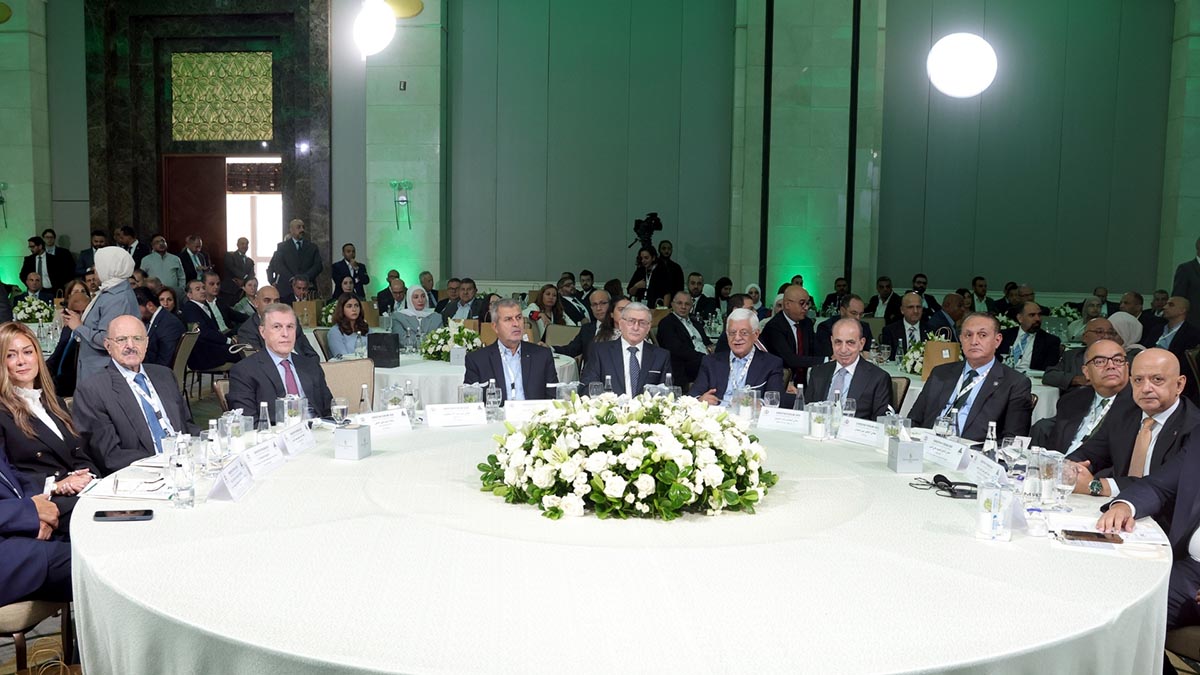
Amman, Sept. 1 (Petra) — The Association of Banks in Jordan on
Tuesday held the fourth Green Finance Forum 2026, focusing on
public-private dialogue as a tool to channel financing toward green
projects, strengthen climate resilience and accelerate Jordan’s
sustainable economic transition.
Held under the patronage of Central Bank of Jordan Governor Adel
Sharkas and attended by Deputy Prime Minister and Minister of Local
Administration Walid Masri, ministers, bankers and representatives of
international institutions, the forum examined ways to develop
bankable green projects, expand sustainable finance and mobilize
public and private investment.
Masri said municipalities and local administrations are key partners
in sustainable development, given their role in creating local
economies and improving quality of life through greener and more
resilient communities.
He highlighted progress in securing climate finance, noting that the
Cities and Villages Development Bank has completed accreditation
requirements with the Green Climate Fund, while projects worth about
$200 million have advanced through the fund’s approval process.
He also pointed to investment opportunities in waste management,
including a “Zero Waste” project in northern Jordan aimed at
significantly reducing landfill waste and a private-sector project
for waste management at the Azraq landfill.
Masri stressed the need to turn financing into sustainable
investments that create jobs and strengthen the economy, building on
successful public-private partnerships in the energy and water
sectors.
Representing the Central Bank governor, Ziad Ghanma said
sustainability and the green transition have become central to
economic policymaking and investment decisions. He highlighted the
bank’s Green Finance Strategy 2023-2028, developed with the World
Bank and relevant stakeholders, as a framework for expanding green
finance and managing climate-related risks across the financial
sector.
He also highlighted the issuance of climate-risk management and
disclosure guidelines and the launch of the Jordan National Green
Taxonomy, developed by the Central Bank and Ministry of Environment
with World Bank support and adopted by the Cabinet in February. The
rating establishes criteria for identifying green projects and
sustainable economic activities, helping direct financing, improve
transparency and attract investment.
Association of Banks Chairperson Bassem Salem said the green
transition has become integral to economic growth, competitiveness,
energy, water and food security, and resource efficiency. He stressed
that public-private dialogue should translate national priorities
into partnerships, projects and investments with tangible economic
impact.
Association Director General Maher Mahrouq said the association began
examining green finance in the banking sector in 2022 and established
a Green Finance Committee to develop partnerships and policy
frameworks. He said the forum, launched in 2023, now aims to
strengthen public-private dialogue, establish the national green
rating as a common reference and expand partnerships to develop
bankable projects.
The forum featured a keynote address by U.N. Special Envoy on
Financing for Sustainable Development Mahmoud Mohieldin on green
dialogue between the public and private sectors amid geopolitical
changes and ways to build economic resilience and finance the
sustainable transition.
The first session focused on sustainability as a driver of economic
resilience, covering renewable energy, energy efficiency, sustainable
transportation, the circular economy, water and food security, green
industries and energy diversification.
Energy and Mineral Resources Minister Saleh Kharabsheh said renewable
sources currently account for about 27% of Jordan’s electricity
generation, with the National Energy Strategy targeting 40% and
potentially 50% by 2035. He stressed the need for a more flexible
electricity grid to accommodate additional renewable energy and said
shifting toward domestic energy sources is increasingly important for
both energy security and lower costs.
Kharabsheh also highlighted plans for green hydrogen production and
the expansion of gas production at the al-Risha field, while noting
the potential to supply natural gas to industrial facilities at lower
costs than diesel and heavy fuel oil.
Environment Minister Ayman Suleiman said sustainability is now an
integrated framework linking energy, water, waste management,
transportation and natural resources. He highlighted Jordan’s
commitment to cutting greenhouse gas emissions by 31% by 2030 and
said renewable energy, gas, green hydrogen and electric vehicles will
contribute to the target.
Former Energy and Mineral Resources Minister Ibrahim Saif highlighted
changes in Jordan’s electricity market and the potential to develop
energy capacity to meet growing global demand for electricity
associated with data processing.
Jordan Kuwait Bank Group CEO Haitham Bataykhi said sustainability
projects have demonstrated their investment viability in Jordan,
citing wind and solar energy projects and the bank’s issuance of
green bonds to finance sustainable projects.
The second session examined the Jordan National Green Taxonomy and
its role in creating a common framework for government, banks,
investors and businesses to identify eligible green projects, guide
financing, attract investment and integrate environmental, social and
governance risks into project assessment and monitoring.
The third session addressed the financing requirements of the green
transition, focusing on the roles of government and the private
sector, risk sharing and the use of policies, incentives, guarantees
and other risk-mitigation mechanisms to make green projects bankable.
Participants also discussed financial tools to support sustainable
projects, including green and sustainability-linked finance, blended
finance, guarantees, green funds, bonds, sukuk and concessional
financing.
//Petra// AJ